

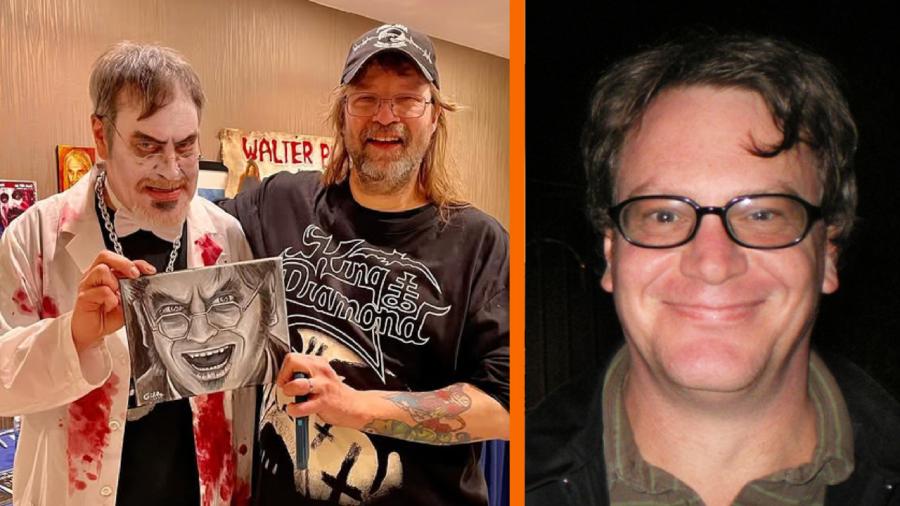
Gregg Gibbs is one of those rare creative names that horror fans recognize instantly, even if they’ve never seen his face on a movie poster. He’s the production designer who built the grimy, junk-stuffed, nightmare-carnival world of Rob Zombie’s House of 1000 Corpses, and he’s also the guy who unexpectedly ended up on the other side of the camera playing one of the film’s most memorable side characters. But there’s a lot more to him than one cult classic. Gibbs is a designer, an actor, a director, and a working fine artist whose whole career sits right at the messy, fascinating crossroads of Americana, sideshow culture, and B-movie horror. This article digs into who he is, what he’s made, and why his work has aged surprisingly well.
Who Is Gregg Gibbs, Exactly?
Gregg Gibbs is an American production designer, actor, director, and visual artist who has spent decades building strange and beautiful worlds for film, music videos, and gallery walls. If you scan his credits, you’ll notice he refuses to stay in a single lane: he’s listed as a production designer, art director, director, writer, property master, and performer, sometimes on the same project. That range is part of what makes him interesting. He isn’t a hired hand who shows up, ticks a box, and leaves. He’s a maker in the old-fashioned sense, someone who sketches, sculpts, paints, and fabricates the actual physical stuff that fills a frame. It’s worth noting there’s another actor named Greg Gibbs floating around out there, so fans occasionally mix them up, but the Gregg Gibbs we’re talking about here is firmly tied to horror, alternative culture, and hands-on design work.
The Road Into Film and Design
Long before House of 1000 Corpses made his name, Gibbs was building his reputation in the world of music videos and underground art. His fascination with vintage and arcane visual traditions, think carnival barkers, circus tents, sideshow banners, roadside Americana, and dusty hillbilly kitsch, gave him a very specific creative fingerprint. That obsession with the overlooked and the odd is exactly what pulled him into the orbit of musicians who wanted their visuals to feel dangerous and handmade rather than slick and corporate. He worked on music video projects connected to that alternative scene, including material tied to Rob Zombie’s Hellbilly Deluxe era and a musical short in the Marilyn Manson orbit. This period matters because it’s where Gibbs sharpened the aesthetic he’d later scale up to feature-film size. Music videos taught him how to make a tiny budget look enormous, how to load a shot with detail, and how to build atmosphere fast, all skills that would become essential the moment he got the call for a real movie.
How He Landed House of 1000 Corpses
The story of how Gibbs got onto House of 1000 Corpses is a good example of how the right relationships open the right doors. He’d already designed several of Rob Zombie’s music videos during the Hellbilly Deluxe run, so when Zombie was handed a chance to direct his first feature, Gibbs was a natural person to bring along. He got the call to join the crew in early 2000, back when the project was still a wild, barely-controlled experiment on the Universal backlot. According to Gibbs, one of his first moves was to walk into the studio’s prop department and essentially tear it apart, pulling out everything he could find and scattering it around to see what stuck. That instinct, grab everything, layer it thick, and make the world feel lived-in and rotting, became the entire visual philosophy of the film. It’s a great illustration of how a production designer’s personal taste can quietly shape an entire movie’s identity.
Building a World Out of Junk and 200 Corpses
What Gibbs pulled off on House of 1000 Corpses was genuinely ambitious, especially given the modest budget. He assembled a crew of artists that reportedly grew to around sixty people, many of them friends he trusted to hand-build props, signage, sculptures, and paintings from scratch. The sets weren’t just decorated; they were crammed, densely packed with objects until every corner felt claustrophobic and slightly deranged. The most famous example is the film’s notorious “corpse hallway,” a set so demanding that Gibbs has said he fabricated more than two hundred individual corpses for it, each one decorated to look distinct from the others. That’s an insane amount of handmade labor for a single sequence, and it’s exactly why the film feels so tactile and grimy compared to the clean, CGI-heavy horror that was becoming common at the time. This is also where his sideshow-and-Americana obsession paid off, because the whole environment reads like a haunted roadside attraction that curdled into something evil.
Becoming Dr. Wolfenstein by Accident
Here’s the twist that turned a behind-the-scenes designer into an on-screen cult figure. The character of Dr. Wolfenstein, the ghoulish horror host who introduces the film’s “murder ride,” was originally meant to be a cameo for Rob Zombie himself. But on the day of the shoot, Zombie reportedly felt that even under heavy makeup he still looked too recognizably like himself, so he pulled out at the last minute. Gibbs stepped in, got into the makeup chair, and ended up playing Dr. Wolfenstein, while Zombie shifted into a more disguised role as Wolfenstein’s hairy assistant. It’s a small piece of casting trivia, but it’s become a beloved bit of the film’s lore, and it’s why Gibbs is credited as both production designer and actor on the same movie. To this day he leans into the Dr. Wolfenstein identity, using it as part of his public persona, which tells you he’s fully embraced his accidental brush with horror stardom.
The Signature Aesthetic: Carnival, Sideshow, and Americana
If you want to understand Gregg Gibbs’ work, forget genre labels for a second and look at his obsessions. His visual world is built from the leftovers of American popular culture: the sideshow tent, the freak show banner, the roadside museum of oddities, the burlesque stage, the hillbilly homestead, the circus midway. These are all forms that live somewhere between celebration and menace, cheerful on the surface but unsettling underneath, and that tension is exactly what Gibbs mines. When he designs a set, he’s not just decorating; he’s channeling a whole tradition of handmade, slightly disreputable American spectacle. That’s why his environments feel authentic rather than art-directed. A lesser designer might slap some cobwebs and skulls around and call it horror. Gibbs instead builds something that feels like a real, weird place that existed before the cameras arrived and will keep existing after they leave. That commitment to genuine texture is his calling card, and it’s a big reason directors in the horror and cult space have kept working with him.
Beyond Rob Zombie: The Rest of His Filmography
While House of 1000 Corpses is the headline, Gibbs’ résumé stretches well past it, and the pattern is consistent: dark, offbeat, character-driven projects that reward strong design. He contributed to The Hillside Strangler in 2004, where he handled production design and also appeared on screen as a character named Officer Mike McHale, once again proving he’s happy to jump in front of the lens when needed. He worked on The Devil’s Muse in 2007, another gritty, unsettling piece rooted in true-crime horror territory. He directed The Treasures of Long Gone John, a documentary released in 2006 about the eccentric record-label founder and collector, which fits neatly with his lifelong love of oddball collectors and outsider culture. His art-department and design work also touches films like Cement in the late 1990s and the acclaimed documentary The Devil and Daniel Johnston, and his credits extend into projects such as Olompali: A Hippie Odyssey and 2:13. Taken together, this body of work paints a picture of someone drawn to subjects that live on the fringe, whether that’s serial-killer history, outsider musicians, or countercultural communes.
Gregg Gibbs the Fine Artist
One thing that separates Gibbs from a lot of film-industry designers is that his creativity doesn’t switch off when the shoot wraps. He’s an active gallery artist with a body of exhibition work that carries the same playful, macabre, sideshow-inspired sensibility as his film sets. His projects have included cheekily titled shows and installations, the kind of work that treats a museum or gallery like its own kind of roadside attraction, blurring the line between fine art, folk art, and carnival spectacle. This matters because it explains where his film aesthetic actually comes from. He’s not borrowing a “horror look” for a paycheck; the imagery lives in him as a genuine artistic obsession, and film work is simply one outlet for it. For fans, this is a reminder that if you love the vibe of his movie sets, there’s a whole parallel body of paintings, sculptures, and installations worth seeking out.
Why His Work Still Resonates
House of 1000 Corpses got a rough reception from mainstream critics when it landed in 2003, but time has been very kind to it, and Gibbs’ contribution is a big part of why. The film has grown into a genuine cult classic, celebrated for exactly the qualities that once made critics uncomfortable: its overstuffed, handmade, unapologetically grotesque design. In an era of increasingly digital, weightless horror imagery, the tactile realness of Gibbs’ work has become a nostalgic virtue rather than a liability. Younger horror fans discovering the film today respond to how physical and committed it feels, and a lot of that commitment is literally sitting in the frame in the form of two hundred hand-built corpses and sixty people’s worth of handmade props. Gibbs represents a very specific, increasingly rare kind of craftsperson, the one who builds the nightmare by hand instead of rendering it. That’s why his name keeps coming up in retrospectives, oral histories, and anniversary pieces about the film, and why his influence quietly echoes through modern practical-effects-driven horror.
FAQs
Who is Gregg Gibbs?
Gregg Gibbs is an American production designer, actor, director, and fine artist best known for designing Rob Zombie’s House of 1000 Corpses. He’s also worked as an art director and documentary filmmaker across a range of offbeat, cult-leaning projects.
What is Gregg Gibbs most famous for?
He’s most famous for serving as the production designer on House of 1000 Corpses (2003), building its dense, sideshow-inspired sets. He also appeared in the film as the horror host Dr. Wolfenstein.
Did Gregg Gibbs act in House of 1000 Corpses?
Yes, he played Dr. Wolfenstein, a role originally meant to be Rob Zombie’s cameo. Zombie stepped aside at the last minute, so Gibbs took over the part while Zombie played the character’s disguised assistant.
What other films has Gregg Gibbs worked on?
Beyond House of 1000 Corpses, his credits include The Hillside Strangler, The Devil’s Muse, The Treasures of Long Gone John, and design work on The Devil and Daniel Johnston. His work tends to focus on dark, unconventional, or countercultural subjects.
Is Gregg Gibbs also an artist outside of film?
Yes, he’s an exhibiting fine artist whose gallery work shares the same carnival, sideshow, and Americana influences seen in his film design. His movie sets and his artwork essentially draw from the same creative well.
Conclusion
Gregg Gibbs is proof that some of the most memorable moments in film history come from the people you never see on the poster. He turned a modest horror budget into an unforgettable handmade nightmare, accidentally stepped into an iconic on-screen role, and did it all while staying true to a deeply personal love of sideshows, carnivals, and forgotten Americana. Whether he’s designing a corpse hallway, directing a documentary about an eccentric collector, or hanging his own strange art in a gallery, the through-line is always the same: genuine craft, real texture, and a fearless embrace of the weird. For horror fans and design lovers alike, he’s a name worth knowing and a career worth exploring well beyond the single film that made him famous.