

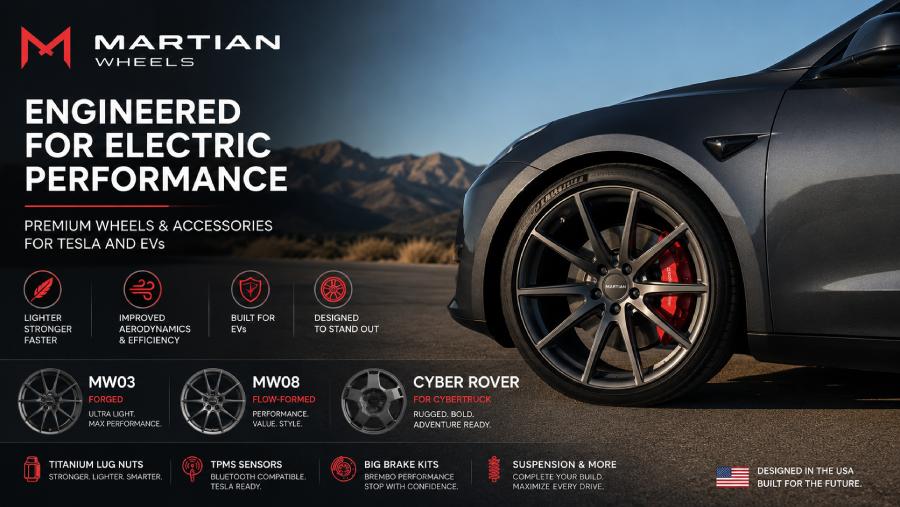
If you spend any real time in Tesla owner circles — the forums, the subreddits, the late-night “should I upgrade my rims” rabbit holes — you’ve almost certainly bumped into the name Martian Wheels. It’s one of those brands that started as a niche option for people who wanted something other than the factory aero covers, and somehow grew into a go-to name for owners who care about how their car rolls, both literally and visually. I’ve followed the aftermarket EV scene closely enough to watch this happen, and it’s a more interesting story than “company sells shiny rims.” So let’s get into what Martian Wheels actually is, why people obsess over it, and whether the hype holds up.
What Exactly Is Martian Wheels?
Martian Wheels is a US-based company that designs and sells premium aftermarket wheels, rims, and performance accessories built specifically for electric vehicles — Teslas above all, but increasingly other EVs like Rivian too. The core pitch is simple: factory wheels are fine, but they’re a compromise built around mass production, and Martian wants to give owners options that improve performance, efficiency, looks, and practicality without the guesswork of mixing and matching random universal parts. Their catalog covers the Model 3, Model Y, Model S, Model X, and the Cybertruck, and they’ve built out a surprisingly deep ecosystem of supporting products around those wheels. In a market that’s still weirdly thin on EV-specific options, that focus is a big part of why they stand out.
How a Niche Rim Shop Became a Household Name in EV Circles
The thing that made Martian Wheels click with owners wasn’t a flashy marketing campaign — it was that they showed up early and spoke the language of EV nerds. Most aftermarket wheel companies were still treating EVs like gas cars, ignoring the specific concerns that actually matter to electric drivers: weight, rolling resistance, aero efficiency, and the way a heavier battery pack changes the equation for ride and durability. Martian leaned into all of that. When you read through owner discussions, you see people swapping notes on whether a particular Martian wheel actually improved their range, how it changed road noise, and how it fared with winter tires. That’s a community that trusts a brand enough to treat it as a serious engineering choice rather than a cosmetic one, and that kind of word-of-mouth credibility is hard to buy.
The Flagship Lineup: MW03 and MW08
If you’ve shopped Martian even briefly, two product names will jump out at you: the MW03 and the MW08. The MW03 (and its updated MW03.2 version) is the forged wheel that built much of the brand’s reputation, frequently mentioned by owners who replaced heavy factory wheels on performance Model 3s and Model Ys. Forged construction is the premium end of the spectrum, prized for being strong and light, and that combination is exactly what an efficiency-minded EV owner wants. The MW08, meanwhile, is the flow-formed line that hits a more accessible price point while still shaving weight and adding a distinctive look. Owners regularly describe the MW08 as a sweet-spot product — good looks, reasonable cost, and a noticeable improvement over stock — which is probably why it’s one of the most talked-about wheels in the whole catalog.
Cybertruck and the Cyber Rover
When the Cybertruck landed, Martian was ready with options, and the standout is the Cyber Rover wheel. This one’s interesting because the Cybertruck’s polarizing design means owners are extremely particular about what they bolt onto it — the wrong wheel can make a futuristic stainless-steel wedge look cartoonish in a hurry. The Cyber Rover came in at a popular 20-inch size with a clean, utilitarian aesthetic that’s drawn comparisons to rugged off-road truck styling, and enthusiasts have embraced it enough that some are even customizing the finishes with custom powder-coating in their own color combinations. That’s the mark of a wheel that people genuinely want to make their own, which is a higher bar than simply selling units. For a vehicle as visually demanding as the Cybertruck, having a credible wheel option early was a smart play.
Forged vs. Flow-Formed: Why the Construction Matters
Here’s where a little expert context helps, because “forged” and “flow-formed” get thrown around like marketing buzzwords when they actually describe real engineering trade-offs. Forged wheels are made by compressing a solid billet of aluminum under enormous pressure, which aligns the metal’s grain structure and produces a wheel that’s exceptionally strong for its weight — the gold standard, but also the pricier one. Flow-formed wheels start as a cast wheel and then get spun and stretched under heat and pressure to compact the metal in the barrel, giving you much of the strength-to-weight benefit of forging at a fraction of the cost. For most everyday EV owners, flow-formed wheels like the MW08 are the smart, value-driven pick, while the forged MW03 line appeals to performance owners chasing every last gram of unsprung weight savings. Understanding that distinction is honestly the single most useful thing when deciding which Martian product fits you.
The Performance and Efficiency Angle
A lot of buyers come to Martian not for looks but for numbers, and the questions they ask are revealing: will lighter wheels improve acceleration, and will the right setup help my range? The physics behind the interest is real — reducing unsprung and rotational weight can sharpen how a car responds, and a more aerodynamically friendly wheel-and-tire package can nudge efficiency upward. That said, the honest answer you’ll see from experienced owners is that the gains are usually modest and easy to swamp with confounding factors like cold weather, tire choice, and driving style. Several owners who switched from heavy staggered factory wheels to Martian sets reported a quieter, slightly smoother ride and a setup they were happy with, which is arguably the more reliable win. If you go in expecting a transformed car, you’ll be underwhelmed; if you go in expecting a thoughtful refinement, you’ll likely be pleased.
Fitment, Tires, and Getting the Setup Right
One thing the Martian community gets right is treating the wheel as half of an equation — the tire is the other half, and the two have to be chosen together. Owners routinely discuss exactly which tires they paired with their wheels, from all-season touring tires for daily drivers to dedicated winter setups for snowy climates, and the brand’s staff are frequently credited with steering people toward the right combination for their region and goals. This matters because a great wheel paired with a poorly chosen tire can undo all the benefits you were chasing, whether that’s ride comfort, efficiency, or grip. The practical takeaway is to think about your actual use case first — daily commuting, track days, winter driving, towing — and let that drive both the wheel size and the tire spec, rather than picking a wheel purely on looks and sorting out rubber later.
The Accessory Ecosystem Around the Wheels
What surprised me, digging into the catalog, is how much Martian sells beyond the wheels themselves. They stock titanium lug nuts that owners praise for durability and clever details — like a 19mm socket size that gives more clearance during installation and helps avoid scratching the wheel finish. They carry Bluetooth TPMS sensors that play nicely with modern Teslas, big brake kits from a respected name like Brembo for owners who want serious stopping power, plus suspension components and various protection and styling pieces. This breadth turns the brand from a one-product shop into something closer to a full upgrade destination, where you can spec out a coherent package rather than sourcing parts from five different vendors and hoping they all play together. For owners who want a single trusted source for a build, that convenience is a genuine selling point.
Pricing and Whether the Value Holds Up
Let’s talk money, because Martian sits firmly in the premium tier and you should go in with clear eyes. A set of four MW08 flow-formed wheels tends to land in the rough neighborhood of well over a thousand dollars, and the brand’s brake kits climb into the multi-thousand-dollar range for the high-end Brembo options. That’s not cheap, but it’s also not outrageous for genuinely engineered aftermarket EV hardware, especially compared to the cost of clumsy universal alternatives that may not fit or perform well. The value argument rests on three things: the EV-specific design focus, the weight and looks improvements over stock, and the support you get when buying a curated product rather than a random listing. Whether that adds up to “worth it” depends entirely on how much you care about your car as an object versus just a tool — and Martian’s customers clearly fall in the former camp.
The Customer Experience: The Good and the Honest Caveats
I’d be doing you a disservice if I painted this as flawless, so here’s the balanced view. On the positive side, a lot of buyers rave about the support — staff members get name-checked in reviews for giving timely, spot-on guidance, orders frequently arrive in good condition within the expected window, and people are simply thrilled with how the wheels look on their cars. On the other hand, there’s a real thread of feedback from owners who experienced frustrating pre-order delays, with shipping timelines slipping and a few customers ultimately choosing competitors out of impatience. The fairest reading is that Martian is a strong product company whose fulfillment has occasionally tested buyers’ patience, particularly on pre-orders for hot new releases. If you’re ordering something in stock, the experience tends to be smooth; if you’re pre-ordering the newest hyped wheel, set your expectations accordingly and build in some buffer.
Tips for Buying Smart
If you’ve decided Martian is on your shortlist, a few practical moves will save you headaches. First, nail down your priorities before browsing — efficiency, looks, winter capability, or performance — because that single decision narrows the catalog dramatically and keeps you from overpaying for features you don’t need. Second, lean on the staff for tire pairing advice rather than guessing, since the community consistently reports that the recommendations are reliable and the wheel-plus-tire combo is what actually determines your results. Third, check stock status carefully and ask about realistic shipping timelines before you commit, especially on anything new or in high demand. And finally, factor in the small stuff like lug nut covers and TPMS compatibility up front, because a few owners have been mildly annoyed to discover certain accessories weren’t included and had to source or even 3D-print their own. A little homework on the front end makes the whole experience far more satisfying.
A Quick Note on the Other “Martian Wheels”
Because language is fun, it’s worth flagging that “Martian wheels” can also literally mean the wheels on Mars rovers — and there’s a genuinely fascinating engineering story there. NASA has documented premature wear on the Mars Science Laboratory Curiosity rover’s wheels caused by harsh, unpredictable Martian terrain, which led engineers to redesign the wheels for the Perseverance rover to be far more durable. It’s a totally different topic from the Tesla wheel brand, but it’s a neat reminder that wheel design is a serious discipline whether you’re rolling across a suburban driveway or the surface of another planet. If you came here looking for the rover side of things, that’s the thread to pull — though most people searching this term are after the EV brand.
FAQs
Are Martian Wheels worth the money for a daily-driven Tesla?
For most daily drivers, yes, provided you value the looks and the weight savings over stock and you’re buying something in stock rather than chasing a delayed pre-order. The flow-formed MW08 line in particular tends to be the value pick, offering a meaningful upgrade in appearance and ride feel without the forged-wheel price tag. Just go in understanding that efficiency gains are modest and the bigger payoff is in aesthetics, ride refinement, and having an EV-specific product designed for your car.
What’s the real difference between the MW03 and MW08?
The short version is construction and price. The MW03 (and MW03.2) is a forged wheel — the strongest, lightest, and most premium option, aimed at performance-minded owners. The MW08 is flow-formed, which delivers a lot of the strength-to-weight benefit at a more accessible cost, making it the popular all-rounder. If you’re optimizing for outright performance and don’t mind paying, go forged; if you want the best balance of looks, weight, and value, the MW08 is the crowd favorite.
Do lighter aftermarket wheels actually improve my Tesla’s range?
They can help a little, but don’t expect a dramatic jump. Reducing rotational and unsprung weight and choosing a more aero-friendly wheel-and-tire package can nudge efficiency upward, but those gains are easily overshadowed by cold weather, tire choice, and how you drive. Experienced owners generally report a quieter, smoother ride as the more dependable benefit, with range improvements being real but small.
Is the buying and shipping experience reliable?
In-stock orders generally go smoothly, with owners praising quick, helpful customer support and products arriving in good condition within expected timeframes. The main caveat is pre-orders for newly released wheels, where some buyers have run into repeated delays. The smart approach is to confirm stock status and get a realistic shipping estimate before committing, especially on anything new or in high demand.
Does Martian make wheels for the Cybertruck and non-Tesla EVs?
Yes on both counts. The Cybertruck has dedicated options like the Cyber Rover, a 20-inch wheel with a rugged, clean aesthetic that owners have embraced and even customized with their own finishes. Beyond Tesla, the brand has expanded into other EVs such as Rivian, reflecting a broader push to serve the electric vehicle market rather than Teslas alone.
Conclusion
Martian Wheels earned its reputation the hard way — by showing up early for EV owners, speaking their language, and building products that treat efficiency, weight, and fitment as first-class concerns rather than afterthoughts. The flagship MW03 and MW08 wheels anchor a lineup that now stretches across every major Tesla model, the Cybertruck, and beyond, backed by a genuinely useful accessory ecosystem from titanium lug nuts to big brake kits. It’s premium-priced, and the pre-order fulfillment has occasionally frustrated buyers, but the product quality, the looks, and the responsive support keep pulling people back. If you’re a Tesla or EV owner who sees the car as more than just transportation, Martian is a brand worth shortlisting — just buy smart, pair your wheels with the right tires, and set realistic expectations on timing. Do that, and you’re very likely to end up in the camp of owners who can’t stop recommending them.