

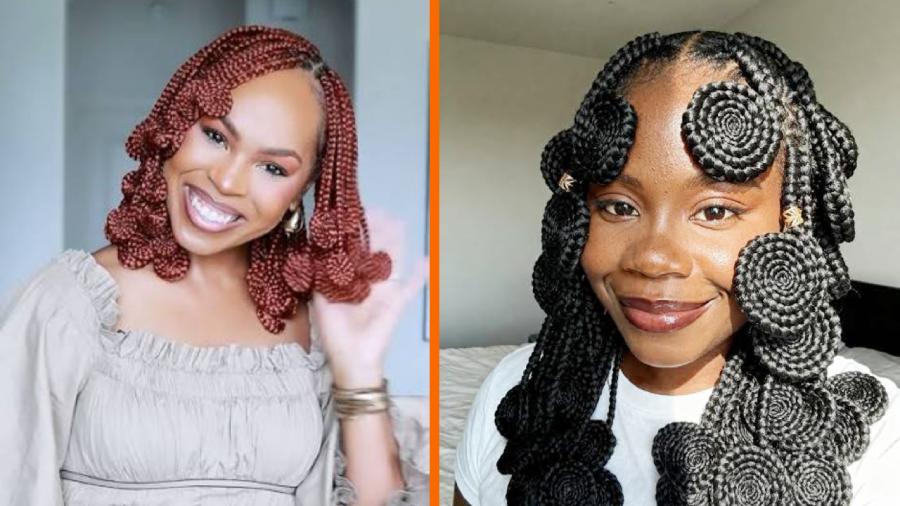
If you have been scrolling through Instagram reels or TikTok lately, there is a good chance you have come across a braided hairstyle that looks sculpted by an artist rather than braided by a stylist. That hairstyle is called Koroba braids, and it is one of the most talked-about protective styles in the natural hair community right now. Rooted in the traditions of the Yoruba people of West Africa, Koroba braids are far more than a passing beauty trend. They carry centuries of cultural meaning, artistic expression, and personal identity within every carefully woven strand. What makes Koroba braids so captivating is the way they merge heritage with modern fashion. The style mimics the shape of an upside-down calabash or basket, with braids radiating outward from the crown and ending in distinctive rolled or coiled tips. Whether you have worn this style since childhood in Nigeria or you are discovering it for the first time through social media, this guide will walk you through everything you need to know about Koroba braids in 2026. From the deep cultural roots of this Yoruba hairstyle to step-by-step styling techniques, maintenance routines, and the latest trending variations, consider this your complete resource for falling in love with Koroba braids.
Quick Information Table
| Detail | Information |
|---|---|
| Hairstyle Name | Koroba Braids |
| Origin | Yoruba Tribe, Nigeria, West Africa |
| Meaning of “Koroba” | Basket or Calabash in the Yoruba language |
| Shape Inspiration | Inverted basket or calabash placed on the head |
| Braid Direction | Radiates outward from the crown of the head |
| End Style | Rolled, coiled, or curled tips resembling bubbles |
| Base Techniques | Cornrow base or individual box-braid base |
| Average Install Time | 3 to 6 hours depending on complexity |
| Recommended Hair Length | At least 3 to 4 inches of natural hair |
| How Long It Lasts | 4 to 8 weeks with proper maintenance |
| Suitable Hair Types | All hair types, especially types 3C to 4C |
| Popular Accessories | Cowrie shells, beads, metallic cuffs, colored thread |
| Difficulty Level | Intermediate to advanced braiding skill required |
| Trending Variations in 2026 | Knotless Koroba bob, jumbo Koroba, colored Koroba |
| Cultural Significance | Represents identity, heritage, and artistic expression |
The Rich History and Cultural Roots of Koroba Braids
To truly appreciate Koroba braids, you need to understand where they come from and what they represent. This is not a style that was invented on a salon floor in Brooklyn or dreamed up by a celebrity stylist in Los Angeles. Koroba braids belong to the Yoruba people of southwestern Nigeria, one of the largest and most culturally influential ethnic groups on the continent. For the Yoruba, hairstyling has always been much more than a matter of appearance. It is a language, a craft, and a form of social communication that dates back hundreds of years. A Yoruba woman’s hairstyle could historically reveal her marital status, her family lineage, her social rank, and even the occasion she was preparing for. Koroba braids, with their distinctive inverted-basket silhouette, were one of many styles passed down through generations of skilled braiders. The word “Koroba” translates to “basket” in the Yoruba language, and the hairstyle earns its name because it replicates the rounded dome shape of a calabash or woven basket turned upside down on the head. Every braid begins at the crown and flows downward and outward, mirroring the ribs of a handwoven basket. In a world where so many traditional African hairstyles were suppressed or erased during centuries of colonization, the revival of Koroba braids in 2026 feels like a powerful act of cultural reclamation. When someone sits in a braider’s chair and asks for Koroba, they are not choosing a pretty hairstyle alone. They are participating in a living tradition that connects them to a heritage of resilience, creativity, and pride.
What Makes Koroba Braids Different From Other Braiding Styles
One of the most common questions people ask when they first encounter Koroba braids is what sets them apart from other popular styles like box braids, cornrows, or Fulani braids. The answer lies in three key elements: the direction of the braids, the shape of the overall silhouette, and the finishing technique at the ends. Unlike standard cornrows that run from the front hairline to the back, Koroba braids originate at a central point on the crown and radiate outward in every direction, almost like the spokes of a wheel or the lines of a sunburst. This crown-outward pattern is the hallmark of the style and gives it that unmistakable dome-like shape. The second defining feature is the way the ends are finished. Rather than hanging loose or being sealed with hot water like regular box braids, Koroba braids are rolled, coiled, or knotted at the tips. Each braid end is carefully wound against itself and sewn down with a needle and thread, creating neat rounded “bubbles” or rosettes. This finishing technique produces the bob-like hemline that makes Koroba braids so visually distinctive. It is this combination of radial patterning and sculpted ends that elevates Koroba from a simple braided style into wearable art. No two installations are exactly alike, and the best braiders treat each head as a unique canvas.
Understanding the Two Main Koroba Braids Techniques
When you walk into a salon and ask for Koroba braids, your stylist will likely present two main options for the base technique, and your choice will shape the final look, feel, and versatility of the style. The first option is the cornrow-based Koroba. In this version, the stylist creates neat, flat cornrow rows that start from a central point on the crown and travel outward toward the edges of the head. The ends of each cornrow are then rolled or coiled into rounded bubble shapes and secured tightly. This technique produces the most authentic Koroba silhouette because the flat braids hug the scalp closely, and the rolled ends create a clean, sculptural hemline that mimics the shape of an inverted calabash. The second option is the box-braid-based Koroba. Here, instead of flat cornrows, the stylist installs medium to large individual box braids and rolls the ends into curls or rosettes to achieve that signature Koroba finish. This version offers more versatility because the individual braids allow for greater movement and can be styled in different ways, from a half-up ponytail to a side-swept look. The box-braid version also tends to be more comfortable for people who find tight cornrows difficult to tolerate. Both techniques are beautiful, and the right choice depends on your comfort level, your styling preferences, and how close to the traditional aesthetic you want to go.
How to Prepare Your Natural Hair Before Getting Koroba Braids
Preparation is everything when it comes to protective styling, and Koroba braids are no exception. The health and longevity of your braids depend heavily on the condition of your natural hair before installation begins. Start at least one week before your salon appointment. Begin with a thorough cleanse using a sulfate-free clarifying shampoo to remove product buildup, dirt, and excess oil from your scalp and strands without stripping essential moisture. Follow this with a deep conditioning treatment — ideally one that balances protein and moisture — because your hair needs to be strong and hydrated enough to withstand the tension of braiding. After deep conditioning, gently detangle your hair in sections using a wide-tooth comb or your fingers. This step is crucial because knots and tangles cause unnecessary pulling and breakage during the braiding process. If your natural hair is tightly coiled, consider stretching it with a blow dryer on a low heat setting or by using a banding method the night before your appointment. Stretched hair is much easier for the stylist to grip, part, and braid smoothly, leading to a neater result and less tension on your edges and scalp. Make sure your hair is completely dry before the installation begins. Braiding over damp or wet hair traps moisture against the scalp and creates conditions where mildew or fungal issues can develop.
A Step-by-Step Overview of the Koroba Braids Installation Process
While the braiding itself should always be handled by a skilled stylist, understanding the installation process helps you set realistic expectations and communicate your preferences more effectively. The process begins with sectioning. Your stylist will part your hair from a central point on the crown, creating clean, even sections that radiate outward like the lines of a starburst. The number and size of those sections depend on whether you are getting cornrow-based or box-braid-based Koroba, and whether you prefer a thinner, intricate look or a chunkier, bolder style. Once sectioning is complete, the braiding begins. For cornrow-based Koroba, the stylist feeds in extension hair at the root and braids each cornrow tightly along the scalp, following the radial parting lines from crown to edge. For box-braid-based Koroba, the stylist isolates each section and creates individual three-strand braids with added extension hair. The most critical and time-intensive step comes at the end. Each braid is carefully rolled or coiled at the tip, wound into a small rosette shape, and secured with a needle and thread or tiny elastic bands. Some stylists also dip the rolled ends in hot water to set the shape and ensure it holds firmly. This finishing step transforms a regular set of braids into the iconic Koroba silhouette, and it demands patience and precision. The entire process takes anywhere from three to six hours depending on the complexity of the design, the thickness of your natural hair, and the speed of your braider.
Trending Koroba Braids Variations to Try in 2026
The beauty of Koroba braids lies in their adaptability. While the traditional style remains timeless on its own, modern stylists and creative clients keep pushing the boundaries of what Koroba can look like — and the results are striking. One of the biggest trends in 2026 is the knotless Koroba bob, which combines the pain-free comfort of knotless braiding with the sculpted Koroba hemline. Because the braids start with your own natural hair rather than a bulky knot at the root, this variation sits flatter, feels lighter, and looks effortlessly sleek. Another major trend is jumbo Koroba braids, where the braids are made significantly thicker than traditional versions, creating a bold, almost architectural look that commands attention. Colorful Koroba braids are also dominating social media feeds, with braiders incorporating everything from honey blonde and burgundy red to pastel pink and ocean blue into the extensions. The color is often concentrated at the rolled ends or applied as an ombre gradient, creating a gorgeous contrast against the natural black base. For a more decorated look, accessorized Koroba braids featuring cowrie shells, gold cuffs, wooden beads, or wrapped thread sections are making a strong statement this year. And for anyone who wants a playful edge, Koroba braids with funky bangs or side-swept fringe offer a way to personalize the style and make it feel distinctly yours.
Koroba Braids for Different Face Shapes and Hair Lengths
One of the reasons Koroba braids have become so widely popular is that they flatter a broad range of face shapes and adapt well to different hair lengths. If you have a round face, a Koroba style with a deep side part and slightly longer braids that skim the jawline helps create the illusion of elongation and adds angular definition to your features. For oval faces — generally considered the most versatile shape for hairstyling — almost any Koroba variation will look stunning, though a classic center-parted Koroba bob with evenly rolled ends is particularly elegant. If you have a square or rectangular face, a Koroba style with softer, looser rolled ends and volume at the sides can balance the stronger angles of your jaw and forehead. Heart-shaped faces look beautiful with Koroba braids that are fuller and wider at chin level, as the extra width helps balance a narrower chin against a wider forehead. When it comes to hair length, you do not need long natural hair to wear Koroba braids. Because the style relies on extension hair for most of its length and body, you can get Koroba braids installed on natural hair as short as three to four inches. The extensions provide the length, while your natural hair acts as the anchor point. This makes Koroba an accessible style for people at every stage of their natural hair journey.
Maintaining Your Koroba Braids for Maximum Longevity
Getting your Koroba braids installed is only half the equation. How you care for them in the weeks that follow determines whether they stay fresh and beautiful or become frizzy, messy, and damaging to the natural hair underneath. The most important aspect of Koroba braids maintenance is keeping your scalp clean and moisturized without disturbing the braids. Use a lightweight, water-based scalp spray or a diluted apple cider vinegar rinse every three to four days to cleanse your scalp without a full wash. Follow this with a light natural oil — jojoba or sweet almond oil works well — applied directly to the scalp using a nozzle applicator bottle. Massage it in gently with your fingertips to boost blood circulation and prevent dryness and flaking. At night, protecting your Koroba braids is essential. Wrap them in a satin or silk scarf or bonnet before bed, and sleep on a satin pillowcase as an added layer of defense. Cotton pillowcases create friction that roughs up the surface of the braids, causes frizz along the parts, and pulls on your edges while you sleep. During the day, avoid excessive touching, pulling, or restyling, as this creates unnecessary tension on the roots and can lead to breakage over time. With consistent, gentle care, a well-installed set of Koroba braids can last four to eight weeks while still looking polished.
Koroba Braids vs. Kipetaka Braids: Clearing Up the Confusion
If you have been researching Koroba braids online, you have almost certainly come across the name Kipetaka braids as well. Some websites and social media posts use the two names interchangeably, but they are distinct hairstyles with different cultural origins and visual characteristics. Koroba braids, as discussed throughout this article, come from the Yoruba people of Nigeria. They are defined by their crown-outward radial pattern and rolled or coiled bubble-shaped ends, with an overall silhouette meant to resemble an inverted calabash or basket. Kipetaka braids, on the other hand, are often described as originating from the Malagasy people of Madagascar. Their defining feature is a swirl-forward pattern, where the braids frame the face in a swooping, wave-like motion rather than radiating outward from the crown. Kipetaka braids tend to have a more forward-facing flow, whereas Koroba braids create a more symmetrical, dome-like shape. Both styles are gorgeous, and both represent proud African braiding traditions, but recognizing and respecting their separate origins matters. Being specific about which tradition you are drawing from when speaking to your stylist shows cultural awareness and helps ensure you get the exact look you envision. Understanding the differences between these two styles also deepens your appreciation of how diverse and creative African hairstyling traditions are across the continent.
Who Can Wear Koroba Braids: A Style for Every Age
One of the most wonderful things about Koroba braids is their universal appeal across age groups and lifestyles. This is not a style that belongs to one generation or one type of person. In Nigeria and across the African diaspora, Koroba braids are worn by children, teenagers, young adults, working professionals, and elders alike — each bringing their own interpretation and personality to the look. For children, Koroba braids are a popular choice because the rolled ends stay secure and tidy, meaning kids can play, run, and stay active without their hairstyle falling apart. Parents often add colorful beads or small accessories to keep the style fun and age-appropriate. For teenagers and young adults, Koroba braids offer a canvas for self-expression through bold colors, creative parting patterns, and trendy accessories. This age group is often at the forefront of the modern Koroba revival, sharing installations on social media and inspiring new variations. For working professionals, a sleek Koroba bob in natural black or dark brown is sophisticated enough for corporate settings while still making a stylish statement. For older women, Koroba braids offer a dignified, elegant protective style that is easy to maintain and does not require daily manipulation. The style also translates beautifully on dreadlocks, where the coiled ends create a larger, more sculptural effect that looks striking at any age. Regardless of who you are, there is a version of Koroba braids that fits your lifestyle.
The Role of Social Media in the Global Revival of Koroba Braids
It would be impossible to discuss the resurgence of Koroba braids in 2026 without acknowledging the enormous role social media has played in bringing this traditional Yoruba hairstyle to a global audience. Platforms like Instagram, TikTok, Pinterest, and YouTube have become the primary engines driving awareness of Koroba braids far beyond Nigeria and West Africa. Talented braiders in Lagos, London, Atlanta, Johannesburg, and Toronto post time-lapse videos of their Koroba installations that regularly rack up millions of views. The visual nature of the style makes it a natural fit for these platforms. The radial parting patterns, the symmetry of the rolled ends, and the sculptural dome shape all photograph and film beautifully, which is why Koroba braids have become a favorite among content creators and beauty influencers. Hashtags like #KorobaBraids, #YorubaBraids, and #AfricanBraids have built thriving online communities where people share installations, recommend braiders, discuss maintenance tips, and celebrate the cultural heritage behind the style. This digital visibility has also created economic opportunities for skilled braiders, many of whom have built full-time careers and international clientele around their Koroba expertise. The social media revival has not been without its challenges. There are ongoing conversations about cultural appreciation versus appropriation, and about the importance of crediting the Yoruba origins of the style rather than rebranding it as a generic fashion trend. But overall, the digital spotlight has been a positive force in ensuring that Koroba braids receive the recognition and respect they deserve.
Common Mistakes to Avoid When Getting Koroba Braids
Even though Koroba braids are a beautiful and rewarding protective style, several common mistakes can compromise your natural hair’s health or the quality of the finished look. The first and most significant mistake is choosing a braider who lacks genuine skill in the Koroba technique. The radial parting, the tension balance, and especially the rolled-end finishing are all specialized. Going to a braider unfamiliar with the style can result in uneven sections, poorly secured ends, and excessive pulling on the scalp. Always ask to see a braider’s portfolio of previous Koroba installations before booking. The second common mistake is allowing the braids to be installed too tightly. Tight braids may look neater initially, but they place extreme stress on your hairline and edges, and over time can lead to traction alopecia — a form of hair loss caused by sustained tension. A skilled braider knows how to create neat, secure braids without cranking them painfully tight. The third mistake is keeping braids in too long. While it is tempting to stretch the life of a beautiful installation, wearing Koroba braids beyond eight weeks increases the risk of matting, product buildup, and weakened roots. The fourth mistake is neglecting your scalp while the braids are in. Your scalp still needs regular cleansing and moisturizing; ignoring this leads to itching, flaking, and even fungal issues. Finally, be mindful of extension weight. Excessively heavy braiding hair adds unnecessary tension and can cause discomfort and damage, especially around the temples and nape where hair is naturally finer and more fragile.
Why Koroba Braids Are More Than Just a Hairstyle
At their core, Koroba braids represent something larger and more meaningful than any single hairstyle could. They are a living thread connecting the present to the past, linking modern Black women and men around the world to a Yoruba artistic tradition that has survived colonization, cultural suppression, and the passage of centuries. When you see someone wearing Koroba braids on the streets of New York, in a market in Accra, or in a salon in London, you are witnessing an act of cultural continuity — someone who has chosen, consciously or instinctively, to carry forward a piece of their heritage in the most visible and personal way possible. In a global beauty landscape that has historically centered European hair textures as the standard of attractiveness, embracing Koroba braids is a quiet but powerful declaration that African beauty traditions are not just valid, but extraordinary. The precision required to create the style, the artistry in the radial patterns and sculpted ends, and the deep cultural knowledge embedded in every installation all point to a hairstyling tradition that is sophisticated, meaningful, and worthy of celebration. As more people around the world discover Koroba braids, they also open a door to learning about Yoruba culture, African history, and the diversity of Black hair traditions. And that, perhaps, is the most beautiful thing about this hairstyle. It does not just change the way you look. It changes the conversations you have and the connections you make.
Conclusion
Koroba braids are a testament to the enduring brilliance of Yoruba hairstyling traditions and the creativity of the global Black hair community that continues to reinterpret and celebrate them. Whether you are drawn to the style for its visual impact, its deep cultural significance, its protective benefits for natural hair, or because you saw a gorgeous installation on social media and could not stop staring, there has never been a better time to try Koroba braids than 2026. The style offers something for everyone — from classic, understated cornrow versions to bold, colorful, accessorized box-braid interpretations. It flatters every face shape, works with nearly every hair length, and looks incredible on people of all ages. Most importantly, wearing Koroba braids connects you to a tradition bigger than any one person: a tradition of artistry, identity, and cultural pride that stretches back generations and continues to evolve with every new installation. So the next time you are sitting in your braider’s chair, consider asking for Koroba. You might discover that this ancient Yoruba hairstyle is exactly the modern statement you have been looking for.