

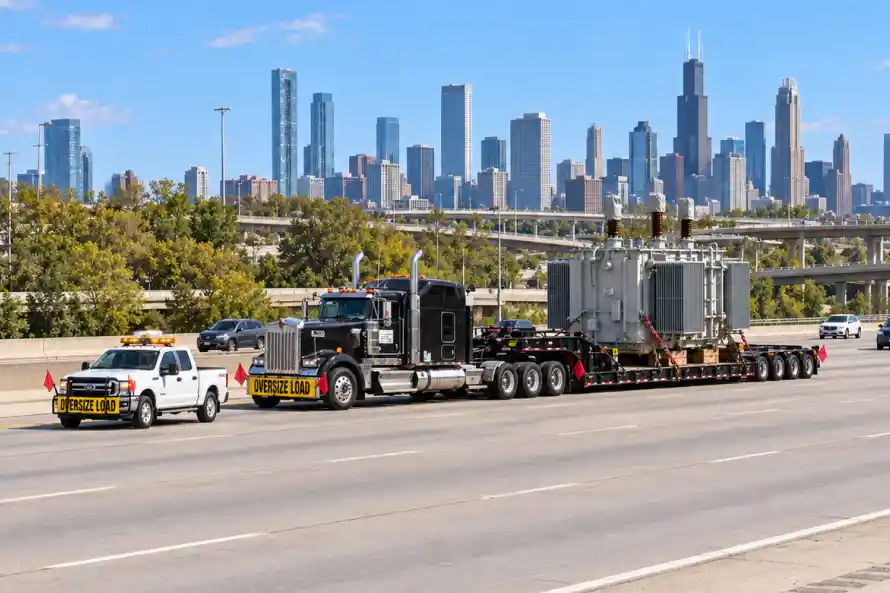
An excavator can be taken apart. So can a large industrial press, at least with enough time, lifting equipment and people who know what they’re doing. That doesn’t necessarily mean either machine should be dismantled before going on a truck.
This distinction becomes important when the cargo exceeds normal highway weight limits. A carrier may need to explain why the equipment is being transported as one piece rather than divided between several trailers.
The rules don’t require every heavy machine to be stripped down to its smallest components.Under 23 CFR 658.5, the carrier can treat cargo as non-divisible when breaking it into smaller loads would interfere with its intended use or destroy its value. The regulation also accounts for machinery that would take more than eight work hours to dismantle with the proper equipment.
The last condition sometimes causes confusion. Eight hours doesn’t mean the entire shipment must take less than a working day to prepare. The regulation concerns dismantling the load into smaller transportable parts.
Take a large generator mounted inside an industrial enclosure. The enclosure might have removable panels, but taking the generator out could involve disconnecting electrical equipment, removing supports and arranging a substantial lift. The fact that the assembly contains bolts doesn’t settle whether it is divisible.
A truck carrying five separate generators is another matter. They may be heavy together, but each unit can ordinarily be transported on its own.
Detachable Equipment Can Complicate Things
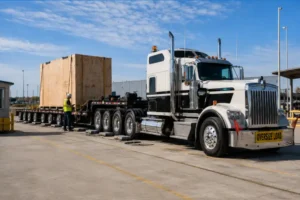
Construction machinery often travels with attachments that weren’t included in its original shipping weight. Buckets, blades and other accessories can make a considerable difference to the loaded combination.
Whether those items may remain attached is worth checking before requesting overweight load permits. Removing a bucket might be easy, while separating a machine’s main structure could require extensive work. Those two operations shouldn’t be treated as equivalent.
The carrier may need information that isn’t included in the usual equipment specifications:
- The weight recorded for the machine in its transport-ready condition.
- A description of attachments that can be taken off with standard tools.
- Time and equipment needed to separate larger assemblies.
- Any effect dismantling would have on the machinery.
For older equipment, the maintenance department may know more about these details than the person arranging transportation.
A Permit Doesn’t Settle Every Question
Even when the equipment qualifies as non-divisible, the carrier still has to find a suitable route. A bridge may have restrictions that prevent the loaded combination from crossing it, regardless of the cargo’s classification.
The paperwork can become more complicated on a journey through several states. A carrier might be asked for additional details about an attachment or the machine’s construction when applying for the next permit.
A carrier should also avoid confusing an inconvenient shipment with a non-divisible one. Moving several pieces separately may cost more, but additional expense alone doesn’t establish that the combined load qualifies.
The equipment manual won’t always answer questions about dismantling. Someone who has worked on the machine may know that removing the bucket is a routine job, while separating the main assembly involves hydraulic connections, lifting equipment and several hours of work. Those details are worth checking before the carrier decides how to describe the load in its permit application.