

Getting the dose right on any ADHD medication is rarely a one-and-done situation. Vyvanse, one of the more widely prescribed stimulant medications for attention-deficit/hyperactivity disorder, is no exception. A lot of people start a new prescription feeling hopeful, then wonder weeks later why things still feel off. Understanding how Vyvanse actually works in the body, and what variables influence whether a dose is doing its job, can make those conversations with a prescriber far more productive.
This article covers the basics of how Vyvanse is absorbed and converted in the body, what factors influence how a person responds to a given dose, how clinicians typically approach titration, and what the research says about finding therapeutic effect without unnecessary side effects. Whether you are newly prescribed or have been on Vyvanse for a while, this breakdown should give you a clearer picture of what is actually happening pharmacologically.
What Vyvanse Is and How It Works in the Body
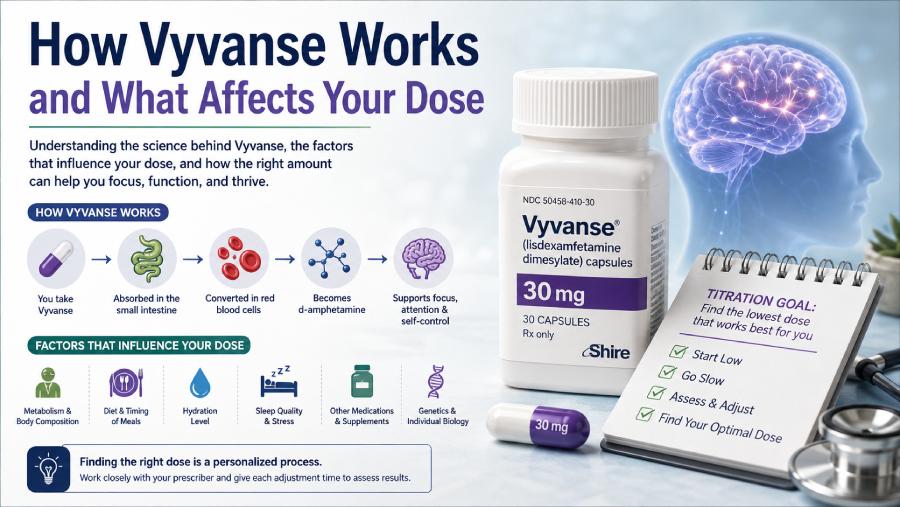
Vyvanse is the brand name for lisdexamfetamine dimesylate. Unlike traditional amphetamine salts, lisdexamfetamine is a prodrug. That means it is pharmacologically inactive on its own. After a person swallows a Vyvanse capsule, the compound travels to the small intestine, gets absorbed into the bloodstream, and is then converted by enzymes in red blood cells into d-amphetamine, which is the active form that produces therapeutic effects.
This conversion process is one of the reasons Vyvanse has a smoother onset and longer duration compared to some other stimulants. The release of active amphetamine is rate-limited by the enzymatic conversion, so blood plasma levels rise more gradually. The result is a clinical effect that typically begins within one to two hours and can last ten to fourteen hours in many patients, according to prescribing information from Takeda Pharmaceuticals, the drug’s manufacturer.
Because the active ingredient is derived through conversion rather than released directly, factors that affect that enzymatic process matter. Age, body chemistry, gastrointestinal health, and even hydration can influence how efficiently lisdexamfetamine becomes d-amphetamine. That variability is part of why two people taking the same capsule strength can have meaningfully different experiences.
Approved Doses and the Standard Titration Approach
Vyvanse is available in capsule and chewable tablet form. The FDA-approved dose range for adults with ADHD starts at 30 mg per day and goes up to a maximum of 70 mg per day. For children aged six and older, the starting dose is also typically 20 to 30 mg. Prescribers generally begin at the lower end and increase incrementally, often in 10 to 20 mg steps, with at least one to two weeks between adjustments to allow for a proper assessment of effects.
This stepwise approach is sometimes called titration to effect, meaning the goal is to find the lowest dose that provides meaningful symptom relief without producing intolerable side effects. There is no universal correct dose. A 120-pound adult and a 220-pound adult may end up on the same dose, or very different ones, because body weight is only one of many variables.
| Dose Strength | Typical Use Case | Approximate Duration of Effect |
| 20 mg | Starting dose for children (6-12) | 10 to 12 hours |
| 30 mg | Common starting dose for adults and adolescents | 10 to 14 hours |
| 40 mg | First titration step if 30 mg is insufficient | 10 to 14 hours |
| 50 mg | Mid-range therapeutic dose | 10 to 14 hours |
| 60 mg | Higher therapeutic dose | 10 to 14 hours |
| 70 mg | Maximum approved dose | 10 to 14 hours |
Factors That Influence How Well a Given Dose Works
Dosing is not just about milligrams on paper. A range of physiological and lifestyle factors can significantly affect how well Vyvanse performs for any individual. Knowing these factors can help patients have more specific, useful conversations with their doctors instead of just saying the medication is or is not working.
Metabolic Rate and Body Composition
People with higher metabolic rates may process and clear d-amphetamine faster, which can shorten the effective window of a given dose. Body composition, particularly lean muscle mass versus fat mass, plays a role in how amphetamines are distributed through the body. This is why dose-to-weight ratios are sometimes discussed in clinical literature, even though weight alone is not sufficient to predict dose needs.
Diet and Timing of Food Intake
Vyvanse can be taken with or without food, and the overall peak concentration is not dramatically altered by a meal, according to pharmacokinetic studies summarized in the drug’s prescribing information. However, taking it alongside a high-fat meal can delay the time to peak plasma levels by about an hour. For people who are sensitive to when the medication kicks in, consistent timing relative to meals can reduce variability in day-to-day experience.
Sleep Quality and Baseline Fatigue
This one is underappreciated. Chronic sleep deprivation can blunt the perceived effectiveness of stimulant medications. When someone is running on poor sleep, cognitive deficits from fatigue can overlap with ADHD symptoms in a way that makes the medication appear less effective than it actually is. Research published in journals covering sleep medicine and neuropsychiatry has consistently noted that stimulant medications perform better when underlying sleep disorders, particularly sleep apnea or insomnia, are also addressed.
Urine pH and Amphetamine Clearance
Amphetamines are pH-sensitive in how they are excreted. A more acidic urinary environment increases clearance, which shortens the drug’s effective duration. Vitamin C supplements, certain fruit juices, and acidic foods consumed in large amounts can lower urinary pH. Conversely, a more alkaline urine environment can prolong amphetamine effects. This is a relatively minor factor for most people but can matter for those who notice inconsistent medication performance from day to day.
Recognizing When a Dose Needs Reassessment
It is worth knowing the difference between a dose that is not yet optimized and one that is actively causing problems. Both situations call for a conversation with a prescriber, but the path forward differs. If focus, motivation, and impulse control remain poor despite being on medication consistently for a few weeks, the dose may simply be too low. Fatigue returning well before the end of a workday, emotional dysregulation persisting throughout the day, and difficulty starting tasks despite genuine effort to use the medication are all common indicators. A thorough overview of signs your Vyvanse dose is too low can be genuinely helpful before that appointment, because going in with specific, documented observations tends to lead to better clinical decisions than a general complaint that the medication is not helping.
On the other side, a dose that is too high often presents differently. Anxiety, restlessness, a feeling of being over-stimulated, appetite suppression significant enough to affect daily functioning, and difficulty falling asleep even when taken early in the morning are common signs that the dose may have gone past the therapeutic window. Increased heart rate and elevated blood pressure are also possibilities. These are measurable, so routine monitoring matters.
How Clinicians Fine-Tune Stimulant Prescriptions
Good stimulant prescribing is iterative. A prescriber who is calibrating a Vyvanse dose well will typically want to know not just whether symptoms improved, but when during the day they improved, how long that improvement lasted, how the comedown felt, and whether sleep was affected. Rating scales like the Adult ADHD Self-Report Scale (ASRS) or Conners’ scales for children provide structured ways to track these changes between appointments.
Patients who keep informal logs, even simple notes in a phone app about focus, mood, and energy at different times of day, give their prescribers far more useful data than a vague summary. Specificity matters. Saying that focus was good from 9 a.m. to 2 p.m. but dropped sharply after that tells a clinician something concrete about whether a dose adjustment, timing change, or possible afternoon booster dose might be appropriate.
- Track symptom relief by time of day, not just overall impression
- Note sleep onset time and quality the night after taking the medication
- Record appetite changes and hydration habits
- Document any side effects with approximate timing
- Bring this log to follow-up appointments rather than relying on memory
When Vyvanse May Not Be the Right Fit at All
Sometimes dose optimization only goes so far. If a person has tried multiple dose levels across a reasonable time frame and the results remain unsatisfactory or side effects are persistent, the issue may not be dose at all. Different stimulant formulations act differently in different people. Mixed amphetamine salts, methylphenidate-based medications, and non-stimulant options like atomoxetine or viloxazine all work through different mechanisms and may suit particular neurochemical profiles better.
There is also the question of comorbidities. Anxiety disorders, bipolar disorder, sleep disorders, and certain thyroid conditions can all complicate how ADHD presents and how well stimulants work. A thorough psychiatric and medical evaluation that rules out or addresses these conditions alongside ADHD tends to produce better outcomes than simply adjusting a single medication in isolation.
Pharmacogenomic testing, which looks at genetic variants affecting drug metabolism enzymes like CYP2D6, is available and can give prescribers a clearer picture of whether a patient is likely to be a rapid or slow metabolizer of certain compounds. While it is not yet standard practice everywhere, it is increasingly accessible and can be particularly useful when someone seems to respond unusually to standard doses.
Finding the right dose of Vyvanse is a process, not a single prescription. Understanding the pharmacology, paying attention to the details of how and when the medication works during the day, and staying in close communication with a prescriber gives that process the best chance of landing in a place that is genuinely therapeutic. The science behind stimulant dosing is well-developed; making use of it just requires asking the right questions.