
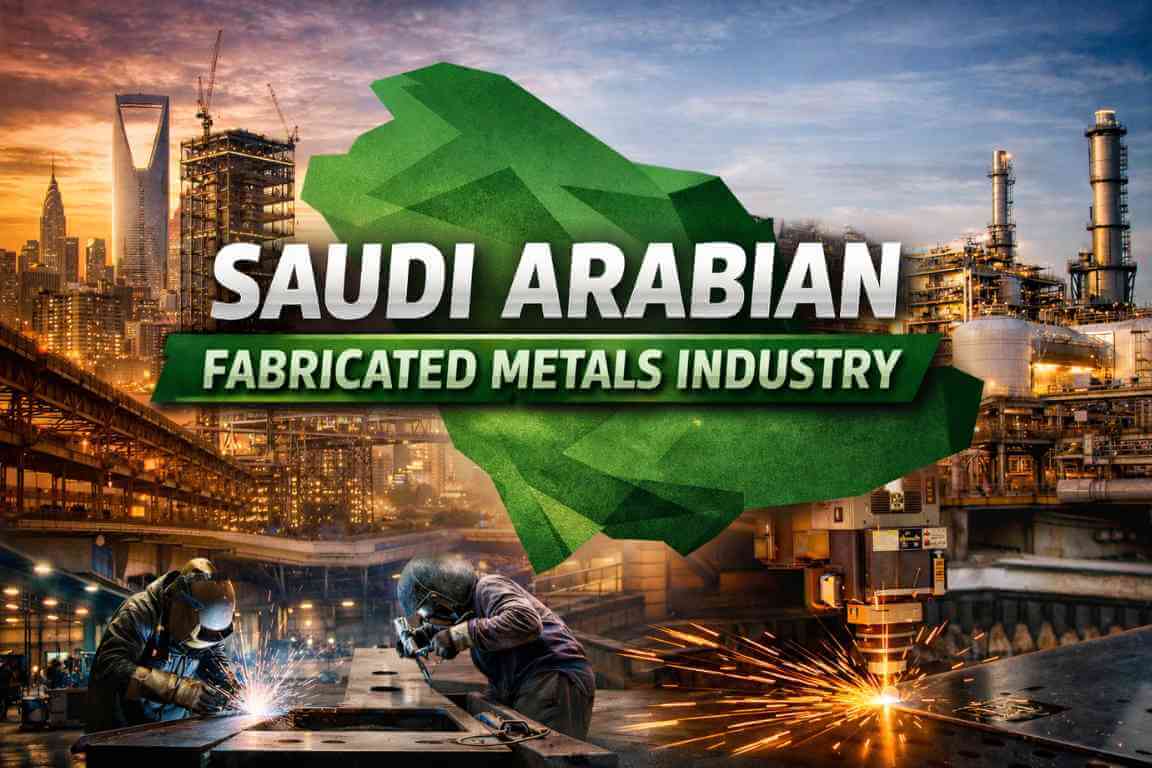
The Saudi Arabian fabricated metals industry has become one of the most important pillars of the Kingdom’s industrial ecosystem. As Saudi Arabia continues its transformation into a diversified and globally competitive economy, fabricated metal products play a central role in construction, infrastructure, energy, manufacturing, and advanced industrial projects. From large-scale structural steel to precision-engineered components, fabricated metals are essential to building the modern Saudi economy.
Driven by long-term development strategies, rapid urbanisation, and rising local manufacturing capacity, this industry is no longer limited to basic fabrication. It now includes advanced processes, modern machinery, skilled technical expertise, and compliance with international quality standards. The result is a sector that supports national development while competing regionally and internationally.
Understanding the Fabricated Metals Industry
Fabricated metals refer to metal products that are created through processes such as cutting, bending, welding, machining, and assembly. Unlike raw metal production, fabrication focuses on transforming steel, aluminium, and other metals into usable components and finished products.
In Saudi Arabia, the fabricated metals industry serves a wide range of sectors, including construction, oil and gas, power generation, transportation, and industrial manufacturing. Products range from structural steel beams and frames to pressure vessels, tanks, platforms, and custom-designed industrial components.
The industry combines engineering design with practical manufacturing, making it a critical link between raw material suppliers and end-use industries.
Strategic Importance to Saudi Arabia
The Saudi Arabian fabricated metals industry is strategically important for several reasons. First, it supports national self-sufficiency by reducing dependence on imported metal products. Second, it contributes to job creation by employing engineers, technicians, welders, machine operators, and project managers. Third, it enables large-scale development projects that define the Kingdom’s economic vision.
As Saudi Arabia invests heavily in infrastructure, industrial zones, and mega-projects, the demand for locally fabricated metal products continues to rise. Local manufacturers benefit from proximity to projects, faster delivery times, and the ability to customise solutions according to specific project requirements.
Role in Construction and Infrastructure
Construction is one of the largest consumers of fabricated metal products in Saudi Arabia. Structural steel frameworks are widely used in commercial buildings, industrial facilities, warehouses, bridges, and transport infrastructure.
The use of fabricated steel offers several advantages, including strength, durability, flexibility in design, and faster construction timelines. As urban development expands across major cities and new economic zones, the fabricated metals industry plays a vital role in meeting construction demands efficiently and safely.
Infrastructure projects such as airports, ports, railways, and highways also rely heavily on fabricated metal components for structural support, safety systems, and operational facilities.
Support for Oil, Gas, and Energy Sectors
Saudi Arabia’s energy sector remains a major driver of demand for fabricated metals. Oil and gas facilities require specialised metal products such as pressure vessels, piping systems, storage tanks, platforms, and support structures.
These products must meet strict safety, quality, and performance standards due to the demanding operating environments involved. The local fabricated metals industry has developed strong capabilities in meeting these requirements, providing reliable solutions for upstream, midstream, and downstream operations.
In addition to oil and gas, power generation projects, including conventional and renewable energy facilities, depend on fabricated metal structures for turbines, frames, supports, and transmission infrastructure.
Contribution to Manufacturing and Industrial Growth
Beyond construction and energy, the Saudi Arabian fabricated metals industry supports a wide range of manufacturing activities. Industrial plants require customised metal components for machinery, production lines, storage systems, and maintenance operations.
As Saudi Arabia expands its manufacturing base, including automotive, defence, food processing, and heavy industries, the need for high-quality fabricated metal products continues to grow. Local fabrication capabilities allow manufacturers to source components quickly and adapt designs to evolving production needs.
This close integration between fabrication and manufacturing strengthens the overall industrial ecosystem.
Technological Advancements and Modern Processes
Technology has transformed the fabricated metals industry in Saudi Arabia. Modern fabrication facilities now use advanced machinery such as CNC cutting systems, automated welding equipment, laser cutting machines, and precision bending tools.
These technologies improve accuracy, reduce waste, and enhance productivity. Computer-aided design and manufacturing systems allow fabricators to produce complex components with consistent quality while meeting tight project timelines.
Automation and digital tools also improve safety by reducing manual handling and exposure to hazardous tasks. As technology adoption continues, the industry becomes more efficient and competitive on a global scale.
Quality Standards and Compliance
Quality and compliance are critical factors in the Saudi Arabian fabricated metals industry. Projects often require adherence to international engineering and safety standards, especially in sectors such as oil and gas, power, and infrastructure.
Local fabricators invest in quality management systems, skilled inspection teams, and certified welding procedures to meet these requirements. This commitment to quality enhances trust among clients and supports the industry’s reputation for reliability and professionalism.
Compliance with environmental and safety regulations also reflects the industry’s alignment with sustainable and responsible manufacturing practices.
Workforce and Skills Development
A skilled workforce is essential to the success of the fabricated metals industry. Saudi Arabia has placed increasing emphasis on technical training and workforce development to support industrial growth.
Fabrication facilities employ a mix of engineers, designers, welders, machinists, quality inspectors, and project coordinators. Continuous training ensures that workers stay updated with new technologies, safety standards, and fabrication techniques.
The development of local talent not only strengthens the industry but also contributes to long-term economic sustainability and knowledge transfer.
Challenges Facing the Industry
Despite its growth, the Saudi Arabian fabricated metals industry faces several challenges. Fluctuations in global metal prices can affect production costs and profit margins. Managing these variations requires efficient procurement strategies and long-term planning.
Another challenge is the need for continuous investment in technology and skills. As global standards evolve, fabricators must upgrade equipment and training to remain competitive.
Project timelines and capacity management can also be demanding, especially during periods of high construction activity. Effective project planning and coordination are essential to meeting client expectations.
Opportunities for Expansion and Innovation
The future offers significant opportunities for the fabricated metals industry in Saudi Arabia. Large-scale development initiatives and industrial diversification create sustained demand for metal products.
There is growing potential in specialised fabrication, such as modular construction components, customised industrial systems, and advanced engineered products. Innovation in materials, design optimisation, and digital manufacturing can further enhance competitiveness.
Export opportunities also exist as Saudi-based fabricators build capabilities that meet international standards. By serving regional and global markets, the industry can expand beyond domestic demand.
Environmental Considerations and Sustainability
Sustainability is becoming increasingly important in industrial manufacturing. The fabricated metals industry contributes to sustainability by promoting efficient material use, recycling, and long-lasting products.
Steel and other metals are highly recyclable, reducing environmental impact over their lifecycle. Modern fabrication processes aim to minimise waste, improve energy efficiency, and support environmentally responsible practices.
As sustainability standards continue to rise, the industry is well positioned to align with national and global environmental goals.
Future Outlook of the Saudi Arabian Fabricated Metals Industry
The outlook for the Saudi Arabian fabricated metals industry remains strong. Continued investment in infrastructure, industrial development, and advanced manufacturing ensures steady demand for fabricated metal products.
Technological innovation, workforce development, and quality enhancement will further strengthen the sector. As Saudi Arabia advances its economic transformation, fabricated metals will remain a foundation of industrial progress and national development.
The industry’s ability to adapt, innovate, and deliver high-quality solutions positions it as a long-term contributor to economic growth and industrial resilience.
Conclusion
The Saudi Arabian fabricated metals industry stands as a vital component of the Kingdom’s industrial framework. Supporting construction, energy, manufacturing, and infrastructure, it plays a decisive role in shaping modern Saudi Arabia. Through technological advancement, skilled labour, and commitment to quality, the industry continues to evolve and expand.
As national development accelerates, the fabricated metals sector will remain essential to building sustainable infrastructure, advancing industrial capabilities, and strengthening economic diversification. Its continued growth reflects both the ambition of the Kingdom and the resilience of its industrial base.