

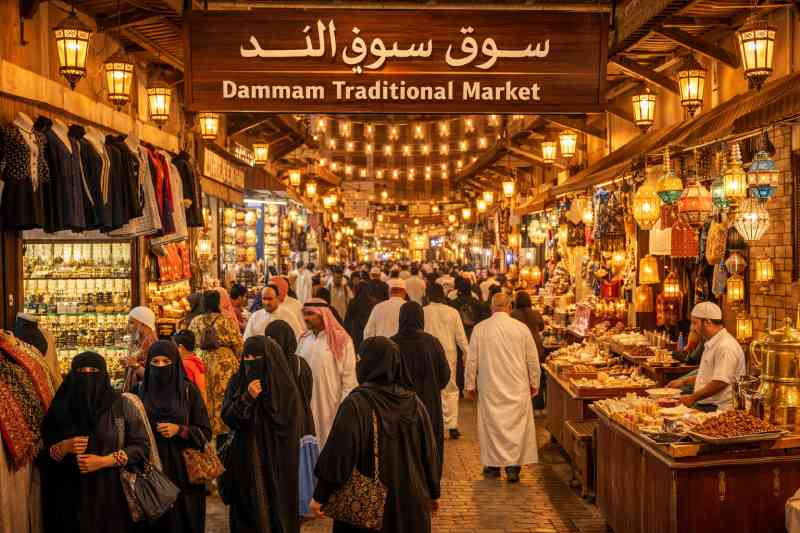
Dammam Traditional Market is one of the most vibrant cultural landmarks in Saudi Arabia’s Eastern Province, offering visitors a rare chance to experience the authentic rhythm of Arabian marketplace life. Nestled in the heart of Dammam on Al Qazaz Street, this historic souq is more than a shopping destination; it is a living expression of local tradition, commerce, hospitality, and heritage. For travellers, residents, and cultural enthusiasts alike, Dammam Traditional Market captures the soul of old Arabia in a way modern malls simply cannot.
In a city known for rapid development, gleaming towers, and expanding infrastructure, this traditional market remains deeply rooted in history. Its narrow lanes, bustling stalls, fragrant spices, colourful textiles, and lively voices create an atmosphere that feels timeless. Whether you come to buy handcrafted goods, admire traditional Saudi garments, or simply soak in the energy of local life, Dammam Traditional Market offers an unforgettable experience.
The Historical Importance of Dammam Traditional Market
Dammam has evolved from a modest coastal settlement into a major economic hub in the Kingdom of Saudi Arabia. Yet amid all this urban growth, Dammam Traditional Market has preserved the old commercial traditions that once defined the city.
Traditional markets in Saudi Arabia have always served as centres of trade, culture, and social interaction. Before the rise of shopping malls and digital retail, souqs were the heart of every town. Dammam Traditional Market continues this legacy by maintaining the essence of old Arabian commerce where bargaining, personal relationships, and trust shape transactions.
This market reflects the region’s commercial heritage and stands as one of the oldest recognised traditional shopping spaces in Dammam, making it an important cultural site for understanding the city’s past.
Location and Accessibility
Dammam Traditional Market is located in the Al Qazaz district, a central and accessible part of the city. Its strategic location makes it easy for both locals and tourists to visit. Positioned close to major roads and transport routes, the market is often lively from late afternoon until night.
Visitors arriving by car usually find nearby parking areas, though evenings can become crowded, especially during weekends and festive seasons such as Ramadan and Eid.
The market generally becomes busiest after sunset, when families, workers, and tourists gather to shop and socialise.
The Atmosphere: A Sensory Arabian Experience
One of the greatest charms of Dammam Traditional Market is its atmosphere. Unlike modern shopping centres with polished floors and controlled lighting, this market is alive with organic energy.
As you enter, you are greeted by:
- The aroma of oud, incense, and spices
- The vivid colours of fabrics and abayas
- The sounds of merchants calling customers
- The sight of traditional lantern-lit storefronts
- The warm greetings exchanged between shopkeepers and buyers
This sensory richness makes every visit memorable. The market is not designed merely for purchasing goods; it is meant to be experienced slowly, with curiosity and appreciation.
What You Can Buy at Dammam Traditional Market
Dammam Traditional Market is famous for its wide variety of traditional and practical goods. Its diversity is one of the reasons it remains so popular.
Traditional Clothing
The market is especially known for beautiful abayas at affordable prices. Women from across the region visit to purchase elegant embroidered styles, particularly before Eid celebrations. Traditional Saudi garments for men are also available, including thobes, scarves, and headwear.
Jewellery and Accessories
Many stalls sell gold-plated ornaments, silver jewellery, handmade accessories, and decorative pieces inspired by Arabian design traditions.
Perfumes and Oud
Arabic perfumes are among the most sought-after items in the market. Visitors can find concentrated oils, oud wood, incense burners, and signature regional fragrances.
Household Goods
From decorative lamps to handcrafted trays, carpets, and ceramics, the market offers many items that reflect Arabian aesthetics and craftsmanship.
Shoes and Leather Products
Traditional sandals, leather slippers, handbags, and belts are available in many shops, often at negotiable prices.
Religious and Festival Items
During Ramadan and Hajj seasons, the market becomes especially busy with shoppers buying prayer mats, tasbih beads, Islamic books, and festive decorations.
Food and Local Flavours
No visit to Dammam Traditional Market is complete without sampling local snacks. Small food stalls scattered through the market offer:
- Fresh dates
- Arabic sweets
- Samosas and fried snacks
- Traditional Saudi tea
- Cardamom coffee
These stalls add warmth and flavour to the shopping experience, inviting visitors to pause and enjoy the slower pace of souq life.
Why Locals Love Dammam Traditional Market
For many residents, Dammam Traditional Market is not just a place to shop. It is part of family tradition.
Parents bring children to teach them about heritage. Elderly residents return to shops they have visited for decades. Young couples browse together before weddings. Seasonal shopping before Ramadan creates emotional ties that go beyond commerce.
The market remains relevant because it serves practical needs while preserving emotional and cultural continuity.
Bargaining Culture in the Market
Negotiation is an important part of traditional souq culture. Unlike fixed-price retail environments, bargaining at Dammam Traditional Market is expected in many shops.
Tips for bargaining respectfully:
- Begin with polite greetings
- Ask prices calmly without pressure
- Offer a lower but reasonable counter-price
- Smile and remain respectful
- Accept when the seller cannot reduce further
Bargaining here is not confrontation; it is part of the social tradition.
Best Time to Visit
The most enjoyable times to explore Dammam Traditional Market are:
Evening Hours
The market becomes most vibrant after 5 PM, when temperatures cool and shops fully open.
Ramadan Season
Ramadan brings extraordinary life to the market, with festive decorations, special goods, and longer shopping hours.
Eid Periods
Before Eid, the market reaches peak excitement as families prepare clothing, gifts, and festive supplies.
Winter Months
Cooler weather from November to February makes walking through the market especially pleasant.
Cultural Significance in Modern Saudi Arabia
Saudi Arabia is changing rapidly under Vision 2030, with expanding tourism, entertainment, and urban development. Yet places like Dammam Traditional Market remain essential because they preserve authentic identity.
As malls become increasingly globalised, traditional markets offer something irreplaceable:
- Cultural continuity
- Local craftsmanship
- Human interaction
- Heritage preservation
Dammam Traditional Market acts as a bridge between generations, ensuring younger Saudis remain connected to traditional commercial culture.
Comparing Dammam Traditional Market to Modern Shopping Malls
Modern malls in Dammam provide comfort, climate control, and international brands. However, they cannot replicate the emotional richness of a traditional souq.
In malls you get:
- Predictable pricing
- Global retail chains
- Modern dining courts
In Dammam Traditional Market you get:
- Authentic Saudi cultural immersion
- Handmade and local goods
- Personal interaction with merchants
- Historic atmosphere
Both have value, but only the traditional market offers heritage as part of the experience.
Travel Tips for First-Time Visitors
If you are visiting Dammam Traditional Market for the first time, keep these tips in mind:
- Carry cash, as some small vendors may not accept cards
- Wear comfortable walking shoes
- Visit in the evening for the liveliest atmosphere
- Bring reusable shopping bags
- Respect local dress customs
- Take time to explore side alleys for hidden treasures
Photography and Respectful Exploration
Photography is often allowed in public walkways, but always ask permission before photographing shopkeepers or merchandise displays. Respect privacy, especially in family shopping areas.
Being courteous enhances your experience and reflects appreciation for local customs.
The Future of Dammam Traditional Market
As tourism in Saudi Arabia expands, markets like this are gaining renewed attention. Cultural tourism increasingly values authentic destinations, and Dammam Traditional Market is perfectly positioned to become an even stronger attraction for international visitors.
Preserving its traditional architecture, merchant culture, and artisanal identity will be essential in maintaining its authenticity for future generations.
FAQs
What is Dammam Traditional Market famous for?
Dammam Traditional Market is best known for affordable abayas, traditional Saudi clothing, perfumes, jewellery, household goods, and authentic Arabian shopping culture.
Where is Dammam Traditional Market located?
It is located in Al Qazaz district on Al Qazaz Street in central Dammam, Saudi Arabia.
What is the best time to visit Dammam Traditional Market?
Evenings are the best time to visit, especially during Ramadan, Eid seasons, and cooler winter months when the market is most lively.
Conclusion
Dammam Traditional Market is far more than a shopping destination; it is a living cultural treasure that reflects the enduring spirit of Saudi Arabia’s heritage. In every fragrance, fabric, greeting, and alleyway, the market tells stories of trade, family, and tradition passed down through generations. For anyone seeking an authentic glimpse into the heart of Dammam, this timeless souq remains one of the city’s most rewarding and meaningful experiences.