

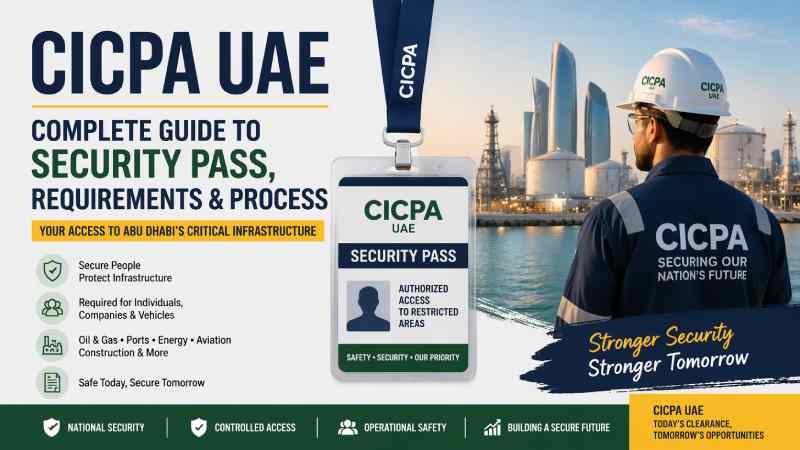
The CICPA UAE system is one of the most important yet often misunderstood security frameworks in the United Arab Emirates, particularly in Abu Dhabi. Whether you are an engineer, contractor, logistics provider, or company planning to operate in restricted zones, understanding how CICPA works is not optional—it is essential.
In simple terms, CICPA is the authority that controls access to some of the most sensitive and strategically important locations in the UAE. These include oil fields, energy plants, ports, coastal facilities, and government-protected infrastructure. Without proper clearance, even highly skilled professionals cannot step inside these zones.
Table of Contents
ToggleWhat is CICPA UAE?
The Critical Infrastructure and Coastal Protection Authority (CICPA) is a government body in Abu Dhabi responsible for safeguarding critical infrastructure and coastal areas.
The authority ensures that:
- Only authorized individuals can access restricted zones
- Companies working in strategic sectors meet strict security standards
- Infrastructure like oil fields, power plants, and ports remain protected
Over time, CICPA UAE has become a cornerstone of national security and industrial safety in the region.
Why CICPA UAE Exists
The UAE is home to some of the world’s most valuable energy assets and infrastructure. Protecting these assets requires a system that goes beyond basic security checks.
CICPA UAE was created to:
- Prevent unauthorized access to sensitive facilities
- Reduce risks of sabotage, espionage, and accidents
- Ensure only verified personnel operate in high-risk environments
- Maintain operational integrity in industries like oil and gas
Without such a framework, managing large-scale infrastructure safely would be nearly impossible.
The Role of CICPA UAE in National Security
CICPA UAE is not just an administrative authority—it is deeply connected to national defense and internal security.
Key Security Functions
- Screening individuals before granting access
- Monitoring entry and exit points in restricted areas
- Coordinating with law enforcement and military units
- Enforcing strict compliance policies for companies
Because of this, CICPA clearance is treated with the same seriousness as high-level background verification.
Industries That Require CICPA UAE Clearance
CICPA UAE applies mainly to sectors that involve critical infrastructure.
Major Industries Covered
Oil and Gas
Companies working with ADNOC and other energy providers must comply with CICPA regulations. This includes:
- Engineers
- Field technicians
- Maintenance teams
Energy and Utilities
Power plants, water desalination units, and energy distribution systems require strict access control.
Ports and Maritime Operations
Ports are considered highly sensitive areas due to trade and logistics importance.
Construction and Engineering
Any project inside restricted zones requires CICPA-approved workers and vehicles.
Aviation and Transport
Certain airport operations and logistics hubs also fall under CICPA jurisdiction.
What is a CICPA Pass?
A CICPA Pass is a security permit issued to individuals, companies, or vehicles allowing access to restricted areas.
Types of CICPA Passes
Individual Pass
Issued to employees working in secure locations.
Company Registration
Organizations must first register with CICPA before applying for employee passes.
Vehicle Pass
Required for vehicles entering restricted zones.
Temporary Pass
Issued for short-term projects or visitors.
Why CICPA UAE Pass is Mandatory
Without a CICPA pass:
- You cannot enter restricted zones
- You cannot perform work in oil fields or ports
- Your company cannot execute contracts in those areas
This makes CICPA clearance a non-negotiable requirement for many industries.
CICPA UAE Application Process
The process is structured and requires coordination between companies and authorities.
Step-by-Step Process
1. Company Registration
Before anything else, the company must be registered with CICPA UAE.
Requirements typically include:
- Valid trade license
- Abu Dhabi Chamber registration
- Contract with a relevant authority (e.g., ADNOC)
2. Employee Documentation
Each employee must submit:
- Passport copy
- Emirates ID
- Visa details
- Passport-size photographs
3. Security Clearance
Background checks are conducted to verify:
- Identity
- Employment history
- Criminal record
4. Approval and Issuance
Once approved, the CICPA pass is issued with a validity period.
Documents Required for CICPA UAE
For Companies
- Trade license
- Chamber of Commerce registration
- Contract agreement
- Establishment card
For Employees
- Passport copy
- Emirates ID
- Visa copy
- Employment contract
- Medical fitness certificate (sometimes required)
CICPA UAE Approval Time
Approval timelines can vary depending on:
- Type of pass
- Completeness of documents
- Background verification
Typically:
- Standard processing: 5–15 working days
- Complex cases: Longer
Delays often happen due to incomplete documentation or security verification issues.
CICPA UAE Costs
Costs vary depending on:
- Type of pass
- Duration
- Company requirements
Fees may include:
- Application charges
- Renewal fees
- Vehicle registration fees
Companies usually handle these costs as part of operational expenses.
Common Challenges in CICPA UAE Process
Even experienced companies face difficulties with CICPA.
1. Documentation Errors
Incorrect or incomplete documents can delay approval.
2. Security Clearance Delays
Background checks may take longer for certain nationalities or roles.
3. Company Eligibility Issues
Not all companies qualify for CICPA registration.
4. Renewal Management
Expired passes can halt operations immediately.
CICPA UAE and ADNOC Relationship
CICPA UAE works closely with ADNOC (Abu Dhabi National Oil Company).
Most oil and gas projects require:
- CICPA-approved workforce
- CICPA-registered companies
Without compliance, companies cannot operate in ADNOC-controlled areas.
CICPA UAE Compliance Requirements
Companies must follow strict rules:
- Maintain updated employee records
- Ensure only authorized personnel enter sites
- Renew passes before expiry
- Follow safety and security guidelines
Non-compliance can result in:
- Fines
- Suspension of access
- Contract termination
CICPA UAE Renewal Process
Passes are not permanent and must be renewed.
Renewal Steps
- Submit updated documents
- Verify employment status
- Pay renewal fees
- Undergo re-verification if required
Timely renewal is critical to avoid operational disruptions.
CICPA UAE for Contractors and Freelancers
Freelancers generally cannot apply directly. They must:
- Be sponsored by a registered company
- Work under an approved contract
This ensures accountability and traceability.
CICPA UAE Vehicle Registration
Vehicles entering restricted zones also need approval.
Requirements
- Vehicle registration documents
- Insurance
- Driver’s CICPA pass
This ensures that both driver and vehicle are authorized.
CICPA UAE and Safety Standards
CICPA is not just about access—it also promotes safety.
It ensures:
- Workers are trained
- Equipment is compliant
- Operations follow strict guidelines
This reduces accidents in high-risk environments.
CICPA UAE Digital Transformation
In recent years, CICPA UAE has moved toward digital systems.
Improvements Include:
- Online applications
- Faster processing
- Digital tracking of passes
This has made the system more efficient and transparent.
CICPA UAE Renaming to NGPD
CICPA UAE has undergone restructuring and is now part of the National Guard Permits Division (NGPD).
However:
- The term “CICPA” is still widely used
- Most people still refer to passes as CICPA passes
This change reflects broader integration into national security frameworks.
Future of CICPA UAE
The system is expected to evolve further with:
- Advanced biometric verification
- AI-based security screening
- Integration with national databases
This will make access control even more secure and efficient.
Practical Example
Imagine a contractor hired to work on an offshore oil platform in Abu Dhabi.
Without CICPA UAE clearance:
- The worker cannot enter the site
- The company cannot deploy staff
- The project cannot proceed
With CICPA:
- Entry is authorized
- Work can begin safely
- Compliance is maintained
Key Benefits of CICPA UAE
- Enhanced national security
- Controlled access to sensitive areas
- Reduced operational risks
- Improved safety standards
- Better accountability
Conclusion
CICPA UAE is far more than a permit system—it is a critical pillar of the UAE’s security and infrastructure management. From oil fields to ports and energy facilities, it ensures that only authorized individuals and companies operate in sensitive environments.
For businesses, understanding and complying with CICPA UAE requirements is essential for smooth operations. For professionals, obtaining CICPA clearance opens doors to some of the most important projects in the region.