

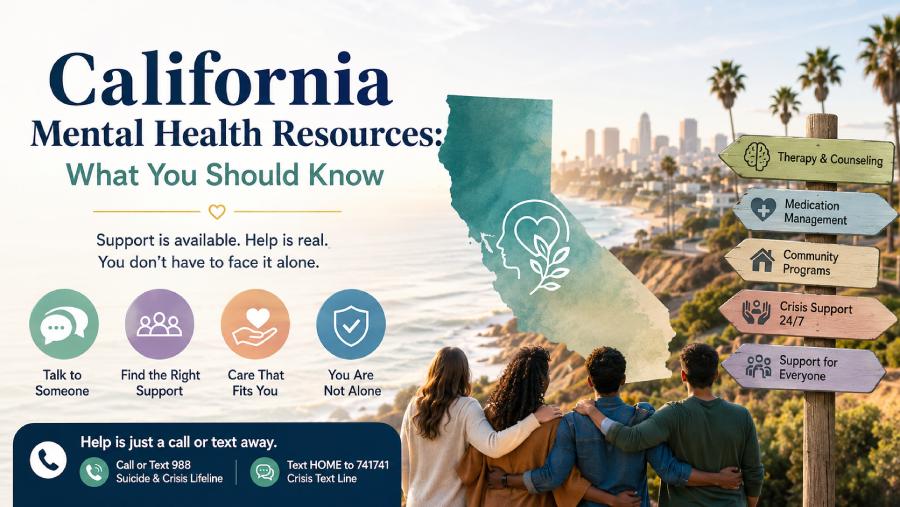
Millions of Californians live with a mental health condition at some point in their lives, yet a significant number never connect with professional support. Some don’t know where to start. Others worry about cost, stigma, or whether their symptoms are serious enough to warrant help. The truth is that mental health care exists on a wide spectrum, and understanding the resources available across the state can make the difference between struggling in silence and actually getting better.
This article walks through how California’s mental health system is structured, what types of support are available, how to pay for care, and what to look for when choosing a provider. Whether you’re researching for yourself or trying to help someone close to you, the information here is meant to give you a clearer picture of your options.
How California’s Mental Health System Is Organized
California operates one of the largest public mental health systems in the United States. At the state level, the Department of Health Care Services oversees Medi-Cal behavioral health benefits. County Mental Health Plans, one for each of California’s 58 counties, are responsible for delivering those services locally. This means the specific programs available to you depend, in part, on where you live.
For people who don’t qualify for Medi-Cal, private insurance, employer-sponsored plans, and out-of-pocket payment are the main pathways. California’s Mental Health Parity law requires most health insurance plans to cover mental health and substance use disorder services at the same level as physical health services. That’s a meaningful protection, though it doesn’t always prevent delays or denials in practice.
The Mental Health Services Act, passed by voters in 2004 as Proposition 63, added a 1% tax on incomes over $1 million to fund expanded community mental health programs. According to the California Department of Health Care Services, this has generated billions of dollars for prevention, early intervention, and treatment programs statewide. It’s one reason California has more diverse mental health infrastructure than many other states.
Common Mental Health Conditions Treated in California
Mental health conditions vary widely in how they present and how they’re treated. The following are among the most commonly diagnosed conditions that Californians seek care for.
- Major depressive disorder: persistent low mood, loss of interest, fatigue, and changes in sleep or appetite lasting at least two weeks.
- Generalized anxiety disorder: excessive, difficult-to-control worry about everyday situations that interferes with daily functioning.
- Post-traumatic stress disorder (PTSD): intrusive memories, avoidance, and heightened alertness following exposure to a traumatic event.
- Bipolar disorder: cycles of depressive episodes and periods of elevated or irritable mood, sometimes with reduced need for sleep and impulsive behavior.
- Obsessive-compulsive disorder (OCD): recurring unwanted thoughts paired with repetitive behaviors performed to reduce distress.
- Schizophrenia and related psychotic disorders: symptoms may include hallucinations, disorganized thinking, and difficulty distinguishing what is real.
- Substance use disorders: often co-occurring with other mental health conditions, requiring integrated treatment approaches.
According to the National Alliance on Mental Illness (NAMI), approximately 1 in 5 adults in the U.S. experiences a mental illness in any given year. For California, with a population exceeding 39 million, that translates to roughly 7 to 8 million adults affected annually. Rates of anxiety and depression rose sharply after 2020, and the state has been working to expand access to care to meet that increased demand.
Types of Mental Health Treatment and What to Expect
Treatment for mental health conditions is not one-size-fits-all. The appropriate level of care depends on symptom severity, diagnosis, personal history, and practical factors like schedule and location. Here’s a general overview of the main treatment settings.
| Level of Care | Setting | Best Suited For |
| Outpatient therapy | Private office or telehealth | Mild to moderate symptoms, ongoing maintenance |
| Intensive Outpatient Program (IOP) | Clinic, several sessions per week | Moderate symptoms needing more than weekly therapy |
| Partial Hospitalization Program (PHP) | Clinic or hospital, full days | Acute symptoms not requiring overnight stay |
| Inpatient/residential | Hospital or residential facility | Severe symptoms, safety concerns, stabilization |
| Crisis stabilization | Crisis center or emergency department | Immediate danger, acute psychiatric crisis |
Psychotherapy, often called talk therapy, is a cornerstone of most treatment plans. Cognitive Behavioral Therapy (CBT) has the strongest research base for conditions like depression, anxiety, and PTSD. Dialectical Behavior Therapy (DBT) is particularly effective for people who experience intense emotional swings or engage in self-harmful behavior. Eye Movement Desensitization and Reprocessing (EMDR) is widely used for trauma.
Medication is another common component of care. Psychiatrists are licensed to prescribe, and in California, psychiatric nurse practitioners can prescribe as well. Medication doesn’t cure mental illness, but it can reduce symptoms enough to make therapy and daily functioning more manageable. Some people use medication short-term; others find it helpful long-term. Both are valid paths, and that decision is best made with a prescribing provider.
Finding a Provider: Practical Steps
Searching for a therapist or psychiatrist can feel overwhelming, especially when you’re already struggling. A few straightforward steps can simplify the process.
- Check your insurance: Call the member services number on your insurance card and ask for a list of in-network behavioral health providers in your area. Ask about your copay, deductible, and whether you need a referral.
- Use a directory: Psychology Today, Open Path Collective, and Therapy Den are searchable directories where you can filter by specialty, insurance, location, and therapeutic approach.
- Contact your county mental health plan: If you’re uninsured or on Medi-Cal, your county’s mental health plan is required to connect you with services. Contact information for each county is available through the California Department of Health Care Services website.
- Ask your primary care doctor: General practitioners frequently have referral relationships with mental health providers and can sometimes expedite the process.
- Consider telehealth: Telehealth significantly expanded during the pandemic and remains available. It can be a practical option if local providers have long waitlists or if transportation is a barrier.
One resource worth knowing about is https://camentalhealth.com/, which provides information about mental health services available to Californians and can be a useful starting point when trying to understand local options and treatment types.
Paying for Mental Health Care in California
Cost is one of the most common barriers people cite when they don’t seek mental health care. Understanding your options can reduce that barrier substantially.
Medi-Cal
California has expanded Medi-Cal eligibility significantly in recent years. As of 2024, all income-eligible Californians regardless of immigration status can qualify for full-scope Medi-Cal. Medi-Cal covers a wide range of mental health services, including therapy, psychiatric evaluation, medication management, and crisis services. Specialty Mental Health Services are available for people with more serious conditions.
Covered California
For those who don’t qualify for Medi-Cal but don’t have employer insurance, Covered California is the state’s health insurance marketplace. Plans purchased here must include behavioral health benefits, and premium subsidies may be available depending on income. Open enrollment runs annually, though qualifying life events allow for mid-year enrollment.
Sliding Scale and Community Clinics
Federally Qualified Health Centers (FQHCs) and community mental health clinics operate throughout California on a sliding fee scale, meaning cost is adjusted based on income. These clinics serve uninsured and underinsured patients and often offer integrated care, meaning physical and mental health services under one roof. Searching “FQHC near me” or using the HRSA Health Center Finder can help locate one.
Crisis Resources Available Around the Clock
When someone is in immediate danger or experiencing a psychiatric emergency, knowing what to do is critical. California has several crisis resources that operate 24 hours a day, seven days a week.
- 988 Suicide and Crisis Lifeline: Dialing or texting 988 connects callers to trained crisis counselors. This number replaced the previous 10-digit crisis line in 2022.
- Crisis Text Line: Text HOME to 741741 to connect with a trained crisis counselor via text message.
- Mobile Crisis Teams: Many California counties now have mobile crisis teams staffed by mental health clinicians who respond to calls instead of, or alongside, law enforcement.
- Psychiatric Emergency Services: Hospital emergency departments can provide psychiatric evaluation and stabilization when someone is in immediate danger.
If someone is in immediate physical danger, calling 911 remains the appropriate first step. However, for situations that are psychiatric in nature rather than physically dangerous, the 988 line and mobile crisis teams are often better equipped to respond in ways that reduce the risk of further trauma.
The Role of Cultural Competence in Mental Health Care
California is one of the most diverse states in the country, and mental health care works best when it accounts for cultural context. Attitudes toward mental illness, help-seeking behaviors, and the relationship between mind and body vary across cultures. A therapist who understands your background and language can make a real difference in whether treatment feels relevant and effective.
When searching for a provider, it’s worth asking whether they have experience working with people from your cultural or linguistic background. Many directories allow filtering by language spoken. Organizations like the Asian Mental Health Project, the Black Emotional and Mental Health Collective (BEAM), and similar groups specifically connect people with culturally informed care. California also funds programs specifically targeting underserved communities through its Mental Health Services Act funding.
Mental health is not separate from physical health, culture, environment, or history. Understanding the full picture of resources available in California is a reasonable place to start, whether you’re in a difficult moment right now or building awareness for the future. The system is large and sometimes complex, but it has more entry points than most people realize, and reaching out is always a valid first step.