

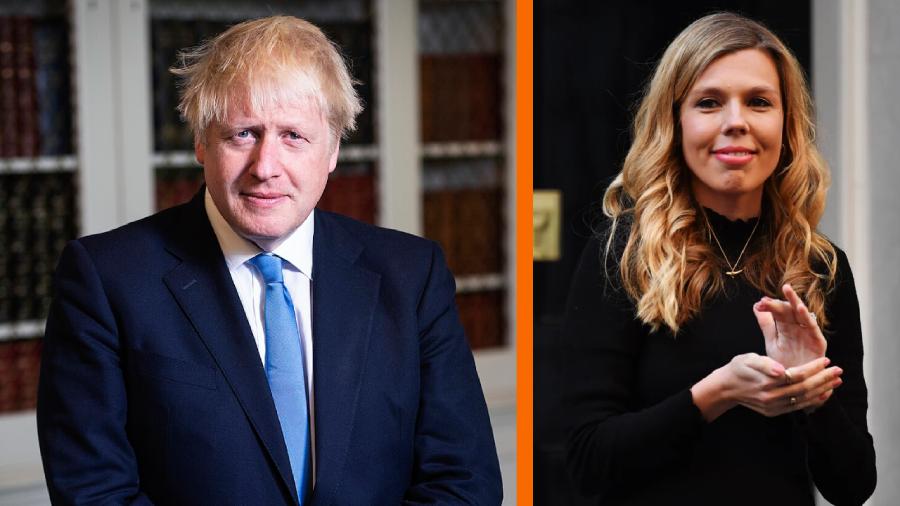
Boris Johnson is one of those rare political figures who genuinely needs no introduction, yet somehow always manages to surprise you with the next chapter. Whether you remember him as the floppy-haired Mayor of London cycling through traffic, the man who championed Brexit, or the Prime Minister who navigated the chaos of a global pandemic, there is always another layer to this man’s story. Love him or find him utterly exasperating, you cannot deny that Boris has left a permanent mark on British political history. His journey from a privileged upbringing to the very top of Downing Street is packed with ambition, controversy, charm, and more than a few spectacular stumbles. But beyond the headlines about policy and scandal, there is a deeply personal side to his story that involves the people closest to him, including his marriages, his children, and the family dynamics that have shaped the man behind the public persona. So, let us dig into the full picture of who Boris Johnson really is, what he has accomplished, and the people who have stood beside him through all of it.
Quick Bio
| Detail | Information |
|---|---|
| Full Name | Alexander Boris de Pfeffel Johnson |
| Date of Birth | 19 June 1964 |
| Place of Birth | Upper East Side, Manhattan, New York City, USA |
| Nationality | British (renounced US citizenship in 2016) |
| Education | Eton College; Balliol College, Oxford |
| Political Party | Conservative Party |
| First Wife | Allegra Mostyn-Owen (married 1987, annulled 1993) |
| Second Wife | Marina Wheeler (married 1993, divorced 2020) |
| Third Wife | Carrie Johnson (married 2021, née Symonds) |
| Children | At least eight known children |
| Notable Children | Lara Lettice Johnson, Theodore Apollo Johnson, among others |
| Prime Minister Tenure | July 2019 – September 2022 |
| Previous Key Roles | Mayor of London (2008–2016), Foreign Secretary (2016–2018) |
| Memoir | Unleashed (published 2024) |
| Current Activity | Public speaking circuit, writing, and commentary |
Early Life and Education
Boris Johnson entered the world in New York City, which is a detail many people find surprising about someone so deeply associated with British politics. His father, Stanley Johnson, was studying economics at Columbia University at the time, while his mother, Charlotte Fawcett, was an artist from a distinguished family. The family moved around quite a bit during his early years, spending time in London and Brussels, which gave young Boris an unusually international childhood for someone who would grow up to become a champion of British sovereignty.
His time at Eton College, where he arrived on a King’s Scholarship, was transformative. It was during these years that he dropped his first name Alexander and started going exclusively by Boris, a move that was part of cultivating the eccentric, larger-than-life persona that would eventually become his trademark. Teachers noted his brilliance but also his laziness, a combination that somehow never held him back. He excelled in English and Classics, became editor of the school newspaper, and joined Pop, the exclusive prefect society that was essentially Eton’s social elite.
From Eton he moved to Balliol College, Oxford, where he read Classics and was elected president of the Oxford Union in 1986. Oxford in the 1980s was a breeding ground for future British leaders, and Boris rubbed shoulders with David Cameron, Michael Gove, Jeremy Hunt, and many others who would later dominate Westminster politics. He also joined the Bullingdon Club, that infamous drinking society known for its wealthy members and rowdy behavior. He later expressed regret about this association, particularly after photographs of him and Cameron in Bullingdon Club attire became tabloid fodder.
The Journalism Years
Before Boris Johnson became a household name in politics, he built his reputation through journalism, and it was a career that suited his personality perfectly. He started at The Times but was famously sacked for fabricating a quote. Rather than ending his career, this episode barely slowed him down. He moved to The Daily Telegraph, where he became the Brussels correspondent and developed a particular talent for writing entertaining, if sometimes exaggerated, stories about European Union bureaucracy. His columns were witty, provocative, and enormously popular with readers who were already skeptical of the EU.
His writing style was distinctive and infectious. He had a gift for making complex political topics feel accessible and amusing, which gave him a public profile that most journalists could only dream of. He became editor of The Spectator in 1999, a role he held until 2005, and used that platform to further build his brand as the clever, funny, somewhat chaotic Tory intellectual who did not take himself too seriously. This media presence laid the groundwork for his transition into frontline politics, because by the time he stood for Parliament, millions of people already knew exactly who Boris was.
Rise Through Politics and the Mayor of London Era
Boris Johnson entered Parliament in 2001 as the MP for Henley, a safe Conservative seat in Oxfordshire. He quickly made a name for himself, though not always for the reasons his party leadership would have preferred. He was entertaining, quotable, and frequently in trouble for various gaffes and off-color remarks. But his popularity with the public was undeniable, and it was this mass appeal that led him to run for Mayor of London in 2008.
Winning the London mayoralty was a significant achievement. He defeated the incumbent Ken Livingstone and suddenly became one of the most visible politicians in the country. During his eight years as mayor, he oversaw the 2012 London Olympics, a period that is widely regarded as a highlight of his public career. He introduced the Boris Bikes cycle-sharing scheme, championed infrastructure projects, and became a genuinely recognizable figure on the world stage. His tenure had its critics, of course, but the general consensus was that he brought energy and visibility to the role. He was reelected in 2012, beating Livingstone again, which cemented his status as a serious political force, not just a celebrity politician.
Brexit and the Road to Downing Street
If there is one single event that defined Boris Johnson’s political legacy more than anything else, it is Brexit. When the 2016 referendum on EU membership was announced, Boris made the dramatic decision to back the Leave campaign, a move that stunned many of his colleagues and arguably changed the course of British history. His influence on the campaign was enormous. He traveled the country in a bus emblazoned with a disputed claim about sending 350 million pounds a week to the NHS, and his charisma and media presence helped tip the balance toward the Leave vote.
After the referendum, the political landscape shifted rapidly. David Cameron resigned, and Theresa May became Prime Minister. Boris was appointed Foreign Secretary, a role that brought him considerable international exposure but also plenty of controversy. He resigned from that post in 2018 over disagreements with May’s Brexit strategy, positioning himself as the champion of a cleaner, harder break from the EU.
When May’s premiership eventually collapsed under the weight of parliamentary deadlock, Boris Johnson won the Conservative leadership contest in July 2019 and became Prime Minister. He called a snap general election in December 2019 and led the Conservatives to their biggest majority since 1987, winning 365 seats. His campaign slogan, “Get Brexit Done,” resonated powerfully with voters who were exhausted by years of uncertainty. The UK formally left the EU on 31 January 2020, and Johnson negotiated the Trade and Cooperation Agreement that would define the future relationship between Britain and Europe.
The Pandemic and the Fall
Just weeks after celebrating Brexit, Boris Johnson was confronted with the defining crisis of a generation. The COVID-19 pandemic swept across the globe, and his government’s response became the subject of intense scrutiny and debate. The early months were chaotic, with criticism over delayed lockdowns, inadequate protective equipment for healthcare workers, and confusing public messaging. Johnson himself contracted COVID-19 in March 2020 and was hospitalized, spending time in intensive care at St Thomas’ Hospital. His recovery was dramatic and personal, and it briefly generated a wave of public sympathy.
On the vaccine front, however, his government delivered one of Europe’s fastest rollout programs. The development and distribution of the Oxford-AstraZeneca vaccine became a genuine source of national pride, and the speed at which the UK vaccinated its population was praised internationally. This was arguably the high point of his pandemic response.
But the scandals eventually caught up with him. The “Partygate” affair, involving gatherings at Downing Street during lockdown restrictions, proved devastating. Reports emerged of parties held at Number 10 while the public was forbidden from visiting dying relatives or attending funerals. The contrast was impossible to defend, and it eroded public trust in Johnson and his government. Combined with other controversies, including the handling of misconduct allegations against a senior MP, the pressure became overwhelming. On 7 July 2022, Boris Johnson announced his resignation as Conservative leader and Prime Minister.
Boris Johnson and Allegra Mostyn-Owen
The personal life of Boris Johnson has been every bit as eventful as his political career. His first serious relationship was with Allegra Mostyn-Owen, whom he met while they were both students at Oxford. Allegra Mostyn-Owen was the daughter of the writer William Mostyn-Owen and the Italian writer Gaia Servadio, and she had been a cover girl for Tatler magazine. The two married in 1987, shortly after graduating. However, the marriage was short-lived and was annulled in 1993. It was a youthful union that simply did not survive the pressures of early adulthood, and both moved on with their lives relatively quickly. Allegra Mostyn-Owen later remarried and largely stepped out of the public eye, though her name remains permanently linked to Johnson’s early biography.
The Marriage to Marina Wheeler
Shortly after his first marriage ended, Boris Johnson married Marina Wheeler in 1993, just twelve days after his annulment from Allegra Mostyn-Owen was finalized. Marina Wheeler is a highly accomplished barrister specializing in public and human rights law, and she brought a level of intellectual gravitas to the partnership that complemented Johnson’s more flamboyant public persona. Together, they had four children: Lara Lettice Johnson, Milo Arthur Johnson, Cassia Peaches Johnson, and Theodore Apollo Johnson.
Marina Wheeler stood by Johnson through decades of political life, including his time as Mayor of London and his rise to national prominence. However, their marriage was repeatedly tested by reports of Johnson’s infidelities. In 2018, the couple announced they were separating, and their divorce was finalized in 2020. Marina Wheeler has spoken publicly about the challenges she faced during this period, including a battle with cervical cancer that she was diagnosed with around the same time as the separation. Despite the personal difficulties, she has maintained her professional career and written about her family’s roots in India in her book The Lost Homestead.
Lara Lettice Johnson, their eldest child, has carved out her own path as a writer and journalist. She studied at the University of St Andrews and has written for several publications. Theodore Apollo Johnson, one of their younger children, has largely been kept out of the public eye, as Marina Wheeler has been protective of her children’s privacy despite the intense media scrutiny that comes with being connected to one of Britain’s most high-profile politicians.
Life With Carrie Johnson
The most significant personal relationship in Boris Johnson’s recent life is undoubtedly his marriage to Carrie Johnson, née Symonds. Carrie Johnson is a former communications director for the Conservative Party and a prominent environmental campaigner. The couple began their relationship while Boris was still going through his divorce from Marina Wheeler, and their partnership quickly became tabloid front-page material.
Carrie Johnson and Boris married on 29 May 2021 in a small, private ceremony at Westminster Cathedral. The wedding was notable for its intimacy, with only around thirty guests in attendance due to pandemic restrictions. Carrie wore a rented white dress, a detail that charmed some commentators and was seen as a deliberate contrast to the extravagance often associated with political power couples.
Together, Carrie Johnson and Boris have had children, including a son named Wilfred Lawrie Nicholas Johnson, born in April 2020, and a daughter, Romy Iris Charlotte Johnson, born in December 2021. Carrie Johnson has been credited with having a significant influence on Boris’s policy positions, particularly regarding environmental issues and animal welfare. She played a role in pushing for the government’s stance on trophy hunting imports and has been vocal about conservation causes.
However, Carrie Johnson has also been a lightning rod for criticism. Some commentators and political opponents accused her of having too much influence over government appointments and policy decisions. She has largely ignored these attacks and continued her advocacy work, building a profile that extends well beyond being the Prime Minister’s wife. Her influence on the Number 10 operation was a topic of constant media speculation during Johnson’s time in office, and she remains a notable figure in British public life.
Post-Downing Street Life and Current Activities
Since leaving office in September 2022, Boris Johnson has kept himself remarkably busy. He published his memoir Unleashed in 2024, a book that offered his personal account of his time in power and predictably generated plenty of headlines and debate. He has also been active on the international speaking circuit, commanding significant fees for appearances around the world.
In April 2026, he visited the University of Miami’s Herbert Business School, where he spoke to students about leadership, geopolitics, and the forces shaping the modern business environment. He is also scheduled to speak at the St. Louis Speakers Series in October 2026. Beyond the speaking engagements, he has remained vocal on social media and in opinion columns, particularly regarding the Russia-Ukraine conflict, a cause he championed strongly during his time as Prime Minister.
His post-political career mirrors those of many former world leaders who leverage their experience and connections into lucrative speaking and writing careers. Whether he has any ambitions to return to frontline politics remains a subject of occasional speculation, though most observers consider it unlikely given the circumstances of his departure.
His Legacy and Lasting Impact
Evaluating the legacy of Boris Johnson is a genuinely complex exercise. On one hand, he achieved things that many thought impossible. He won the Brexit referendum, secured a massive parliamentary majority, and delivered the UK’s departure from the European Union. His government’s vaccine rollout during the pandemic was a legitimate success story. His early and vocal support for Ukraine following Russia’s 2022 invasion earned him genuine respect on the international stage, and he hosted the COP26 climate summit in Glasgow in 2021.
On the other hand, the scandals that plagued his time in office cannot be ignored. Partygate was a devastating blow to public trust, and the manner of his departure left a bitter taste for many. His critics point to a pattern of dishonesty, a cavalier attitude toward rules, and a governing style that prioritized short-term political wins over long-term institutional health. The leveling-up agenda, his flagship domestic policy, is widely seen as having underdelivered.
Perhaps the most accurate assessment is that Boris Johnson was a leader of enormous talent and enormous flaws, and that the two were inextricably linked. The same qualities that made him a brilliant campaigner and communicator also made him a chaotic and sometimes reckless administrator. History will likely judge him as a consequential Prime Minister, for better and for worse.
FAQs
How many times has Boris Johnson been married?
Boris Johnson has been married three times: first to Allegra Mostyn-Owen, then to Marina Wheeler, and currently to Carrie Johnson.
Who is Carrie Johnson?
Carrie Johnson is the current wife of Boris Johnson, a former Conservative Party communications director, and an environmental campaigner known for her advocacy on animal welfare and conservation issues.
How many children does Boris Johnson have?
Boris Johnson is known to have at least eight children, including Lara Lettice Johnson and Theodore Apollo Johnson from his marriage to Marina Wheeler, and Wilfred and Romy from his marriage to Carrie Johnson.
Why did Boris Johnson resign as Prime Minister?
He resigned in July 2022 following a series of scandals, most notably the Partygate affair involving lockdown-breaking gatherings at Downing Street, which led to a mass resignation of government ministers.
What is Boris Johnson doing now in 2026?
He is active on the international speaking circuit, published his memoir Unleashed in 2024, and continues to comment on global affairs, particularly the Russia-Ukraine conflict.
Conclusion
Boris Johnson’s story is far from over, but even at this point, there is more than enough material to fill several biographies. From his birth in New York to his education at Eton and Oxford, from his journalism career to the heights of Downing Street, and through three marriages to Allegra Mostyn-Owen, Marina Wheeler, and Carrie Johnson, his life has been a relentless series of reinventions. His children, including Lara Lettice Johnson and Theodore Apollo Johnson, are part of a sprawling family story that reflects the personal complexity behind the public image. Whether you see him as a visionary leader who got Brexit done and stood up for Ukraine, or as a fundamentally unserious figure who treated the rules as optional, one thing is beyond dispute: Boris Johnson has been one of the most fascinating and consequential British politicians of the twenty-first century. And knowing Boris, the next chapter is probably already being written.