

If you’ve ever stood over a stinky, soggy compost pile wondering why nothing seems to be breaking down, you’re not alone. Composting sounds simple in theory, but a traditional heap can test your patience fast. That’s exactly where a compost tumbler comes in. It takes the messiest, most back-breaking part of composting and turns it into something you can knock out in about thirty seconds. Let’s dig into what these things actually are, how they work, and whether one belongs in your backyard.
So, What Exactly Is a Compost Tumbler?
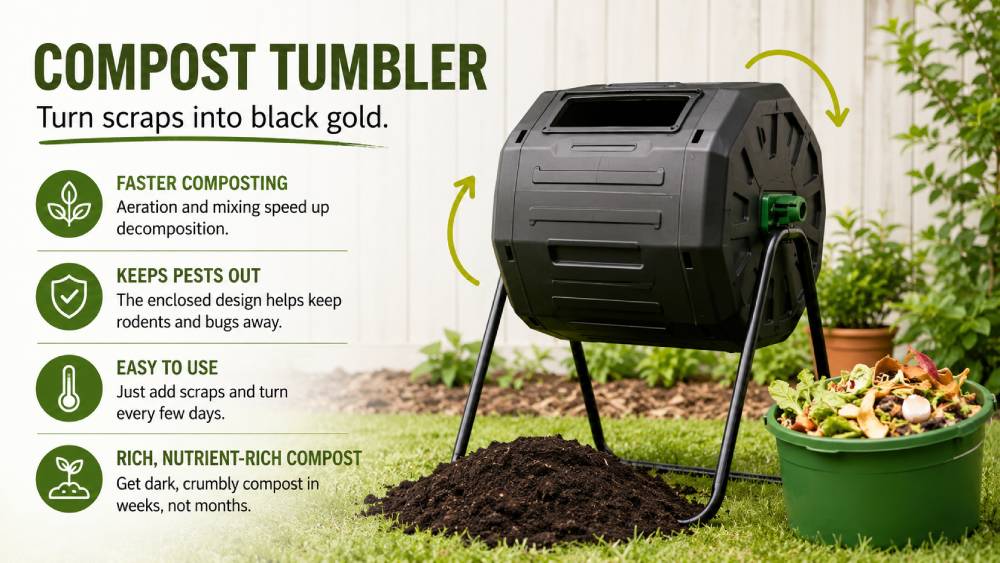
A compost tumbler is a sealed, barrel-shaped container that sits on a frame or stand and spins around a central axis. You toss in your kitchen scraps and yard waste, close the lid, and give the drum a few rotations every couple of days. That spinning motion does the heavy lifting that you’d normally do by hand with a pitchfork. Because the whole thing is enclosed and lifted off the ground, it keeps the heat in, keeps the pests out, and creates a tidy little ecosystem where microbes can get to work without much interference from you. Think of it as composting with training wheels, except the training wheels make it faster too.
How a Compost Tumbler Actually Works
The magic isn’t really magic at all, it’s just good airflow and trapped heat. When you rotate the drum, you’re mixing fresh material into the stuff that’s already decomposing and dragging oxygen into every corner of the pile. Composting microbes are aerobic, meaning they need that oxygen to thrive, and they reward you by generating heat as they chew through the waste. A well-managed tumbler can climb well above 130 degrees Fahrenheit inside, and the better-insulated models can push past 160. That heat speeds everything up dramatically and even breaks down materials that would normally rot slowly or attract trouble. The sealed design holds all that warmth in, so the process keeps humming along even when the weather outside isn’t cooperating.
Why Turning the Pile Matters So Much
Here’s the thing most beginners underestimate: turning a compost pile isn’t optional busywork, it’s the engine of the whole operation. When organic matter sits undisturbed, the center can go anaerobic, which is a fancy way of saying it suffocates and starts to smell like a swamp. Turning reintroduces oxygen, redistributes moisture, and brings cooler outer material into the hot core where the real action happens. With an open heap, this means wrestling a pitchfork into a dense, heavy mass, which is genuinely exhausting and is the reason so many compost piles get abandoned. A tumbler reduces that whole chore to a quick spin of the drum, which is honestly the single biggest reason people stick with composting once they switch over.
Compost Tumbler vs. Traditional Compost Bin
A lot of folks lump tumblers and bins together, but they’re built for different priorities. A standard compost bin sits directly on the ground with an open bottom, which lets worms and soil organisms wander in but also lets heat escape and gives rodents an easy way to burrow underneath. Bins usually hold a good deal more volume, often two to three times what a tumbler holds for the same footprint, so they’re great if you generate mountains of yard waste. Tumblers, on the other hand, trade some capacity for speed, cleanliness, and convenience. They’re enclosed, elevated, and easy to turn, which makes them faster and far less inviting to pests. If your priority is sheer volume, a bin wins. If your priority is getting usable compost quickly without a wrestling match, the tumbler takes it.
The Real Benefits of Using a Compost Tumbler
The headline benefit is speed. Under good conditions, a tumbler can hand you finished compost in as little as three to six weeks, which feels almost suspiciously quick compared to the months a passive pile can take. Beyond that, the sealed and raised design keeps rats, raccoons, and other uninvited guests from setting up camp in your scraps. It’s also gentler on your body, since there’s no bending, lifting, or stabbing involved, just a simple turn of the drum. The contained system keeps odors down and the whole setup looking neat, which matters a lot if you’ve got close neighbors or a small yard. And because the heat stays trapped inside, many tumblers keep working through cold snaps that would shut a regular pile down completely.
The Downsides Worth Knowing About
I’d be doing you a disservice if I made tumblers sound flawless, because they aren’t. The most obvious limitation is capacity, since most tumblers hold somewhere between four and fifteen cubic feet, which fills up faster than you’d expect once you’re committed to composting. They can also get genuinely tough to spin when fully loaded, especially the models that pivot around a center axle and carry all the weight in the bottom half. Because they’re sealed off from the ground, beneficial worms and soil life can’t naturally migrate in, so you’re relying entirely on the microbial action you create. They also tend to cost more than a basic bin, and if you keep adding fresh scraps to a single chamber, you’ll never quite get a fully “finished” batch because new material keeps resetting the clock.
Single-Chamber vs. Dual-Chamber Models
This distinction trips up a lot of first-time buyers, so it’s worth understanding before you spend any money. A single-chamber tumbler processes one big batch at a time, which works beautifully if you can resist tossing in new scraps while a batch is cooking. The problem is that real life rarely cooperates, and most of us keep generating kitchen waste every single day. That’s where dual-chamber tumblers shine. They essentially give you two composters in one unit, so you can let one side finish maturing while you keep feeding the other. By the time the second chamber fills up, the first one is ready to harvest, and you just rotate your attention back and forth. For continuous, year-round composting, a dual chamber is almost always the smarter choice.
What to Look for When You’re Buying One
Not all tumblers are built the same, so a little scrutiny goes a long way. Start with the frame and the central axis, because those parts bear the entire weight of a full drum and need to be genuinely sturdy if you want years of use rather than months. Check the handles or hand grips too, since flimsy ones will frustrate you every time you go to turn a heavy load. Think about materials as well: metal tumblers are durable and can get nice and hot in the sun, while plastic and resin models tend to be lighter and easier to wipe clean. Finally, be realistic about size. A bigger drum makes more compost but becomes harder to spin when full, so pick a capacity you can comfortably rotate even on a lazy day.
What You Can and Can’t Toss In
Composting is part art, part chemistry, and knowing your inputs keeps things smooth. The greens, which provide nitrogen, include fruit and vegetable scraps, coffee grounds, fresh grass clippings, and plant trimmings. The browns, which provide carbon, cover dry leaves, shredded cardboard, paper, straw, and small wood chips. Most of the time you’ll want to avoid meat, dairy, oily foods, and pet waste, though a well-insulated tumbler that runs genuinely hot can sometimes handle small amounts of fish, fat, or meat that would be off-limits in a cold open pile. When in doubt, leave the questionable stuff out, because it’s far easier to keep a tumbler healthy than to rescue one that’s gone sour.
Getting the Green-to-Brown Balance Right
If there’s one ratio that separates great compost from a slimy mess, it’s the balance between greens and browns. A rough target many gardeners aim for is around two to three parts brown material to one part green by volume, though you’ll learn to read your pile rather than obsess over exact math. Too many greens and the contents turn wet, heavy, and smelly, which is your cue to mix in more dry browns to soak up the excess and restore airflow. Too many browns and everything stalls because the microbes don’t have enough nitrogen to fuel their work. The contents should feel like a wrung-out sponge, damp but never dripping, and a quick handful test after each spin tells you most of what you need to know.
How Long Until You Get Finished Compost?
This is the question everyone wants answered, and the honest reply is “it depends.” With the right balance of materials, consistent turning, and warm conditions, a tumbler can produce dark, crumbly, earthy-smelling compost in roughly three to six weeks. Cooler temperatures, an unbalanced mix, or the habit of constantly adding fresh scraps will stretch that timeline considerably. The finished product should look like rich, dark soil, smell pleasant and forest-like, and show no recognizable chunks of food. Once it reaches that stage, let it cure for a week or two before spreading it, which lets the biology settle and ensures it won’t rob nutrients from your plants when you mix it into the garden.
Common Mistakes Beginners Make
The most frequent slip-up is treating a single-chamber tumbler like a never-ending trash can, dumping in scraps daily and then wondering why nothing ever finishes. Another classic error is letting the contents get too wet, usually from too many greens and not enough dry material, which leads to that telltale sour smell. Some people forget to turn it regularly, which defeats the entire point of owning a tumbler in the first place. And plenty of newcomers cram it absolutely full, only to discover they can barely rotate the drum and there’s no room left for the air the process desperately needs. Leaving a little breathing space and turning every two or three days fixes most of these problems before they start.
Simple Tips to Speed Things Up
Want compost faster? Chop your scraps into smaller pieces before they go in, because smaller surface area means microbes can break things down quicker. Keep an eye on moisture and adjust with browns or a splash of water as needed, since the biology grinds to a halt at either extreme. Position the tumbler somewhere it’ll catch sun, which helps the interior stay warm and active. Turn it on a consistent schedule rather than whenever you happen to remember, and consider tossing in a handful of finished compost or garden soil to introduce a starter population of hungry microbes. None of these tricks are complicated, but stacked together they can shave real time off your wait.
FAQs
Do compost tumblers really work better than a pile?
Yes, for most home gardeners they do. The sealed, rotating design traps heat and forces oxygen into the material every time you spin it, which speeds decomposition and can deliver finished compost in weeks rather than months. You trade some capacity for that speed and convenience.
How often should I turn a compost tumbler?
Every two to three days is the sweet spot. Regular turning keeps oxygen moving through the material and stops the center from going anaerobic and smelling sour. If you forget for a week here and there it won’t ruin anything, but consistency is what keeps the process fast.
Can you put meat and dairy in a compost tumbler?
Generally it’s best to skip meat, dairy, and oily foods. That said, a well-insulated tumbler that runs genuinely hot can sometimes break down small amounts of fish, fat, or meat that would attract pests in an open pile. When in doubt, leave it out.
Why does my compost tumbler smell bad?
A sour or swampy smell almost always means too much wet “green” material and not enough dry “brown” material. Mix in shredded cardboard, dry leaves, or paper to soak up the excess moisture and restore airflow. The contents should feel like a wrung-out sponge, never dripping.
How long does a compost tumbler take to make finished compost?
Under good conditions, expect three to six weeks. Warm temperatures, the right green-to-brown balance, and consistent turning speed things up, while cold weather or constantly adding fresh scraps will stretch the timeline. Let the finished batch cure for a week or two before using it.
Conclusion
A compost tumbler is, at its heart, a clever solution to the one problem that derails most would-be composters: the tedious, exhausting work of turning a pile. By sealing your scraps inside a rotating drum, it traps heat, invites in oxygen with a simple spin, keeps pests at arm’s length, and delivers finished compost in weeks rather than months. It isn’t the right fit for everyone, since it holds less than a sprawling bin and asks you to manage your inputs a bit more thoughtfully, but for most home gardeners the trade-off is more than worth it. If you’ve been on the fence about composting because it felt like too much hassle, a tumbler might be the thing that finally makes it click. Get the green-to-brown balance right, give it a turn every few days, and before long you’ll be scooping out rich, dark compost that your garden will absolutely love.