

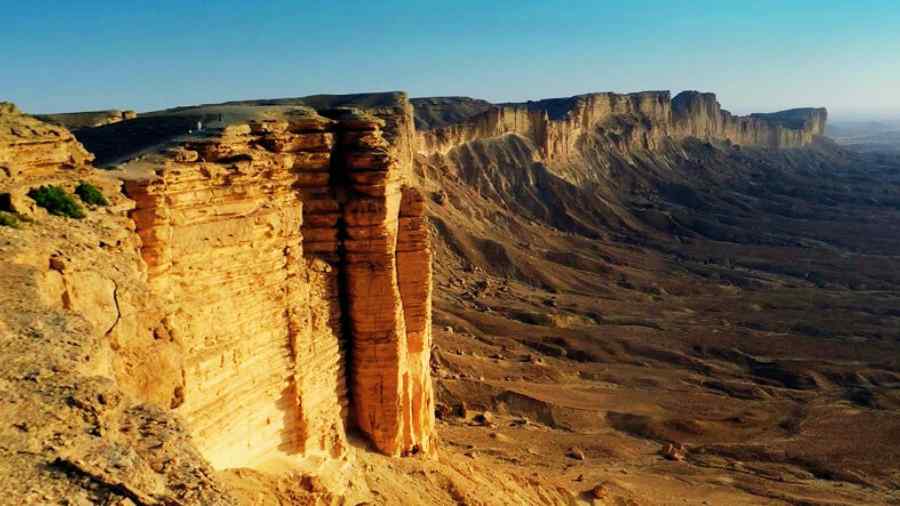
Saudi Arabia is home to some of the most striking natural formations in the world, and among them, Tuwaiq Mountain stands as a symbol of endurance, history, and breathtaking geological beauty. This massive escarpment stretches dramatically across the heart of the Arabian Peninsula and has shaped trade routes, settlement patterns, and cultural identity for centuries. Today, it represents a blend of geological wonder, tourism value, and deep cultural meaning for the Kingdom.
The Historical Identity of Tuwaiq Mountain
Tuwaiq Mountain, known in Arabic as “Jabal Tuwaiq,” is not a single peak but a long, towering ridge that historically guided travelers across central Arabia. For centuries, merchants, nomads and early kingdoms used the valleys and routes surrounding this natural barrier for navigation. Before modern roads existed, the escarpment acted like a compass line stretching across the desert, ensuring people always had a sense of direction.
Its name originates from the Arabic word ṭawq, meaning “collar” or “ring,” symbolising the way the escarpment encircles parts of the Najd plateau. In ancient poetry and literature, it was often mentioned as a representation of greatness and stability. This cultural symbolism survives even today: Tuwaiq has become a national icon representing strength and perseverance.
Geological Formation and Structure
To understand the grandeur of Tuwaiq Mountain, it is essential to appreciate how it was formed. Millions of years ago, the area that is now central Saudi Arabia was covered by shallow seas. Layers of sediments—limestone, sandstone, and other marine materials—accumulated over long periods. When tectonic movements lifted the region, erosion carved out the dramatic steep western face and the gently sloping eastern side that define the escarpment today.
The ridge extends nearly 800 kilometers from north to south, forming a natural spine across Saudi Arabia. Its height varies along the way, with some points rising hundreds of meters above the surrounding terrain. These variations create unique viewpoints, cliffs and valleys that attract geologists, hikers and photographers alike. Fossils of ancient corals, shells and marine life are still found in the limestone layers, offering evidence of the region’s prehistoric underwater origins.
Location and Surrounding Regions
Tuwaiq Mountain runs through the central Najd region, one of the most historically important areas of the Arabian Peninsula. It stretches near Riyadh, the capital city, making it easy for millions of residents and visitors to explore it.
To the west of the escarpment, the landscape drops into wide plains that extend toward the heart of the desert. To the east, the land slopes toward populated areas that have benefitted from the protection and strategic value of this natural barrier. Several towns, agricultural areas and small settlements exist along its base, particularly around valleys that receive seasonal rainwater.
Cultural Significance and Modern Symbolism
Over generations, Tuwaiq Mountain has been associated with pride and strength in Saudi culture. It represents the landscape that shaped early Arabian tribes, trade and settlement. Many traditional poems reference its shape, height and presence as symbols of courage and persistence.
In recent years, the mountain has also become a modern emblem of Saudi ambition and resilience. Its image is used in branding, speeches and national events. The phrase “like Tuwaiq” has been popularized to describe determination and unshakable will—qualities that the Kingdom aims to project in its modern identity and development projects.
Tuwaiq Mountain and Tourism Growth
One of the most visible transformations in recent years is the rise of tourism around Tuwaiq Mountain. With Saudi Arabia opening more of its heritage and natural sites to visitors, the escarpment has become a major attraction.
The most famous destination along the ridge is the “Edge of the World.” This dramatic viewpoint features vertical cliffs dropping hundreds of meters into a vast, empty plain. It is one of the most photographed places in the country and a favourite spot for nature enthusiasts, adventurers and photographers.
Visitors often travel here during early morning or late afternoon to witness how sunlight creates deep shadows and golden hues across the cliffs. The silence and expanse of the plain below offer a rare sense of stillness and perspective that many people find unforgettable.
Activities Around Tuwaiq Mountain
The region provides several activities suitable for different types of travellers:
Hiking
Hiking trails range from gentle slopes to more challenging rocky climbs. The terrain is diverse, making it ideal for both beginners and experienced hikers. The views from higher points allow visitors to see miles of desert and sky, giving a sense of scale that is difficult to find elsewhere.
Off-Road Adventures
Many visitors use four-wheel-drive vehicles to explore the rougher areas. The rocky tracks, narrow passes and desert surroundings make off-roading a thrilling experience. However, safety precautions are essential because some slopes and gravel areas can be difficult to navigate.
Photography and Stargazing
Thanks to minimal light pollution, the escarpment is an excellent place for night-sky photography. During cloudless nights, the stars appear bright and clear, creating a perfect environment for stargazers and astrophotographers.
Nature Observation
Although the region is mostly desert, it supports unique plant and animal life adapted to its harsh climate. Small shrubs, desert trees and seasonal flowers appear after rare rainfall. Wildlife such as birds, foxes and desert reptiles are occasionally seen by observant visitors.
Accessibility and Travel Tips
Because Tuwaiq Mountain is close to Riyadh, many visitors can reach the area within an hour or two by car. However, certain parts require more careful planning.
A four-wheel-drive vehicle is recommended for off-road sections, especially near the cliff edges. Travellers should bring plenty of water, sun protection, and proper footwear. The weather can be extremely hot during the day, and cold at night, so planning around sunrise or sunset is wise.
Mobile signal may be weak in some isolated areas. Travelling in groups or with a guide can be beneficial, particularly for those new to desert exploration.
Environmental Considerations
Preserving Tuwaiq Mountain’s natural beauty is essential, especially as tourism increases. Visitors are encouraged to respect the environment by avoiding littering, sticking to safe paths, and not disturbing the natural formations.
Saudi Arabia has begun incorporating sustainability plans into its tourism strategies, ensuring that iconic natural sites like Tuwaiq remain protected for future generations. Educational programs, guided tours and designated visitor areas are part of this ongoing effort.
The Mountain’s Role in Modern Saudi Vision
Tuwaiq Mountain has not only historical and geological value; it also plays a symbolic role in Saudi Arabia’s Vision 2030 initiative. This vision encourages the growth of tourism, environmental preservation, and cultural pride. By highlighting natural landmarks such as Tuwaiq, the country aims to broaden its appeal to global visitors and strengthen national identity.
New development projects around the Riyadh region, including cultural centres, entertainment complexes and eco-tourism initiatives, further elevate the mountain’s importance as a national treasure.
Why Tuwaiq Mountain Captivates the World
Tuwaiq Mountain stands out not merely because of its physical size but because of the story it tells. Its layered rocks hold traces of ancient seas, its cliffs carry the memories of caravans and travellers, and its presence continues to inspire modern generations.
Few natural formations combine geology, history, culture and modern symbolism in such a powerful way. The escarpment’s grand scale and quiet beauty make it one of the most remarkable places in the Arabian Peninsula.
Conclusion
Tuwaiq Mountain is more than a geographical formation; it is a living monument shaped by millions of years of natural history and centuries of cultural significance. Its towering cliffs, fossil-rich rocks and scenic valleys offer a unique blend of natural wonder and historical depth. As Saudi Arabia continues to highlight its natural heritage, Tuwaiq Mountain will remain a central symbol—representing strength, resilience and timeless beauty. This remarkable landscape not only strengthens national pride but also draws global interest, ensuring its legacy continues for generations to come.