

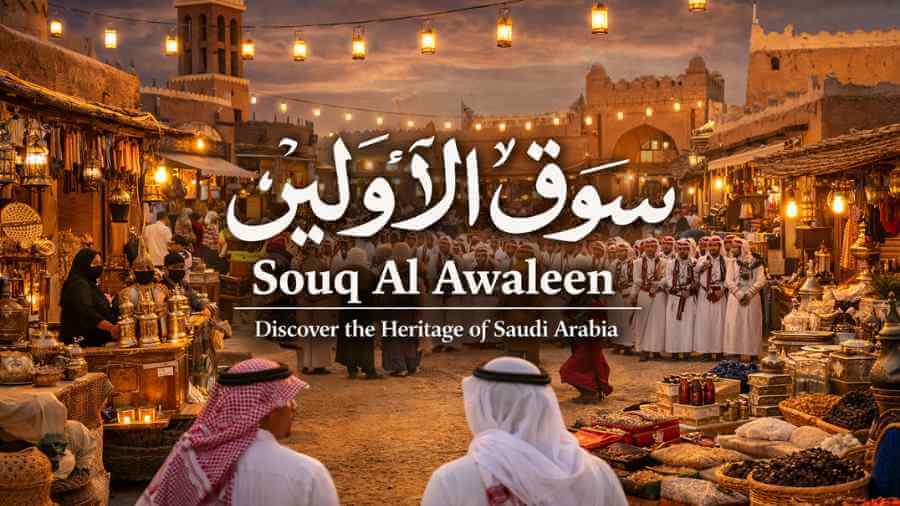
Souq Al Awaleen is far more than a marketplace. It is a living cultural space where the past of Saudi Arabia is carefully re-imagined for the present. Designed as a heritage-inspired souq, it brings together traditional crafts, regional customs, food, music, and architecture in a single immersive environment. For visitors seeking to understand Saudi identity beyond modern skylines and shopping malls, Souq Al Awaleen offers a rare and meaningful experience rooted in authenticity.
The Meaning Behind the Name Souq Al Awaleen
The word “Awaleen” in Arabic refers to earlier generations or those who came before. In this context, Souq Al Awaleen symbolises respect for ancestors, traditions, and ways of life that shaped Saudi society long before the era of oil wealth and rapid urban development.
The name itself sets the tone for the entire experience. Every detail within the souq, from the building materials to the performances and goods on sale, reflects a deliberate attempt to recreate the spirit of old Saudi neighbourhoods. It is not a museum frozen in time, but a vibrant space where history feels alive and participatory.
Location and Cultural Context
Souq Al Awaleen is typically hosted within designated zones during Riyadh Season, a major cultural and entertainment programme that transforms the city into a hub of events, exhibitions, and festivals. While the souq is seasonal rather than permanent, its influence is lasting.
Riyadh, as the capital, plays a key role in shaping modern Saudi identity. By placing Souq Al Awaleen in the heart of the city, organisers bridge the gap between the Kingdom’s past and its future. Visitors experience heritage not as something distant or rural, but as an essential part of contemporary urban life.
Architecture Inspired by Traditional Najdi Design
One of the most striking aspects of Souq Al Awaleen is its architecture. The structures are inspired by traditional Najdi buildings, characterised by earthy tones, mud-brick textures, wooden doors, and geometric patterns.
Walking through the souq feels like stepping into an old Saudi town. Narrow pathways, open courtyards, lantern lighting, and handcrafted details create an atmosphere of warmth and familiarity. This architectural approach is not merely decorative; it reflects how communities once lived, interacted, and traded.
The layout encourages exploration rather than rushing. Visitors naturally slow down, observe their surroundings, and engage with shopkeepers and performers, mirroring the rhythm of life in traditional markets.
Traditional Crafts and Artisan Skills
At the heart of Souq Al Awaleen are its artisans. Skilled craftspeople demonstrate and sell traditional products that reflect the diversity of Saudi regions. These crafts are not mass-produced souvenirs but items rooted in heritage and craftsmanship.
Visitors may encounter handwoven textiles, Sadu weaving, pottery, leather goods, wooden tools, and traditional jewellery. Each item carries cultural meaning, often tied to specific regions, tribes, or historical practices.
Many artisans are present in person, allowing visitors to watch techniques passed down through generations. This interaction adds depth to the experience, turning shopping into an educational and cultural exchange.
Regional Diversity Under One Roof
Saudi Arabia is a vast country with varied landscapes and regional identities. Souq Al Awaleen celebrates this diversity by representing traditions from across the Kingdom.
Different sections of the souq highlight clothing styles, crafts, and customs from regions such as Najd, Hijaz, Asir, and the Eastern Province. This approach reinforces the idea that Saudi culture is not singular but richly layered.
For local visitors, it offers a sense of national unity and pride. For international visitors, it provides a comprehensive introduction to the cultural richness of the country in one accessible location.
Traditional Food and Culinary Heritage
Food plays a central role in Saudi hospitality, and Souq Al Awaleen embraces this wholeheartedly. The souq features stalls and kitchens offering traditional Saudi dishes prepared using time-honoured recipes.
Visitors can enjoy items such as flatbreads, rice-based dishes, grilled meats, dates, sweets, and aromatic coffee served in the traditional manner. The scents alone contribute to the sensory experience of the market.
Beyond taste, these foods tell stories of desert life, trade routes, and communal gatherings. Eating at Souq Al Awaleen becomes a way to connect with Saudi history through flavour and tradition.
Live Performances and Storytelling
Souq Al Awaleen is not a silent marketplace. Music, movement, and storytelling bring the space to life throughout the day and evening. Traditional dances, folk songs, and rhythmic drumming performances are staged in open areas, inviting audiences to gather and participate.
Performers often wear traditional attire, reinforcing the authenticity of the experience. Storytellers and cultural presenters share tales of village life, old professions, and social customs, helping visitors understand how people lived before modern conveniences.
These performances transform the souq into a living theatre of heritage, where culture is not displayed behind glass but shared openly.
Family-Friendly Atmosphere
One of the strengths of Souq Al Awaleen is its appeal to all age groups. Families can explore the souq together, with children engaging in interactive activities, workshops, and demonstrations designed to spark curiosity about heritage.
Hands-on experiences such as simple crafts or traditional games help younger visitors connect with culture in a playful and memorable way. This focus on education ensures that traditions are passed on to future generations, not just preserved for display.
A Bridge Between Past and Present
Souq Al Awaleen reflects a broader cultural vision within Saudi Arabia: preserving heritage while embracing progress. Rather than isolating tradition from modern life, the souq integrates it into a contemporary festival setting.
This balance resonates strongly with visitors. The environment feels authentic without being outdated, festive without being commercialised beyond recognition. It demonstrates that heritage can be celebrated in ways that are engaging, dignified, and forward-looking.
Tourism and Cultural Impact
As Saudi Arabia expands its tourism sector, cultural attractions like Souq Al Awaleen play a vital role. They offer visitors meaningful experiences that go beyond shopping centres and luxury hotels.
By showcasing heritage in an accessible format, the souq contributes to cultural understanding and international appreciation of Saudi traditions. It also provides economic opportunities for artisans and performers, ensuring that traditional skills remain valued and sustainable.
Why Souq Al Awaleen Stands Out
What sets Souq Al Awaleen apart from other markets is its intentional design and cultural depth. It is not a permanent commercial souq adapted for tourists, but a carefully curated cultural environment created to honour the past.
Every element, from architecture to performances, supports a coherent narrative about Saudi heritage. This clarity of purpose gives the souq a strong identity and lasting impression.
Conclusion
Souq Al Awaleen represents a thoughtful celebration of Saudi heritage, offering visitors an immersive journey into the Kingdom’s cultural roots. Through traditional architecture, artisan crafts, regional diversity, food, and live performances, it brings history to life in a way that feels genuine and engaging. More than a seasonal attraction, Souq Al Awaleen stands as a symbol of how Saudi Arabia values its past while confidently shaping its future.