

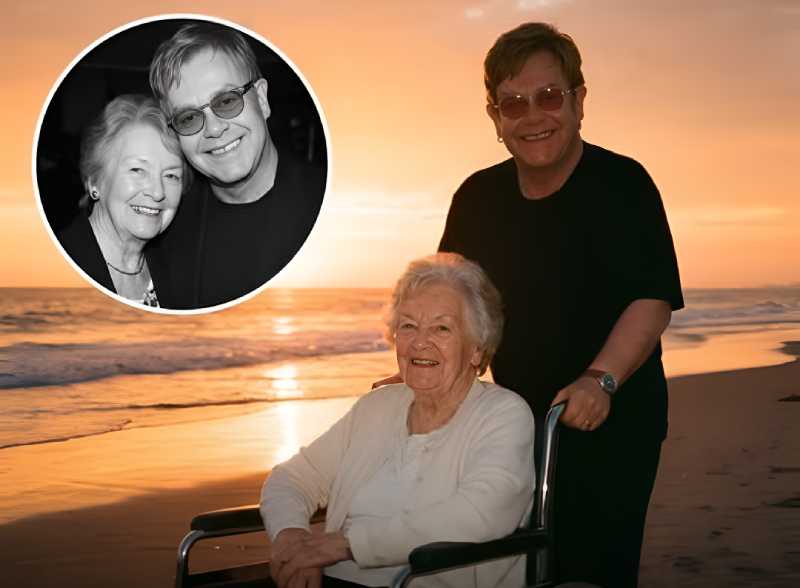
Sheila Eileen Dwight may not be a household name in the same way her son is, but her story is deeply woven into the early life of one of music’s greatest icons, Elton John. Born in 1925, Sheila lived through an era of profound social and cultural change in Britain, and her personal journey reflects many of the complexities of that time. While history often remembers her in relation to her famous son, her life deserves attention on its own terms.
Growing up in mid-20th-century England, Sheila developed a personality that was both strong-willed and expressive. These qualities would later play a major role in shaping her household and, indirectly, the environment in which her son grew up. Her life was not defined by fame or public recognition, but rather by the everyday realities of family, relationships, and resilience.
Early Life and Background
Sheila Eileen Dwight, born Sheila Eileen Harris, spent her formative years in England during a period marked by World War II and its aftermath. Like many individuals of her generation, she experienced the uncertainties and hardships that came with wartime life. These experiences often instilled a sense of resilience and practicality that would later define her character.
Her upbringing was relatively modest, and she did not come from a background of fame or privilege. Instead, she built her life through everyday efforts, adapting to the circumstances around her. This grounded perspective influenced how she approached family life and parenting, especially when raising a child with exceptional talent.
In her younger years, Sheila developed an appreciation for music, which would later become a significant aspect of her household. Although she was not a professional musician, her interest in music created an environment where artistic expression was encouraged. This seemingly small detail would have a lasting impact on her son’s future career.
Marriage and Family Life
Sheila married Stanley Dwight, a Royal Air Force officer, and together they had a son, Reginald Kenneth Dwight—later known to the world as Elton John. Their marriage, however, was not particularly harmonious. The relationship was often described as strained, with differences in personality and expectations creating tension within the household.
Stanley Dwight was known for his strict and reserved demeanor, which contrasted sharply with Sheila’s more expressive and outgoing personality. This dynamic created a complex family environment, where emotional connections were not always straightforward. For a young child growing up in such a setting, these contrasts could be both challenging and formative.
Eventually, Sheila and Stanley’s marriage came to an end, leaving Sheila to take on the primary role of raising their son. This transition was significant, as it meant she had to navigate the responsibilities of single parenthood while ensuring that her child’s needs—both emotional and developmental—were met.
Raising Elton John: Influence and Support
One of the most important aspects of Sheila Eileen Dwight’s life was her role in raising Elton John. From an early age, it became clear that her son had an extraordinary talent for music. Sheila recognized this potential and took steps to nurture it, providing encouragement and opportunities that allowed his abilities to flourish.
She introduced him to a wide range of music, exposing him to artists and styles that broadened his understanding of the art form. This exposure was crucial in shaping his musical identity, as it allowed him to develop a diverse and unique sound. Sheila’s support extended beyond mere encouragement; she actively facilitated his musical education and development.
Despite the challenges of single parenthood, Sheila remained committed to her son’s growth. She ensured that he had access to piano lessons and supported his involvement in music-related activities. Her belief in his talent played a significant role in building his confidence, which would later become a defining feature of his stage presence.
A Complex Mother-Son Relationship
While Sheila Eileen Dwight was instrumental in supporting her son’s early career, their relationship was far from simple. Like many parent-child relationships, it evolved over time and was influenced by changing circumstances, personal differences, and external pressures.
As Elton John’s fame grew, the dynamics between mother and son began to shift. The demands of a global career, combined with personal challenges, created distance between them. Reports and interviews over the years have highlighted periods of tension and disagreement, reflecting the complexities of maintaining a close relationship under such conditions.
Despite these challenges, their bond remained significant. The emotional connection between them, though sometimes strained, was never entirely severed. Their relationship serves as a reminder that even in the context of fame and success, family dynamics can remain deeply human and multifaceted.
Public Perception and Media Attention
As the mother of a global superstar, Sheila Eileen Dwight occasionally found herself in the public eye. Media coverage often focused on her relationship with Elton John, particularly during periods of conflict. This attention brought a level of scrutiny that she had not originally sought.
Public perception of Sheila was shaped largely by these narratives, which sometimes emphasized controversy over context. While such portrayals can capture certain aspects of reality, they rarely provide a complete picture. Sheila’s life, like anyone’s, contained layers of complexity that could not be fully understood through headlines alone.
It is important to approach these accounts with a sense of balance, recognizing that media narratives often simplify or dramatize personal relationships. Sheila’s story, when viewed in its entirety, reveals a woman who played a crucial role in her son’s life while also navigating her own challenges.
Estrangement and Reconciliation
One of the most notable aspects of Sheila Eileen Dwight’s later life was her estrangement from her son. This period of separation lasted for several years and was widely reported in the media. The reasons behind the rift were personal and multifaceted, involving disagreements and misunderstandings that are common in many families.
Despite the distance, both Sheila and Elton John eventually found a way to reconnect. Their reconciliation marked a significant turning point, allowing them to rebuild their relationship and move forward with a renewed sense of understanding. This reunion was particularly meaningful given the length and intensity of their estrangement.
The process of reconciliation highlights the enduring nature of family bonds. Even after years of separation, the connection between mother and son remained strong enough to overcome past conflicts. This aspect of Sheila’s story adds a layer of emotional depth, illustrating the possibility of healing and forgiveness.
Later Years and Legacy
In her later years, Sheila Eileen Dwight lived a quieter life, away from the constant spotlight that surrounded her son. She remained in England and continued to be a part of his life following their reconciliation. These years were marked by a sense of closure and renewed connection.
Sheila passed away in 2017 at the age of 92. Her death was met with public acknowledgment from Elton John, who expressed his grief and appreciation for her role in his life. This moment underscored the lasting impact she had on him, both personally and professionally.
Her legacy is not defined by fame but by influence. She played a crucial role in shaping the early life of a musical legend, providing the support and encouragement that helped him achieve greatness. At the same time, her story stands as a testament to the complexities of family relationships and the resilience required to navigate them.
The Human Story Behind the Fame
When discussing figures connected to celebrities, it is easy to reduce their identities to a single role. However, Sheila Eileen Dwight’s life offers a broader narrative that extends beyond her association with Elton John. She was a woman with her own experiences, challenges, and contributions.
Her story reflects the realities of motherhood, particularly in the context of raising a child with exceptional talent. It also highlights the emotional complexities that can arise within families, especially when fame and public attention are involved. These elements make her life story both relatable and significant.
By examining her life in detail, we gain a deeper understanding of the factors that influence success. Behind every prominent figure, there are often individuals whose contributions, though less visible, are equally important. Sheila Eileen Dwight is one such individual, whose impact continues to be felt through her son’s enduring legacy.
FAQs
Who was Sheila Eileen Dwight?
Sheila Eileen Dwight was the mother of Elton John. She played a key role in supporting his early interest in music and helping shape his journey toward becoming a global icon.
What was Sheila Eileen Dwight’s relationship with Elton John like?
Her relationship with Elton John was complex. They were close during his childhood, experienced a period of estrangement in later years, and eventually reconciled before her death.
Why is Sheila Eileen Dwight important in Elton John’s story?
She is important because she recognized and encouraged Elton John’s musical talent early on, providing the support and environment that helped him develop into a legendary artist.
Conclusion
Sheila Eileen Dwight’s life is a compelling blend of resilience, influence, and emotional complexity. As the mother of Elton John, she played a foundational role in shaping one of the most iconic careers in music history. Her early support and encouragement helped nurture his talent, setting the stage for his future success.
At the same time, her story is marked by challenges, including a difficult marriage, the demands of single parenthood, and a complex relationship with her son. These experiences add depth to her narrative, reminding us that even those connected to fame lead lives filled with both triumphs and struggles.