
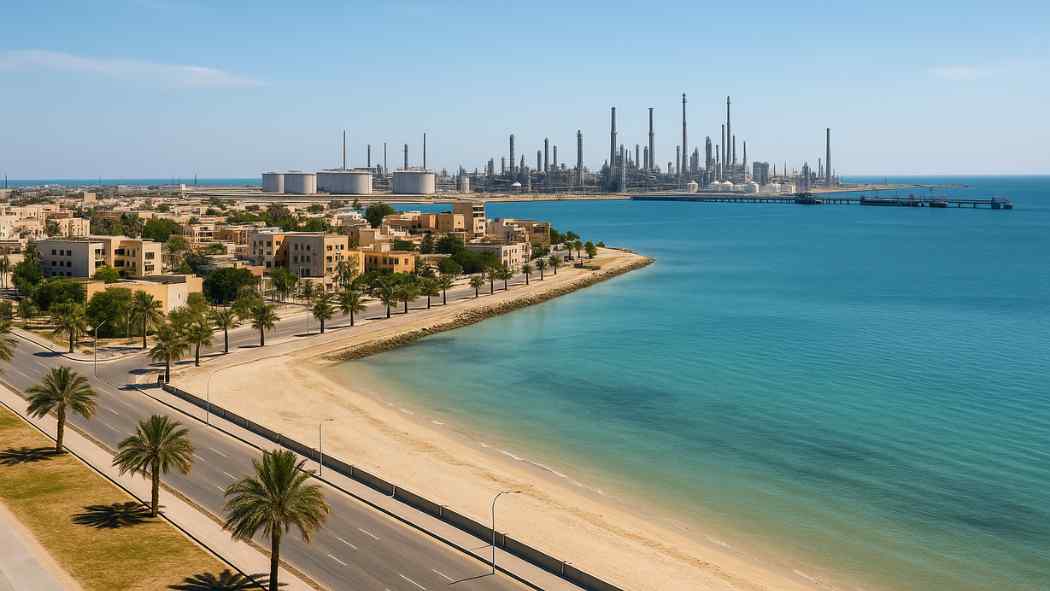
Ras Tanura is one of the most strategically important cities in Saudi Arabia, located in the Eastern Province on a beautiful peninsula extending into the Arabian Gulf. The name Ras Tanura is respected not only across Saudi Arabia but also throughout the global oil industry. This region holds extraordinary significance due to its role in the development of Saudi Aramco and its central place in the international petroleum supply chain. However, Ras Tanura is much more than a refinery or an export terminal. It is an evolving coastal city with residential communities, beaches, marine landscapes, infrastructure, and a vital role in national economic growth.
The purpose of this article is to explore Ras Tanura from every possible angle. Many people only know it as an industrial zone, but the truth is far more detailed. Ras Tanura offers a fascinating history, a global economic value, a multicultural community lifestyle, and beautiful natural surroundings. Its contribution to Saudi Arabia’s past is undeniable and its importance for the future remains immense. The following sections present a comprehensive and informative picture of Ras Tanura.
Understanding the Location and Geography of Ras Tanura
Ras Tanura sits on a narrow peninsula that stretches into the Arabian Gulf. This unique location allows the city to access deep waters, making it an ideal docking point for tankers and marine operations. The coastline gives it a naturally protective structure, which historically made the location suitable for developing some of the largest petroleum terminals and shipping facilities in the world.
The city lies north of Dammam and south of Jubail, two major industrial and commercial hubs. It is well connected by roads and highways, making it easy to travel between different parts of the Eastern Province. The city’s geography has been one of the biggest reasons for its selection as a central industrial zone. Surrounded by water and easily accessible for marine engineering, it quickly grew into a coastal powerhouse.
The Rise of Ras Tanura as an Industrial Hub
When oil was discovered in Saudi Arabia in the early twentieth century, Ras Tanura became one of the first areas to witness rapid industrial development. The city grew alongside the expansion of oil infrastructure. What initially began as a small industrial site evolved into one of the world’s most important petroleum refining and exporting locations.
The Refinery
The Ras Tanura refinery became a central part of Saudi Arabia’s transformation into a global petroleum supplier. With massive capacity and well-developed facilities, it became one of the largest refineries in the Middle East. The refinery specialises in processing crude oil and converting it into usable products such as fuel, petroleum chemicals, and other refined materials.
Over the decades, the facility expanded and introduced advanced technological systems. These upgrades enabled more efficient refining, greater safety measures, and increased international export capacity. The refinery operates day and night with highly trained professionals, engineers, safety teams, and equipment that contributes to global energy supply.
The Port and Terminal
The Ras Tanura oil terminal is often regarded as one of the most vital export points for Saudi crude oil. Tankers and massive carriers transport petroleum around the world from this very location. It handles a huge portion of the kingdom’s oil shipping activities. The terminal is important not only for the national economy but also for global markets, helping regulate supply and demand.
Multiple offshore loading platforms support very large tankers. These platforms are specifically designed for deep waters where large ships can dock safely. The entire terminal infrastructure demonstrates world-class engineering and long-term industrial planning.
Read: Saudi Medevac: The Lifesaving Air Ambulance Network Transforming Emergency Healthcare in the Kingdom
Historical Development of Ras Tanura
Ras Tanura’s story stretches back to the early 1930s, when the discovery of oil changed Saudi Arabia forever. The small coastal area transformed rapidly once industrial activity began. By the 1940s, facilities for refining and storage were already in place, and the city became central in meeting global oil demand.
Over the decades, Ras Tanura expanded its infrastructure, added more industrial facilities, and built a growing community around the oil operations. Residential complexes, schools, administrative buildings, and support services began developing. Engineers, workers, and their families settled in Ras Tanura, and it became not just an industrial location but a fully functioning township.
Urban Layout and Residential Life
Although industrial development remains its most famous feature, Ras Tanura also functions as a city with well-organised residential zones. Many people live and work here, contributing to a multicultural community. Over the years, the population has included Saudi nationals and expatriates from many countries. People from South Asia, the Philippines, Arab nations, and Western countries have been part of the community.
These residential neighbourhoods are designed to offer services and comfort. The city provides mosques, schools, medical facilities, supermarkets, playgrounds, sports clubs, and recreational areas. Many of the residential zones were constructed to support the workers of the oil industry along with their families, creating a peaceful and safe living environment.
Beaches and Natural Coastal Beauty
One of the most attractive aspects of Ras Tanura is its coastline. The beaches of Ras Tanura are known for their golden sands, clean water, and peaceful environment. Families visit the beach for evening walks, picnics, swimming, or simply to enjoy the sea breeze. The sea life and marine environment near the coast are important ecological assets as well.
These beaches are not just for leisure. They symbolise the identity of Ras Tanura as a coastal city. Residents and visitors appreciate the tranquillity that the sea offers. The coastline also provides opportunities for future tourism expansion and eco-friendly recreational developments.
Economic and Strategic Importance
Ras Tanura is one of the pillars of Saudi Arabia’s energy sector. The economy of the region depends heavily on the operations of the refinery and terminal. Thousands of employees and service providers work within the city. The operations of Ras Tanura influence international markets, government revenue, trade partnerships, and global supply chains.
Jobs related to Ras Tanura include engineering, construction, refining, marine services, transportation, safety management, logistics, and technical supervision. The city has become a central economic zone that continues to contribute to national development.
Infrastructure and Mobility
The city has a well-designed road network connecting it to major cities of the Eastern Province. The main highways link Ras Tanura with Jubail, Dammam, Khobar, and Dhahran. There is also an airport facility dedicated to transportation services for industrial and offshore needs. The transportation infrastructure supports both industrial and residential convenience.
The city’s layout is organised around providing safety, efficiency, and mobility. Modern transportation systems support industrial logistics, while cleaner residential streets support community life.
Culture and Multicultural Identity
Ras Tanura’s culture has evolved through decades of international influence. The presence of expatriates and mixed communities has shaped customer preferences, eating habits, languages used, and social activities. English is commonly used as a shared language among different communities.
The social fabric of Ras Tanura is enriched by cultural diversity. People from multiple backgrounds contribute to the city’s identity, making it an interesting place to live and work.
Tourism and Recreational Potential
Even though Ras Tanura is not traditionally considered a tourist city, its waterfront and beaches have created opportunities for tourism. Families from other parts of Saudi Arabia visit the city for seaside relaxation and picnics. As Saudi Arabia continues to expand tourism through Vision 2030, Ras Tanura holds potential for coastal development, eco-tourism, and water-sports activities.
Recreational facilities such as parks, beaches, cafes, fishing spots, and walking areas provide leisure options for residents and visitors.
Future Growth and Vision
Ras Tanura remains an important location for the growth of Saudi Arabia’s economy. Future development plans focus on sustainability, advanced refinery technology, environmental protection, and modern urban systems. As the city continues to develop, it is likely to witness further growth in community infrastructure, industrial facilities, and tourism opportunities.
Saudi Arabia’s national vision focuses on balancing economic progress with environmental safety and modern infrastructure. Ras Tanura has the legacy, the geographical advantages, and the industrial strength to remain central in the kingdom’s future.
Conclusion
Ras Tanura is an exceptional city that combines the power of the oil industry with the beauty of the Arabian Gulf. It is a unique destination where economic importance meets coastal charm. From its early development and vital refinery operations to its beaches, multicultural community, and urban environment, Ras Tanura remains one of the most significant locations in Saudi Arabia’s Eastern Province. Its history and modern development reflect its contribution to both national and global progress.