
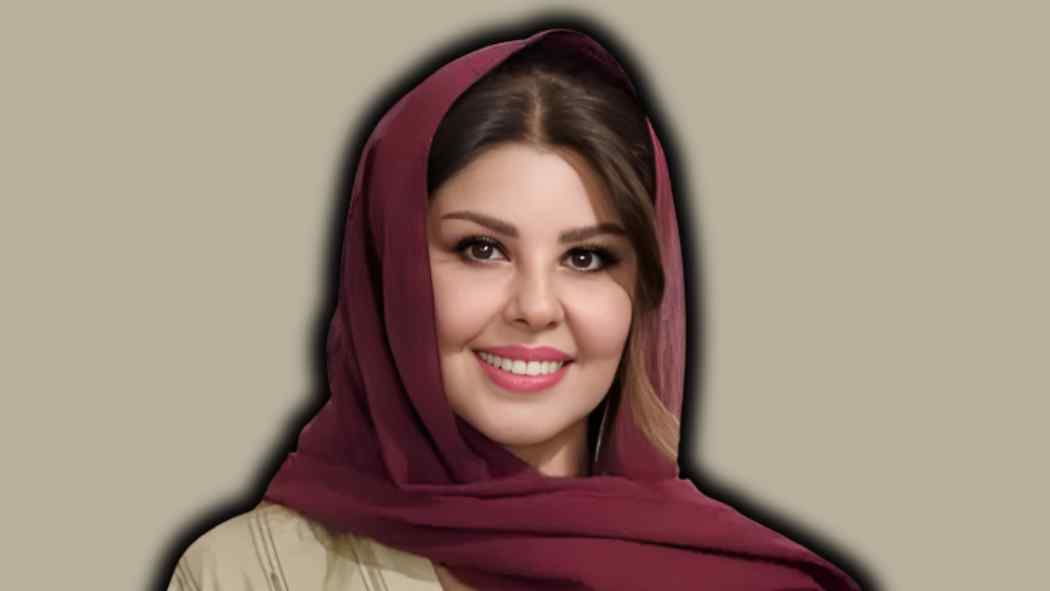
When we speak about contemporary Saudi artists who have pushed boundaries, fused heritage with innovation, and reintroduced the world to Arabic identity in a fresh visual language, one name rises with remarkable prominence — Lulwah Al Homoud. She stands among the pioneers of modern Middle Eastern art, gracefully balancing traditional Islamic calligraphy with abstract geometry, global aesthetics, and philosophical reflection. Her work is not merely decorative ink on canvas; it is a visual conversation about faith, structure, language, and the essence of meaning. With an impressive international presence, museum recognition, and a voice that shapes art culture in Saudi Arabia, she represents a bridge between the past and the future.
This article explores her life journey, artistic philosophy, global influence, exhibitions, signature style, and her role in empowering young artists. Written in a detailed, human tone and designed to be valuable for readers, researchers, art enthusiasts, and those curious about Saudi creativity, this piece aims to highlight why lulwah al homoud is a name the world should know.
Early Life and Academic Journey
Born in Riyadh in 1967, Lulwah Al Homoud grew up in a culturally rich environment that embraced art, literature, and tradition. Her fascination with shapes, patterns, and letters began early, but her path to art was not immediately linear. She first pursued sociology at King Saud University, studying human behavior, society, and structure — topics that would later influence her artistic thought.
Her academic path eventually led her to the United Kingdom, where she continued her education in the field of art and design. She completed her Master’s degree in Visual Communication at the prestigious Central Saint Martins in London. This phase exposed her to global artistic dialogues, techniques, and styles, allowing her to develop a research-driven approach to creativity. Unlike many artists who work from spontaneous emotion, lulwah al homoud often approaches her work like a scholar — studying the root of letters, the geometry behind Islamic art, and the meanings hidden within form.
The Artistic Philosophy Behind Her Work
One cannot understand Lulwah Al Homoud without understanding her relationship with the Arabic letter. To her, every letter carries energy, history, structure, and spiritual language. Instead of writing text traditionally, she often deconstructs letters into geometric elements — triangles, circles, rhythm, repetition. In her eyes, a letter is not just for reading, but for experiencing visually.
Her art represents silence, meditation, and communication beyond words. Many observers often stand in front of her work trying to decode the letters, only to realize that the experience is not about reading but about feeling. She once expressed in interviews that Arabic calligraphy to her is a universal language, one that speaks even when readable text is removed.
This deep conceptual foundation makes her work attractive to museums and serious collectors. It also positions her as a unique voice among contemporary Arab artists — someone who honors heritage yet refuses to be confined by it.
Style, Techniques, and Mediums
Lulwah Al Homoud’s signature style is easily recognizable. Her artworks often display controlled precision, carefully calculated geometry, and sophisticated arrangements of letter-based forms. She blends old calligraphic traditions with modern minimalism, creating a balance between discipline and creativity.
Materials she frequently uses include ink, archival paper, digital layering, mixed media, large installations, and in some works, gold leaf or subtle texture. Her pieces appear mathematical — yet spiritual. They invite contemplation, as if each line holds a story or prayer.
The use of symmetry and geometric harmony is inspired by Islamic art foundations, where beauty lies in balance and repetition. In many of her works, letters are multiplied until they transform into patterns, resembling stars, architectural blueprints, or cosmic formations. This ability to transform language into universal symbols is what defines her brilliance.
Exhibitions and Global Presence
Lulwah Al Homoud is not only admired within Saudi Arabia — her work lives beyond borders. She has exhibited in major cities including London, Paris, Dubai, Riyadh, New York, and Seoul, among others. Museums such as the British Museum in London and the Los Angeles County Museum of Art have featured her work, placing her among respected names in global art collections.
The fact that a Saudi female artist reaches this level of recognition reflects the power of her identity and her message. She has participated in biennales, curated exhibitions, and represented contemporary Islamic aesthetics to audiences who may have never experienced Arabic calligraphy in this form. Her work resonates with international viewers because it feels both ancient and futuristic — familiar yet mysterious.
Contribution to Saudi Art Community
Beyond personal success, Lulwah Al Homoud believes firmly in building culture. She has taken roles as a curator, art advisor, and mentor to young talent. She founded the LAHAF Art Foundation to support emerging artists, encourage experimentation, and create global exchange opportunities. Her work extends beyond galleries into education, community development, and art diplomacy.
In panel discussions and mentorship sessions, she often encourages patience, discipline, and authenticity. Her message to new artists is simple: do not rush to imitate trends — create from your own roots, your own voice. It is this leadership spirit that makes her more than an artist; she is a cultural pillar in Saudi Arabia’s evolving art scene.
Themes and Meaning Within Her Art
A deep look into her work reveals several recurring themes:
-
Identity and Language: The soul of Arabic script transformed into visual meaning
-
Spirituality and Reflection: Silence, meditation, and inner worlds expressed through form
-
Geometry and Order: The mathematical beauty of Islamic art principles
-
Cultural Continuity: Respect for tradition while innovating its future
-
Universal Communication: Art that speaks across languages and regions
Her artworks encourage viewers to pause — to think, breathe, and explore meaning beyond speech. Museum visitors often describe a sense of calmness when observing her pieces. The rhythm of repeated shapes feels like recited verses or prayer beads — subtle, endless, timeless.
Saudi Art Renaissance and Her Role in It
Saudi Arabia today is witnessing an extraordinary cultural transformation. Venues like Riyadh Season, art biennales, museums, and creative festivals are opening global doors for artists. Lulwah Al Homoud stands among those shaping this era. She represents the international face of Saudi artistic identity — one rooted in heritage but reaching toward future horizons.
Her participation in local and international exhibitions serves as a reminder that Saudi Arabia has rich artistic potential, not limited to tradition but capable of redefining modern aesthetics. As the Kingdom increases support for creative fields, artists like her will continue to lead, inspire, and document cultural evolution.
Influence on Future Generations
Young artists often look up to her journey as proof that passion, study, and perseverance can lead to global recognition. She inspires women in particular, showing that artistic ambition is not only possible but valuable. Her story encourages individuals to explore deep ideas, culture, and self-expression without fear.
Her foundation, mentorship efforts, and presence at educational programs make her impact long-lasting. When future generations speak about modern Saudi calligraphy, her name will undoubtedly be remembered among those who shaped it.
Why the World Should Know Her Name
Lulwah Al Homoud is more than an artist using beautiful letters — she is an ambassador of cultural identity. Her work reflects a bridge between ancient Islamic knowledge and modern abstract interpretation. She has achieved international recognition through innovation, dedication, and intellectual creativity.
In a world where cultures mix and identities evolve, she reminds us that history is not a museum artifact — it is a living source of inspiration. Through her art, the Arabic alphabet becomes universal. Anyone, regardless of language, can feel its rhythm, beauty, and soul.
Conclusion
The legacy of Lulwah Al Homoud continues to grow as she creates, teaches, curates, and inspires. Her work stands as a testament to what happens when tradition meets imagination. By transforming Arabic calligraphy into visual philosophy, she offers the world a new way to see Islamic art — one that is modern, meaningful, and globally relevant.
From Riyadh to London, from paper to museums, her creative journey has only begun to unfold. As Saudi Arabia enters a new era of cultural expansion, artists like her will stand at the forefront, representing a powerful story of identity, art, and innovation. The world should learn her name, study her work, and appreciate the beauty she brings to contemporary art.