

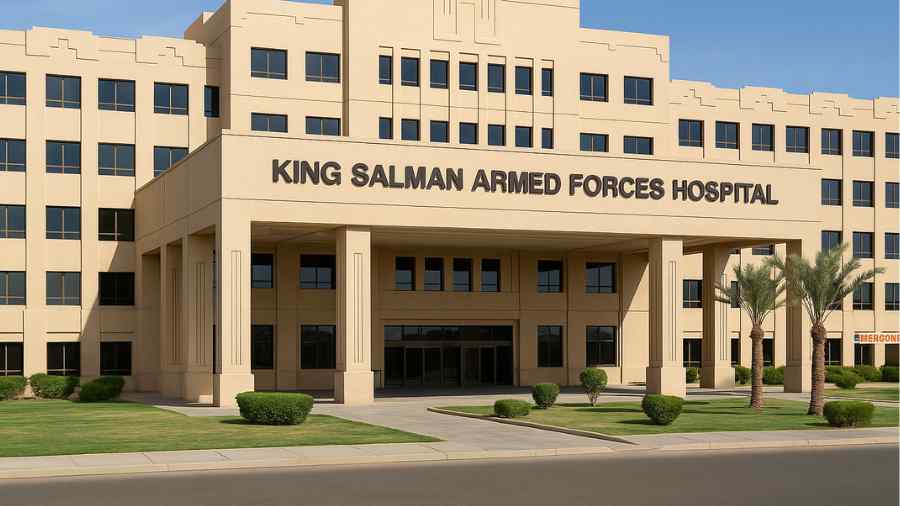
King Salman Armed Forces Hospital stands as one of the most respected, advanced, and strategically significant healthcare institutions in Saudi Arabia. Known for its high-standard medical care, modern infrastructure, and specialised healthcare facilities, it plays an essential role in serving both military personnel and civilians across the region. Over the years, the hospital has become a symbol of medical excellence, continuous growth, and national commitment to healthcare advancement.
Historical Background
Established with the aim of supporting the healthcare needs of the Kingdom’s armed forces, King Salman Armed Forces Hospital gradually expanded into a comprehensive medical centre open to the wider community. Its development reflects Saudi Arabia’s vision of strengthening healthcare across all regions, especially those with strategic military importance. Initially set up with a moderate capacity, the hospital has grown through multiple phases of expansion. Each phase brought advanced facilities, increased bed capacity, specialised buildings, and highly trained medical teams.
The hospital’s history is closely connected to the evolution of the armed forces’ medical infrastructure. From offering basic medical services to military personnel, it transitioned into a sophisticated institution capable of handling complex surgeries, emergency cases, chronic conditions, and advanced specialties. It also became a major training hub, contributing to the development of Saudi healthcare professionals.
Hospital Structure and Capacity
One of the distinguishing features of King Salman Armed Forces Hospital is its expansive and well-organised layout. Rather than relying on a single multi-purpose building, the hospital is structured across several specialised units and blocks, each designed to focus on specific fields of medicine. This structure improves efficiency, reduces congestion, and ensures dedicated attention to critical departments.
The hospital includes inpatient and outpatient departments, diagnostic centres, intensive care units, surgical theatres, maternity units, paediatric wings, and emergency care facilities. Over time, its capacity increased significantly, accommodating hundreds of beds and offering services to thousands of patients annually. The design prioritises both patients’ comfort and smooth operational flow for healthcare providers.
Mission and Vision
At its core, the mission of the hospital is to deliver advanced, safe, and accessible healthcare that meets international standards. The vision aligns with Saudi Arabia’s broader healthcare transformation under the national development plans, aiming for excellence, digital innovation, and patient-centred care.
The hospital emphasises:
- High-quality treatment aligned with global standards.
- Advanced medical education and continuous training for healthcare professionals.
- Strong research initiatives that support medical development.
- A compassionate, ethical, and patient-focused environment.
This commitment has earned the hospital a strong reputation, making it one of the leading healthcare institutions in the region.
Medical Specialties and Advanced Services
King Salman Armed Forces Hospital provides an extensive range of medical services across multiple specialities. Many of these services are supported by modern technology, specialised facilities, and highly qualified specialists. Some prominent specialties include:
1. Cardiology and Cardiac Surgery
The hospital is well-equipped for cardiac care, including diagnosis, interventional cardiology, and open-heart surgeries. Dedicated buildings and surgical suites are specifically designed for cardiovascular treatment, making it one of the strongest departments within the hospital.
2. Obstetrics and Gynaecology
Women’s health is a major focus, and the hospital includes specialised maternity units for routine pregnancies, high-risk cases, prenatal care, labour, and post-natal services. The facilities also include neonatal intensive care units managed by experienced paediatric specialists.
3. Oncology and Tumour Management
Cancer care is supported by advanced diagnostic tools, chemotherapy units, and specialised oncology clinics. The hospital provides comprehensive care plans that include early detection, monitoring, and long-term management.
4. Nephrology and Dialysis
Renal care is another prominent specialty, with dedicated dialysis centres serving patients with chronic kidney disease. The hospital ensures regular monitoring and specialised treatment plans for both acute and long-term kidney conditions.
5. Surgery and Trauma Care
With multiple surgical theatres, the hospital carries out a wide range of operations including general surgery, orthopaedic procedures, trauma surgeries, and minimally invasive procedures. The trauma care unit is particularly essential due to the hospital’s role in serving military personnel.
6. Internal Medicine
Covering cardiology, pulmonology, endocrinology, gastroenterology, infectious diseases, rheumatology, and more, the internal medicine department offers broad and advanced services for adult patients.
7. Paediatrics and Child Health
The paediatric department is equipped to handle general paediatrics, neonatal care, paediatric emergencies, and childhood infections. It offers a safe and compassionate environment for young patients.
Diagnostic and Technological Capabilities
Modern diagnostic tools are essential to delivering precise and timely medical care. King Salman Armed Forces Hospital excels in this area, offering:
- Digital radiology and imaging
- MRI and CT scan units
- Ultrasound diagnostics
- Endoscopy and colonoscopy facilities
- Advanced laboratory testing
These technologies ensure accurate diagnoses and effective treatment plans, supporting both emergency and long-term care.
Education and Training
The hospital plays a major role as a teaching and training centre for medical students, interns, residents, nurses, and other healthcare professionals. Accredited by medical authorities, it provides residency programs, fellowship training, continuous medical education, and hands-on clinical exposure.
Training includes:
- Workshops and conferences
- Simulation-based learning
- Specialised medical skill development
- Research support for medical staff
This educational commitment ensures that the hospital contributes significantly to the development of skilled medical professionals in Saudi Arabia.
Patient Experience and Care Philosophy
One of the core strengths of the hospital is its patient-centred care approach. The environment is designed to offer comfort, privacy, and safety. From outpatient reception to inpatient wards, the hospital emphasises:
- Clear communication with patients and families
- Respectful and culturally sensitive care
- Minimised waiting times
- Supportive nursing staff
- Ethical medical practices
The hospital also incorporates digital systems for appointment booking, medical records, and patient communication, improving accessibility and overall experience.
Role in Military Healthcare
Being a part of the Armed Forces Medical Services, the hospital holds a unique responsibility toward military personnel and their families. It provides priority treatment to soldiers, veterans, and defence staff, especially for injuries, trauma cases, and physical rehabilitation. The hospital’s military connection ensures strong discipline, organisation, and rapid emergency response.
Community Impact and Regional Importance
Although connected to the armed forces, the hospital also serves civilians in the region. Its contributions include:
- High-quality medical care for residents
- Emergency medical response
- Support for public health initiatives
- Screening programmes for chronic diseases
- Health education campaigns
For the Tabuk region, the hospital is one of the most important healthcare institutions, offering services that might not be available elsewhere in the area.
Expansion and Future Development
Saudi Arabia’s healthcare vision includes continuous improvement of medical facilities. King Salman Armed Forces Hospital is expected to undergo more upgrades to support national goals such as digital transformation, AI-supported diagnostics, expansion of surgical capacities, and sustainable healthcare practices.
Future developments may include:
- Enhanced digital health systems
- New specialty centres
- Expansion of surgical and ICU units
- More training partnerships with international medical organisations
These improvements will help the hospital maintain its position as a leading healthcare centre.
Conclusion
King Salman Armed Forces Hospital stands as a vital pillar of medical excellence in Saudi Arabia. Through its modern facilities, specialised departments, advanced technologies, and commitment to high-quality healthcare, it has established itself as a premier institution serving both military and civilian populations. Its focus on education, patient-centred care, and continuous improvement ensures that it remains a trusted and essential part of the region’s healthcare system. With ongoing development and expansion, the hospital is well-positioned to meet future medical challenges and contribute to the Kingdom’s vision of world-class healthcare for all. If you want, I can also create a meta title, meta description, and article slug for this topic.