

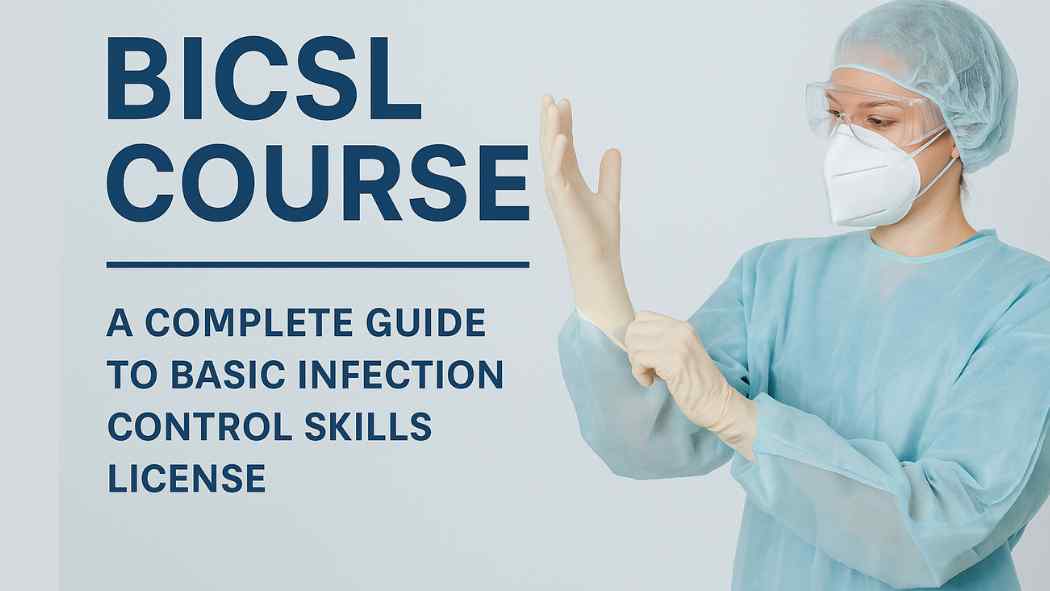
The healthcare industry is one of the most sensitive fields where safety, cleanliness, and infection prevention hold the highest importance. Every day, hospitals deal with infectious diseases, patient contact, medical waste, blood exposure, and procedures that could create contamination if not handled correctly. To ensure that health workers understand how to manage infection risks accurately, the BICSL course (Basic Infection Control Skills License) plays a crucial role. It is a recognised training programme that educates professionals on infection control standards, safe clinical practices, hygiene protocols, and essential safety behaviours required inside medical environments.
The demand for infection control training has increased significantly over the past few years. Modern hospitals prefer staff who are not only skilled in medical duties but also trained to maintain clean and infection-free environments. A BICSL certificate strengthens the professional profile of healthcare workers and assures employers that the person understands how to reduce infection transmission and protect both patients and staff.
What is the BICSL Course?
The BICSL course is short for Basic Infection Control Skills License. It is a structured training programme designed to teach healthcare professionals the best practices to prevent infections in medical workplaces. The training includes both theoretical knowledge and practical skill development. The main goal of this course is to ensure that healthcare staff understand how infections spread and how to prevent them using proper safety measures. It covers everything from hand hygiene to waste disposal, PPE usage, sterilisation methods, and patient isolation protocols.
A person who completes the BICSL course is awarded a certificate that proves their competency in handling infection control responsibilities. Many hospitals and clinics prefer or require this certification for new staff hiring, especially for roles involving patient contact. Because preventing infection is a shared duty among all healthcare workers, this course is suitable for professionals from various medical departments.
Why the BICSL Course is Important in Healthcare
In healthcare settings, even a small mistake can result in infection transmission. Contaminated instruments, unwashed hands, incorrect use of gloves, or improper waste disposal can lead to serious health risks. Hospital-acquired infections are one of the biggest challenges worldwide, and thousands of cases occur due to avoidable mistakes. The BICSL course equips healthcare workers with the skills needed to follow safe practices confidently.
There are several reasons the BICSL certificate holds value:
It reduces hospital-acquired infections
It ensures safe patient treatment procedures
It protects healthcare staff from disease exposure
It improves hygiene and clinical environment safety
It builds trust among patients and improves facility reputation
It supports regulatory compliance for medical institutions
Infection prevention is a responsibility shared by every staff member, from doctors and nurses to cleaners and technicians. The BICSL programme encourages more safety awareness, helping create a culture where cleanliness and infection control are prioritised daily.
Who Should Enrol in the BICSL Course?
The course is ideal for anyone working or planning to work in healthcare. Participants often include:
Nurses and nursing assistants
Doctors, interns and medical students
Pharmacists and laboratory technicians
Dentists and dental assistants
Radiology and imaging staff
Cleaning and sterilisation teams
Emergency responders
Public health workers
Volunteers in medical missions
Hospital administrative workers near patient areas
Even non-clinical employees who work in hospitals benefit greatly, because infection control is not limited to direct patient care. Everyone inside a medical environment shares responsibility for maintaining safety.
Key Topics Covered in the BICSL Course
While course content may vary slightly between training providers, the core modules remain consistent. The BICSL programme usually includes:
Introduction to Infection Control
Participants learn about microorganisms, infection types, the chain of infection, and how diseases spread within hospitals. Understanding this foundation helps workers recognise risks early.
Hand Hygiene Standard Procedures
Hand washing is the most powerful method for disease prevention. Trainees learn the correct technique, the difference between soap washing and sanitiser use, and when each method should be applied.
Use of Personal Protective Equipment (PPE)
This module explains how to correctly wear gloves, masks, gowns, and face shields. It teaches donning and doffing techniques to avoid contamination while putting PPE on or taking it off.
Sharps and Needle Safety
Healthcare workers frequently handle needles and sharp instruments. This section teaches the correct disposal method, which containers to use, and how to avoid needle-stick injuries.
Sterilisation and Disinfection Procedures
Trainees learn how to sterilise medical instruments using proper cleaning techniques. They also understand high-level and low-level disinfection processes.
Waste Management and Disposal
Medical waste must be handled carefully. The course teaches colour-coded waste segregation, biohazard disposal, and safe waste handling during and after procedures.
Infection Control in Special Units
This includes isolation rooms, intensive care units, surgical theatres, and emergency departments where infection risk is higher. Workers learn how to manage patients requiring isolation precautions.
Environmental Cleaning
Proper cleaning of surfaces, equipment and patient beds is essential. The course includes training on spill cleanup and disinfection routines.
Respiratory Protection
Participants learn how to use N95 masks or respirators, including fit checking procedures when handling airborne infections.
Assessment and Certification
After training, participants take a written exam followed by practical evaluations. Successful candidates receive the Basic Infection Control Skills License certificate.
Each module aims to build focused skills that healthcare professionals apply daily. Instead of memorising, learners are encouraged to understand real clinical situations.
Duration, Assessment and Certificate Validity
The BICSL course duration may range from one day to a week depending on provider style. Some conduct intensive single-day programmes including practice sessions, while others offer extended modules. Assessment usually includes:
Multiple-choice written exam
Practical evaluation of hand hygiene and PPE usage
Instructor observation
Case-scenario exercises
Once the participant passes evaluation, they receive a certificate. In most cases, the certification remains valid for one or two years. Renewal training ensures healthcare professionals stay updated with new infection control standards, especially since procedures evolve over time.
Benefits of Completing the BICSL Course
This certification offers numerous advantages, both professionally and practically.
Career Growth Benefits
Improves employability in hospitals and clinics
Increases job opportunities in Gulf regions
Adds strong qualification to CV and interviews
Shows responsibility and professionalism
Helps in career progression or promotion
Many healthcare employers prioritise applicants with infection control skills. A BICSL holder stands out immediately.
Patient and Workplace Safety Benefits
Prevents cross-infection spread among patients
Protects healthcare workers from exposure risks
Ensures correct use of PPE and sanitation
Promotes hygienic handling of instruments and waste
Creates a safer medical environment overall
Infection control training is one of the strongest ways to reduce contamination incidents in hospitals. A well-trained team makes the workplace safer for both caregivers and patients.
Personal Skill Development
Enhances confidence in clinical procedures
Improves decision-making during risky situations
Promotes responsibility and awareness
Builds long-term professional ethics
A BICSL certified person develops a habit of thinking about safety first.
Importance of BICSL Course in Saudi Arabia and Gulfhealthcare
Healthcare systems in Gulf countries handle diverse patients including seasonal visitors. During events like Hajj and Umrah, infection control becomes even more critical. Facilities require trained staff who understand prevention methods. This is why BICSL training holds high value in regions like Saudi Arabia, UAE, Qatar, Kuwait and Bahrain.
Hospitals often make it mandatory for staff to hold infection control training before working in wards. Nursing job requirements frequently list infection control certification as preferred or required. For students entering healthcare careers, the course helps prepare for real-time clinical environments.
How to Prepare for the BICSL Exam
Preparing for the BICSL assessment is easier with the right approach. Some useful preparation tips include:
Study course material thoroughly
Practise hand hygiene steps daily
Learn PPE sequence for wearing and removal
Understand waste segregation colour codes
Review sterilisation and disinfection steps
Participate actively in practical sessions
Observe how infection control is practiced in hospitals
The aim is not to memorise temporarily but to permanently learn safe habits.
Job Opportunities After Getting BICSL Certification
While the BICSL course is not a full medical qualification, it greatly enhances career chances. Job positions that value this certification include:
Nursing staff and charge nurses
Lab technicians and phlebotomists
Dentists and dental hygienists
Operating room technicians
Ward assistants and cleaning supervisors
Public health and infection control officers
Ambulance and emergency care workers
Employers are more confident hiring individuals who already understand infection prevention protocols. This reduces training time and enhances workplace safety.
Conclusion
The BICSL course serves as a foundation for infection control awareness and safe medical practice. As healthcare environments continue to evolve, infection prevention is no longer optional but necessary. A single mistake in handling instruments or waste can risk many lives, which is why trained staff are valued. Completing this course gives healthcare professionals the knowledge and confidence to maintain hygiene standards, prevent infection transmission, and create a safe environment for everyone.
This certification not only improves clinical skills but also increases employment opportunities in hospitals and medical facilities. Whether you are a nurse, technician, student or support staff, the BICSL course adds significant value to your career and prepares you to respond responsibly in clinical situations. Investing in infection control training means investing in safety, professionalism, and patient health.