

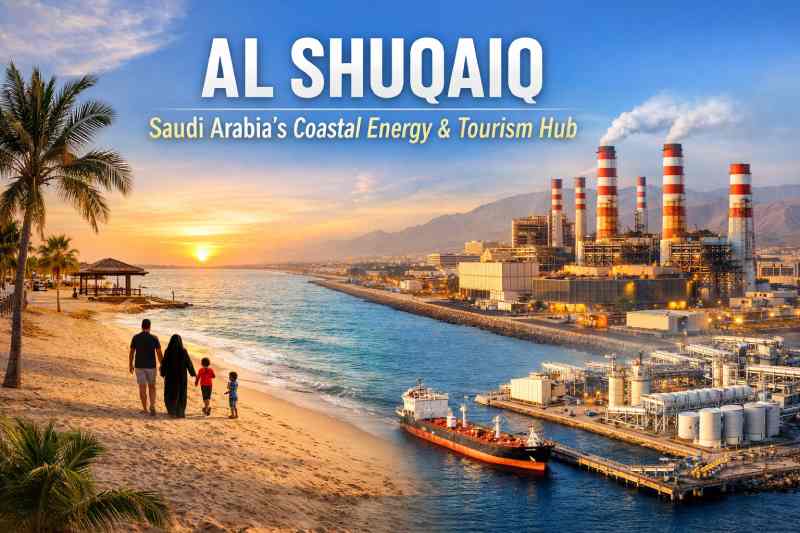
Saudi Arabia is home to many remarkable coastal locations along the Red Sea, but few places have experienced the quiet transformation seen in Al Shuqaiq. Located in the Jazan Province in the southwest of the Kingdom, this coastal town has gradually evolved from a modest fishing settlement into an important center for energy infrastructure, water desalination, and regional tourism. While it may not yet have the global recognition of cities like Jeddah or Yanbu, the steady development of this area highlights its growing strategic and economic importance.
Over the past two decades, the region has witnessed significant investments in power generation and desalination projects, helping supply electricity and fresh water to large parts of southern Saudi Arabia. At the same time, the coastline surrounding the town has become increasingly attractive for visitors seeking calm beaches, warm weather, and scenic landscapes. The balance between industrial development and natural charm makes the town a fascinating case of modern transformation in the Kingdom.
The Geographic Location and Natural Landscape
The town lies along the eastern shore of the Red Sea in the Jazan region of Saudi Arabia. Positioned roughly between the cities of Jazan and Abha, it benefits from a location that connects coastal areas with the mountainous interior of the country. The surrounding region includes fertile valleys, sandy beaches, and coastal plains that stretch for many kilometers.
The climate in this part of the Kingdom is generally warm throughout the year, with mild winters and hotter summers typical of Red Sea coastal areas. The warm sea temperatures and relatively calm waters create an environment suitable for fishing and marine activities, which have historically supported the local population.
One of the defining features of the coastline near Al Shuqaiq is its natural beauty. Long stretches of shoreline offer scenic views of the Red Sea, and the nearby valleys contribute to the unique landscape where desert terrain meets the ocean. These natural characteristics have gradually made the area more appealing to tourists looking for quieter alternatives to the Kingdom’s more crowded coastal cities.
Historical Background and Early Development
Before modern infrastructure arrived, the town was primarily known as a small fishing community. Local residents relied on traditional fishing methods, small-scale agriculture, and trade with neighboring villages to sustain their livelihoods. The sea provided both food and economic opportunity, and many families developed skills that were passed down through generations.
Fishing boats leaving the shore early in the morning and returning with fresh catch was once a daily sight along the coast. Markets in nearby towns would sell seafood such as grouper, shrimp, and other Red Sea fish, contributing to the local economy. Over time, small trade networks developed between coastal communities and inland settlements.
The transition from a quiet fishing village to a modern industrial and tourism location began in the late twentieth century. As Saudi Arabia invested heavily in energy and water infrastructure, the strategic location of Al Shuqaiq made it an ideal site for large-scale development projects. Its access to seawater, open land, and transportation routes allowed planners to build facilities capable of serving millions of people across the southern region.
Energy Infrastructure and Industrial Importance
One of the most significant factors in the transformation of this coastal town has been the establishment of large power and desalination facilities. These projects have played a crucial role in providing electricity and clean drinking water to communities across southern Saudi Arabia.
Major Power Generation Projects
The power plants built near the town represent some of the largest energy facilities in the region. These plants use advanced technologies to generate electricity efficiently, supporting both residential areas and industrial operations. The presence of such infrastructure has strengthened the national power grid and improved energy stability in surrounding provinces.
The development of these facilities also created employment opportunities for engineers, technicians, and construction workers. As a result, the local economy expanded beyond traditional fishing and agriculture, welcoming professionals and workers from different parts of the country.
Water Desalination Facilities
Water scarcity has long been a challenge in the Middle East. To address this issue, large desalination plants have been constructed along the Red Sea coastline. These plants convert seawater into fresh water through advanced filtration and purification processes.
The desalination complexes near Al Shuqaiq are among the most important in Saudi Arabia. They provide millions of liters of potable water daily, supplying homes, businesses, and agricultural projects throughout the southern provinces. This infrastructure not only supports local communities but also contributes to the broader national strategy for water security.
Economic Impact
The industrial facilities have significantly influenced economic growth in the region. Infrastructure improvements, including roads, utilities, and housing, followed the construction of power and desalination plants. These developments attracted service industries, retail businesses, and transportation networks that further strengthened the local economy.
Tourism and Coastal Attractions
Although industrial projects play a central role in the region’s development, the coastline surrounding the town offers natural attractions that appeal to visitors seeking relaxation and scenic views. The Red Sea is famous for its clear waters, marine biodiversity, and beautiful coral reefs, and these features extend along the beaches in this area.
The calm coastal environment makes Al Shuqaiq an appealing destination for families and travelers who prefer peaceful seaside experiences. Visitors often come to enjoy long walks along the beach, fishing activities, and quiet evenings watching the sunset over the sea.
Beach Activities
Many visitors appreciate the simplicity of the beaches in the region. Unlike heavily commercialized resorts, the coastline retains a natural charm that reflects the authentic environment of the Red Sea. Activities commonly enjoyed by visitors include:
Swimming in warm coastal waters
Fishing from the shore or small boats
Picnics and family gatherings near the beach
Photography of sunsets and coastal landscapes
During the cooler winter months, the weather becomes especially pleasant, attracting more visitors from nearby cities. Families often travel to the coast for weekend outings, enjoying the fresh sea breeze and open spaces.
Coastal Promenades and Recreation Areas
Local authorities have invested in developing public spaces along the coastline to improve the visitor experience. Walking paths, seating areas, and small parks have been built to encourage tourism and recreation. These improvements make the coastal areas more accessible and comfortable for both residents and travelers.
Local Culture and Community Life
Despite modernization, the local culture remains deeply rooted in traditions shaped by the sea and desert environment. Hospitality plays an important role in everyday life, and visitors often notice the welcoming attitude of residents.
Community gatherings, local markets, and cultural celebrations help maintain a strong sense of identity. Traditional foods, especially seafood dishes, remain a key part of the region’s culinary heritage. Fresh fish prepared with spices and rice is a common meal enjoyed by both residents and visitors.
The growth of the energy sector and tourism has also introduced new cultural influences. Workers and professionals from different parts of the Kingdom have moved to the area, creating a diverse community while still preserving local traditions.
Environmental Considerations and Sustainability
Rapid development in coastal regions requires careful attention to environmental protection. Industrial projects and tourism activities must be balanced with efforts to preserve marine ecosystems and coastal landscapes.
Authorities in Saudi Arabia have introduced environmental regulations designed to reduce pollution and protect marine life. Modern desalination and power plants are increasingly adopting technologies that minimize environmental impact, including improved waste management and energy efficiency measures.
The waters surrounding Al Shuqaiq remain home to various species of fish and marine organisms that form part of the Red Sea ecosystem. Protecting these natural resources is essential not only for environmental reasons but also for maintaining the fishing traditions that have supported the community for generations.
Infrastructure and Transportation
Improved infrastructure has played a vital role in the region’s development. Roads connecting the coast to inland cities allow goods, services, and travelers to move more efficiently. These transportation links support industrial operations while also encouraging tourism and regional trade.
Modern highways now make it easier for residents of nearby cities to visit the coast for leisure activities. Improved utilities, housing developments, and communication networks have also enhanced the quality of life for people living in the area.
These infrastructure improvements demonstrate how strategic planning can transform smaller towns into important regional centers while still maintaining their natural character.
Future Development and Vision 2030
Saudi Arabia’s Vision 2030 initiative aims to diversify the national economy by encouraging tourism, innovation, and sustainable development. Coastal areas across the Kingdom are receiving attention as potential tourism destinations, and the scenic shoreline around Al Shuqaiq could play a role in these future plans.
Investment in tourism infrastructure, hospitality services, and recreational facilities could further increase visitor numbers. At the same time, continued upgrades to energy and water infrastructure will help ensure that southern Saudi Arabia has the resources necessary for economic growth.
Balancing tourism, industry, and environmental protection will remain an important challenge. However, careful planning could allow the region to benefit from development while preserving the natural beauty that makes it unique.
FAQs
Where is Al Shuqaiq located in Saudi Arabia?
It is located on the Red Sea coast in the Jazan Province of southwestern Saudi Arabia.
What is the town known for?
The area is known for its power plants, desalination facilities, fishing heritage, and scenic Red Sea coastline.
Is the region a tourist destination?
Yes, the beaches and coastal landscapes attract visitors looking for peaceful seaside experiences.
Why is the location important for desalination projects?
Its position on the Red Sea provides easy access to seawater, making it suitable for large-scale desalination plants.
What industries support the local economy?
Energy production, water desalination, fishing, and tourism all contribute to economic activity in the area.
Conclusion
The story of Al Shuqaiq reflects the broader transformation taking place across Saudi Arabia as the Kingdom invests in infrastructure, energy, and tourism. From its origins as a modest fishing community to its present role as a hub for power generation and water desalination, the town illustrates how strategic development can reshape a region.