

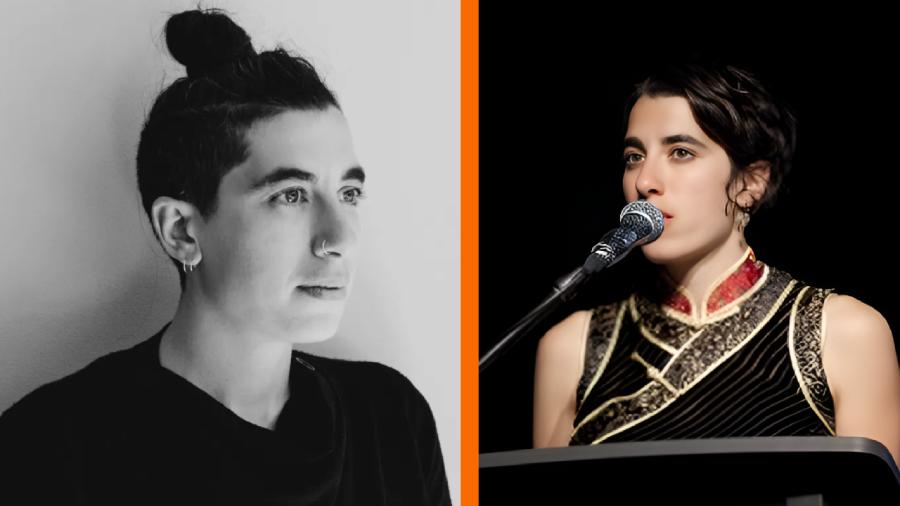
Sarah Gory is an Australian writer, editor, researcher, and lecturer at RMIT University, widely recognized for her creative nonfiction and art criticism that has appeared in leading publications such as Meanjin, The Lifted Brow, and the Australian Book Review. She gained national attention when her essay “Ghosts, Ghosts Everywhere” — a deeply personal exploration of her grandfather Mark Gory’s experience of the Holocaust — was named runner-up in the prestigious 2022 Calibre Essay Prize. Through her work, Sarah examines how inherited trauma, memory, and ethical responsibility pass between generations, making her one of the most compelling voices in contemporary Australian letters.
Quick Bio
| Detail | Information |
|---|---|
| Full Name | Sarah Gory |
| Profession | Writer, Editor, Researcher, Lecturer |
| Known For | Creative nonfiction, art criticism, essay writing |
| Current Position | Lecturer at RMIT University, Melbourne |
| Education (Undergraduate) | Bachelor of Arts, Honours (2008), University of Melbourne |
| Education (Postgraduate) | Master of Writing and Publishing (2019), RMIT University |
| Education (Doctoral) | PhD completed in 2025, University of Melbourne |
| Co-Publisher | Common Room Editions (with Paul Mylecharane, launched 2020) |
| Major Award | Runner-up, 2022 Calibre Essay Prize (“Ghosts, Ghosts Everywhere”) |
| Notable Shortlist | 2019 Neilma Sidney Short Story Prize (“Leaving”) |
| Forthcoming Book | “Mother is not a Metaphor” (expected 2026) |
| Publications | Meanjin, The Age, The Lifted Brow, un Magazine, VAULT, Australian Book Review |
| Connection to Mark Gory | Mark Gory is her grandfather, a Holocaust survivor whose parents were killed in WWII |
| Residence | Naarm/Melbourne, Australia |
Who Is Sarah Gory?
Sarah Gory is an Australian writer, editor, publisher, and academic whose career has spanned more than two decades in the literary and visual arts sectors, and whose work consistently explores the intersection of personal narrative and critical inquiry. She has held leadership roles at some of Australia’s most important literary organizations — including serving as General Manager of the National Young Writers Festival, Director of the Queensland Poetry Festival, and Program and Services Manager at the Queensland Writers Centre — before taking on the role of Managing Editor at un Projects, an independent arts publishing collective. Her creative nonfiction and art criticism have been published in some of Australia’s most respected journals, including Meanjin, The Lifted Brow, The Age, and the Australian Book Review, and she completed her PhD at the University of Melbourne in 2025 before joining RMIT University as a lecturer in the School of Media and Communication, where her research interests center on the expansive possibilities of creative nonfiction, the relationship between form and content, cross-disciplinary practice, and questions of personhood and value.
Background in Writing, Editing and Publishing
Sarah’s career in the Australian literary landscape is unusually broad, covering not just her own writing but significant editorial and publishing work that has shaped the way independent voices are heard across the country. She earned her Bachelor of Arts with Honours from the University of Melbourne in 2008, where she studied History, and later completed a Master of Writing and Publishing at RMIT in 2019 before undertaking doctoral research at the University of Melbourne. Throughout these years, her editorial collaborations have been remarkably wide-ranging — she edited the catalogue for the 22nd Biennale of Sydney (NIRIN, 2020), served as Commissioning Editor for un Extended, copy-edited artist monographs such as Robert Owen’s “A Book of Encounters” for Perimeter Editions, and co-edited the AMBLE issue of Cordite Poetry Review alongside poet Elena Gomez in 2021. In 2020, she and Paul Mylecharane launched Common Room Editions, a publishing imprint dedicated to amplifying marginalised and under-represented Australian histories, stories, and voices, and she continues to guest lecture on art and critical writing at various universities while participating in panels at writers’ festivals and literary events across Australia.
Partnership with Paul Mylecharane
While Sarah Gory keeps the finer details of her personal relationships away from the public eye, what is clearly documented is her close professional partnership with Paul Mylecharane, with whom she co-founded Common Room Editions in 2020. The imprint was conceived as a “radical” publishing venture — a platform for stories and histories that the mainstream publishing industry often overlooks — and it reflects both Sarah’s and Paul’s shared commitment to cultural equity and the democratisation of whose voices get published. Multiple biographical notes across literary journals and her own website describe Sarah as living in Naarm/Melbourne “with her family,” and Paul Mylecharane is also acknowledged in the broader un Projects community as a collaborator and figure within the Melbourne arts scene, though the precise nature of their personal relationship beyond their professional partnership has not been publicly detailed by either party.
Parenthood and Family Life
Sarah Gory’s biographical profiles consistently note that she lives in Melbourne with her family, and the theme of family — its presence, its absences, its inherited weight — runs through much of her published writing. Her forthcoming debut book, “Mother is not a Metaphor,” expected in 2026, signals that motherhood and the experience of raising children are central preoccupations not only in her personal life but in her intellectual and creative work as well. The title alone suggests a refusal to let the experience of being a mother be reduced to literary symbolism, insisting instead on its material, lived reality. While she has not publicly named or discussed her children in interviews or profiles — a choice that reflects her broader commitment to protecting her family’s privacy — the themes of caregiving, responsibility, and the transmission of memory across generations recur throughout her essays and criticism, suggesting that parenthood has profoundly shaped the lens through which she views both literature and the world.
Reckoning with Intergenerational Trauma
The single most powerful thread running through Sarah Gory’s public work is her engagement with intergenerational trauma, specifically the trauma inherited from her grandfather, Mark Gory. In her award-recognised essay “Ghosts, Ghosts Everywhere,” Sarah confronts the legacy of the Holocaust as it has filtered down through her family. Mark Gory’s parents — Sarah’s great-grandparents — were both killed during World War II, and the essay traces how one generation’s catastrophic suffering becomes another generation’s imaginative and emotional inheritance. The Australian Book Review described the essay as one that “confronts spectres of the past in order to pose questions about how to live ethically in the present and about what responsibilities we bear towards the future,” and noted that Sarah’s writing resists the temptation to relegate ongoing pain to the past. Through a structure built on fragments and shifting between recollection and rumination, the essay explores rituals of memorialisation — both public and private — and the ever-present risk of forgetfulness, making it one of the most compelling pieces of Australian creative nonfiction published in recent years.
Life After Completing Her PhD
Sarah Gory completed her doctoral studies at the University of Melbourne in 2025, marking a significant milestone in a career that had already been distinguished by editorial leadership and published creative work. The transition from PhD candidate to lecturer at RMIT University placed her within the non/fictionLab research group, a hub for scholars and practitioners working at the boundaries of nonfiction, creative writing, and cross-disciplinary inquiry. Her academic research interests — the expansive possibilities of creative nonfiction, the relationship between form and content, and questions of personhood and value — align seamlessly with the kind of writing she has been doing for over a decade. With her first book, “Mother is not a Metaphor,” forthcoming in 2026, this post-PhD phase of her career represents a convergence of the personal, the academic, and the creative, positioning Sarah as one of the most thoughtful and quietly influential voices in contemporary Australian letters.
Why People Search for Sarah Gory
People tend to search for Sarah Gory for a few interconnected reasons: her runner-up finish in the 2022 Calibre Essay Prize brought her name to a national audience, her editorial fingerprints are on some of Australia’s most significant arts publications of the past decade, and her forthcoming book “Mother is not a Metaphor” has generated anticipation among readers of Australian nonfiction. The name “Mark Gory” often appears in searches alongside hers because of the deeply personal family history she explored in “Ghosts, Ghosts Everywhere,” where she wrote openly about her grandfather’s experience as a Holocaust survivor and the loss of his parents during WWII. For readers and researchers interested in how Australian writers are grappling with inherited trauma, cultural memory, and the ethics of storytelling, Sarah Gory’s body of work represents an essential and growing contribution.
Privacy, Accuracy and Public Information
It is worth noting that Sarah Gory, like many writers who draw on personal and family history in their work, maintains a careful boundary between what she shares publicly through her essays and what she keeps private. The details included in this article are drawn entirely from publicly available sources — her own website, her profiles on literary journal pages, her RMIT University staff listing, and coverage in the Australian Book Review and Cordite Poetry Review. No claims are made here about details she has not chosen to share publicly, and readers should respect the distinction between a writer’s published, curated self-presentation and the private life that exists behind it, particularly when the subject matter involves sensitive family history connected to the Holocaust and the loss of family members during wartime.
FAQs
Who is Sarah Gory?
Sarah Gory is an Australian writer, editor, researcher, and lecturer at RMIT University, known for her creative nonfiction, art criticism, and her award-recognised essay “Ghosts, Ghosts Everywhere,” which was runner-up in the 2022 Calibre Essay Prize.
How is Sarah Gory related to Mark Gory?
Mark Gory is Sarah Gory’s grandfather, a Holocaust survivor whose parents were both killed during World War II, and whose story forms the emotional core of her celebrated essay “Ghosts, Ghosts Everywhere.”
What is Sarah Gory’s forthcoming book about?
Sarah’s debut book, “Mother is not a Metaphor,” is expected in 2026 and is anticipated to explore themes of motherhood, identity, and creative nonfiction, though full details have not yet been publicly released.
Where did Sarah Gory study?
She earned a Bachelor of Arts with Honours from the University of Melbourne in 2008, a Master of Writing and Publishing from RMIT in 2019, and completed her PhD at the University of Melbourne in 2025.
What is Common Room Editions?
Common Room Editions is an independent publishing imprint co-founded by Sarah Gory and Paul Mylecharane in 2020, dedicated to publishing marginalised and under-represented Australian histories, stories, and voices.
Where does Sarah Gory work now?
Sarah is currently a lecturer at RMIT University in Melbourne, where she is part of the non/fictionLab research group in the School of Media and Communication.
Sarah Gory’s story is ultimately one of a writer who has turned inherited silence into language, and private grief into public meaning. From her grandfather Mark Gory’s survival of the Holocaust to her own career as a literary editor, essayist, and now academic, the thread connecting the generations is not just one of trauma but of a stubborn insistence on remembering, on naming what happened, and on refusing to let the past be conveniently filed away. With a debut book on the horizon and a growing body of critical and creative work behind her, Sarah Gory is a writer whose name will only become more familiar in the years ahead — not because she courts attention, but because her work demands it.