

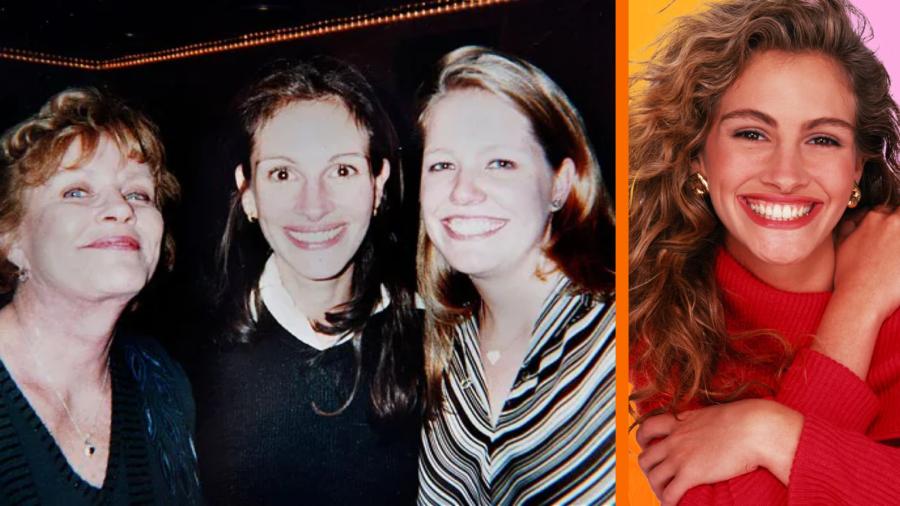
Nancy Motes never really got the chance most people take for granted — the chance to be seen for who she actually was, rather than who she was related to. Born into a family that would eventually produce some of Hollywood’s biggest names, she spent most of her 37 years navigating the impossible weight of a famous last name she didn’t even share. While her half-sister Julia Roberts was collecting Oscars and gracing magazine covers, Nancy was quietly building her own life, battling personal demons, and trying to carve out an identity that wasn’t defined by someone else’s spotlight. Her story is one of talent, heartbreak, family dysfunction, and ultimately, a tragedy that shook the Roberts family to its core. To understand Nancy, though, you have to understand where she came from — and that means going all the way back to her mother, Betty Lou Bredemus, and the complicated family tree that shaped everything.
Early Life and Family Background
Nancy Motes was born on May 19, 1976, in Smyrna, Georgia, a small suburban city just northwest of Atlanta. Her mother was Betty Lou Bredemus, a woman with a fascinating story of her own, and her father was Michael Motes, Betty Lou’s second husband. This is where the family dynamics get interesting, because Betty Lou had already been married once before — to Walter Grady Roberts, with whom she had three children: Eric Roberts, Lisa Roberts Gillan, and Julia Roberts.
By the time Nancy came along, the Roberts household had already experienced its share of upheaval. Betty Lou Bredemus and Walter Roberts had divorced in 1972, and Betty Lou married Michael Motes that same year. So Nancy grew up as the youngest of four siblings, but with a different father than her three older half-siblings. That distinction might seem minor on paper, but in practice, it created fault lines within the family that would deepen over the decades.
Nancy Motes age at the time of her passing was just 37, but she had already lived through more family turmoil than most people experience in a lifetime. Growing up in Smyrna, she was surrounded by a family steeped in the performing arts. Her mother had co-founded the Atlanta Actors and Writers Workshop with Walter Roberts, and the creative energy in the household was palpable. But creativity and stability don’t always go hand in hand, and the Motes-Roberts family was proof of that.
Betty Lou Bredemus: The Matriarch Behind the Fame
You really cannot tell Nancy’s story without spending some time on Betty Lou Bredemus, because she was the thread that connected all the moving pieces of this family. Born on August 13, 1934, in Minneapolis, Minnesota, Betty Lou was the daughter of Elizabeth Ellen Billingsley and Wendell John Bredemus, a football player. She grew up with a passion for the arts, singing in her school choir and performing in drama productions during her high school years at Austin High School.
After graduating in 1952, Betty Lou joined a stock company and performed in several plays before returning home. When her father fell ill, she was forced to leave school, but she didn’t let that stop her. Inspired by her brother’s path through the Army, she joined the United States Air Force in 1953 and completed basic training in Texas before being stationed at Keesler Air Force Base in Mississippi. That kind of grit and determination was a defining feature of Betty Lou Bredemus throughout her life.
It was after her military service that Betty Lou met Walter Grady Roberts, and together they built something remarkable. The Atlanta Actors and Writers Workshop became a beloved institution in the community, teaching acting to young people between the ages of five and eighteen. Among their students were the children of Martin Luther King Jr. and Coretta Scott King. In fact, the Kings became close friends of the Roberts family, and when Julia Roberts was born in 1967 during a period of financial hardship, Coretta Scott King offered to pay the hospital bill. That detail alone tells you something about the kind of community Betty Lou and Walter had built.
But the workshop eventually closed, the marriage fell apart, and Betty Lou moved on to her second chapter with Michael Motes. Nancy was born out of that marriage in 1976, and Betty Lou later divorced Michael in 1983, reverting to her maiden name, Bredemus. She spent the rest of her life largely out of the public eye, encouraging her children’s careers from the sidelines while dealing with her own health challenges.
Betty Lou Bredemus passed away on February 19, 2015, at the age of 80, after a long battle with lung cancer. Her death came just one year after she lost her youngest daughter, Nancy — a back-to-back devastation that no family should have to endure.
Growing Up in the Shadow of Julia Roberts
This is where things get complicated, and where Nancy Motes’ story takes on a dimension that most celebrity family narratives gloss over. Imagine growing up with a half-sister who becomes one of the most recognizable faces on the planet. Julia Roberts won an Academy Award, commanded tens of millions per film, and was routinely called “America’s Sweetheart.” Eric Roberts, too, had a successful acting career, earning an Oscar nomination of his own. Even Lisa Roberts Gillan found work in the entertainment industry as an actress and producer.
And then there was Nancy.
She wasn’t untalented or unmotivated. Nancy Motes worked as a production assistant on the hit TV show Glee and was involved in dog training. But in a family where the bar for success was set at Hollywood stardom, anything short of that could feel like falling short. The comparisons were constant, not just from the public but, according to Nancy herself, from within the family as well.
Nancy struggled with her weight for much of her life, and she publicly alleged that Julia Roberts had bullied her about it. In social media posts before her death, she referenced the pain of feeling belittled by her famous half-sister. Whether those allegations captured the full picture of their relationship is something only the people involved truly know, but the anguish Nancy expressed was real and raw.
The Nancy Motes family dynamic was, by all accounts, fractured. The age gap between Nancy and her older siblings, combined with the different fathers and the massive disparity in public visibility, created a situation where Nancy often felt like an outsider in her own family. That sense of not belonging is a recurring theme in the accounts of those who knew her.
Nancy Motes’ Career and Personal Life
Despite the challenges she faced, Nancy Motes was building a life for herself. She worked behind the scenes in television, landing a role as a production assistant on Glee, which was one of the biggest shows on television at the time. It wasn’t the kind of career that would land her on magazine covers, but it was honest work in an industry she had grown up around.
Nancy was also passionate about animals, particularly dogs. She worked as a dog trainer and frequently took dog-sitting jobs, which is how she ended up at the house on North Bundy Drive in Los Angeles where she was found on February 9, 2014. Her love for animals was one of the things that people who knew her consistently highlighted — it was genuine and uncomplicated in a way that so much else in her life was not.
On the personal front, Nancy was engaged to John Dilbeck, who would later become a vocal critic of the Roberts family in the wake of Nancy’s death. Their relationship appeared to be a source of stability and happiness for Nancy during a turbulent period, and Dilbeck’s grief after her passing came through clearly in the interviews he gave and the allegations he leveled at the family over how they had treated her.
Nancy Motes net worth at the time of her death was not publicly disclosed in any official capacity, and most estimates suggest it was modest compared to her famous siblings. She was not a high-earning celebrity; she was a working professional in the entertainment industry who happened to share a bloodline with some of Hollywood’s elite. The financial disparity between Nancy and Julia Roberts was vast, and it likely added another layer of complexity to an already strained relationship.
The Strained Relationship with Julia Roberts
The tension between Nancy Motes and Julia Roberts has been the subject of considerable public discussion, particularly after Nancy’s death. According to multiple reports, Nancy felt that Julia had been dismissive and even cruel toward her, particularly regarding her weight. Nancy took to social media on several occasions to express her frustration, and the posts painted a picture of a woman who felt marginalized and disrespected by her own family.
John Dilbeck, Nancy’s fiancé, intensified the controversy after her death. He alleged that Julia Roberts had actively worked to keep Nancy away from their mother, Betty Lou Bredemus, during Betty Lou’s final years. According to Dilbeck, Julia treated their mother like a possession, dictating who could and couldn’t spend time with her. These are serious allegations, and they cast a shadow over the public image that Julia Roberts had carefully cultivated over decades.
It is worth noting that Julia Roberts did eventually speak publicly about Nancy’s death. In an interview with WSJ Magazine roughly 20 days after the tragedy, she broke down in tears and said it was pure heartbreak. She acknowledged the pain the family was going through and expressed a desire to keep looking ahead. Whether that response was enough in the eyes of those who knew Nancy best remains an open question.
The reality is that family relationships, especially those involving fame, money, and unresolved childhood dynamics, are rarely simple. Julia Roberts may well have experienced the relationship differently than Nancy did. But the pain Nancy expressed was documented in her own words, and it deserves to be acknowledged rather than swept aside to preserve a celebrity’s image.
Michael Motes: Nancy’s Father
Michael Motes is a figure who often gets overlooked in the telling of this family’s story, but his role was significant. He married Betty Lou Bredemus in 1972, the same year she divorced Walter Roberts, and together they had Nancy in 1976. The marriage did not last, and they divorced in 1983.
Michael Motes’ relationship with his daughter and with the broader Roberts family is not extensively documented in public records, but his presence — and his absence — shaped Nancy’s life in important ways. Having a different father than her three older siblings meant that Nancy was, in some respects, always on the outside looking in. The Roberts name carried weight and instant recognition; the Motes name did not. That distinction, however unfair, colored how Nancy was perceived both within the family and by the outside world.
The Tragedy of February 9, 2014
On February 9, 2014, Nancy Motes was found dead in the bathroom of a Los Angeles home where she had been dog-sitting. She was discovered by her fiancé, John Dilbeck, in a bathtub, with prescription and non-prescription medications found nearby. She was 37 years old.
Initially, the family released a statement through People magazine describing her death as an apparent drug overdose and expressing shock and devastation. But when the Los Angeles County coroner’s report was released months later, it revealed that Nancy had died from multiple drugs combined with drowning, and her death was officially ruled a suicide.
A five-page suicide note was found at the scene, addressed to several members of her family. According to reports, the note directly referenced her estrangement from her family and included allegations of bullying by Julia Roberts. The note was a final, devastating expression of the pain that had defined so much of Nancy’s adult life.
The news sent shockwaves through Hollywood and beyond. The half-sister of one of the most beloved actresses in the world had died by her own hand, leaving behind a note that pointed fingers at the very family the public had long admired. It was a stark reminder that fame and fortune do not insulate families from dysfunction, and that the people closest to celebrities often bear invisible burdens.
The Aftermath and Family Fallout
The period following Nancy’s death was marked by public accusations and private grief. John Dilbeck gave multiple interviews in which he laid blame squarely at Julia Roberts’ feet, alleging that her treatment of Nancy had contributed directly to her mental health struggles. He painted a picture of a family where Nancy was consistently sidelined and diminished, and where the power dynamics created by Julia’s fame made it nearly impossible for Nancy to assert herself.
Julia Roberts, for her part, largely retreated from public comment after her initial interview with WSJ Magazine. She focused on her work, appearing in Ryan Murphy and HBO’s adaptation of The Normal Heart, and continued to build her career. Whether she addressed the allegations privately is unknown, but publicly, she chose silence over engagement.
Eric Roberts and Lisa Roberts Gillan were also part of this family equation, though their public responses were more muted. Eric Roberts has had his own complicated history with the family, including periods of estrangement from Julia, so the dynamics at play were multi-layered and deeply personal.
The loss of Nancy was compounded by the death of Betty Lou Bredemus just one year later. The family buried its youngest member and then its matriarch within the span of twelve months — a concentrated period of grief that would test any family’s resilience.
Nancy Motes’ Legacy
Nancy Motes may not have achieved the kind of fame that her siblings did, but her story resonates with anyone who has ever felt overlooked, undervalued, or trapped by circumstances beyond their control. She was a real person with real struggles, and reducing her to a footnote in the Julia Roberts biography does a disservice to her memory.
Her story also raises important questions about how we treat the family members of celebrities. The public’s fascination with famous families often creates a hierarchy where some members are elevated and others are forgotten, and the psychological toll of that dynamic can be devastating. Nancy Motes lived in that gap between public invisibility and private pain, and her death should serve as a reminder that every person in a family matters, regardless of their level of fame.
The Nancy Motes family story is not a simple tale of good and evil. It is a messy, complicated, deeply human story about love, resentment, mental health, and the corrosive effects of inequality within a family unit. Nancy deserved better than the hand she was dealt, and her legacy, such as it is, lies in the conversations her story continues to provoke about family, fame, and the importance of treating every person with dignity.
FAQs
Who was Nancy Motes?
Nancy Motes was the half-sister of Julia Roberts, Eric Roberts, and Lisa Roberts Gillan, born to Betty Lou Bredemus and Michael Motes on May 19, 1976, in Smyrna, Georgia. She worked as a production assistant on Glee and as a dog trainer before her passing in 2014 at age 37.
How was Nancy Motes related to Julia Roberts?
Nancy and Julia shared the same mother, Betty Lou Bredemus, but had different fathers — Julia’s father was Walter Grady Roberts, while Nancy’s father was Michael Motes, Betty Lou’s second husband.
What was Nancy Motes’ net worth?
Nancy Motes net worth was never officially disclosed, but it is widely believed to have been modest, as she worked behind the scenes in television and in dog training rather than as a high-profile entertainer.
Who was Betty Lou Bredemus?
Betty Lou Bredemus was the mother of Eric Roberts, Julia Roberts, Lisa Roberts Gillan, and Nancy Motes, and she co-founded the Atlanta Actors and Writers Workshop before passing away from lung cancer on February 19, 2015, at age 80.
What happened to Nancy Motes?
Nancy Motes was found dead on February 9, 2014, in a Los Angeles home where she had been dog-sitting, and the coroner later ruled her death a suicide caused by a combination of multiple drugs and drowning.
Conclusion
Nancy Motes’ story is a sobering reminder that the glittering world of Hollywood often casts long, dark shadows over the people who live just outside its brightest lights. She was a daughter, a sister, a fiancée, and a person who loved animals and worked hard to build a life on her own terms. But the weight of her family’s fame, the fractures within the Nancy Motes family, and her own mental health struggles proved to be a burden she could not carry forever. Betty Lou Bredemus raised four children who each navigated the world of entertainment in their own way, but the family’s story is as much about loss and disconnection as it is about success. Nancy deserved to be more than a cautionary tale or a tabloid headline, and perhaps the best way to honor her memory is to take her story seriously — not as gossip, but as a genuine human tragedy that speaks to the complexities of family, identity, and belonging.