

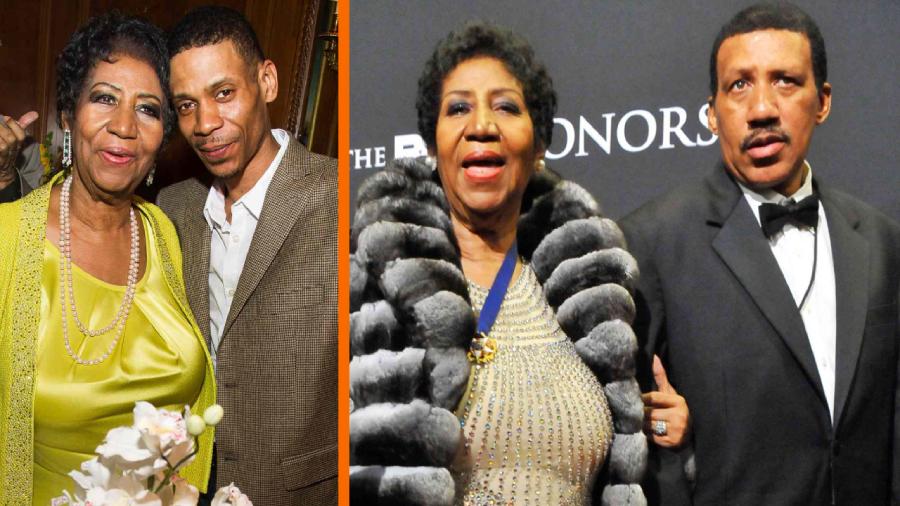
Edward Franklin may not be a household name the way his mother was, but if you ever needed proof that talent runs deep in a bloodline, his story is it. As the second son of the Queen of Soul, he grew up surrounded by music, faith, and the kind of family history that reads like an American epic. Yet for most of his life, Edward stayed out of the spotlight, content to let his powerful gospel voice do the talking on the rare occasions he stepped onto a stage. In this deep dive, we’ll unpack who Edward Franklin really is, where he came from, the famous family that shaped him, and the quieter, more complicated chapters of his life that rarely make the headlines.
Who Is Edward Franklin?
Edward Franklin is the second of Aretha Franklin’s four sons, a gospel singer in his own right who has spent his life mostly behind the curtain rather than in front of it. While the world knew his mother as a global icon with a catalogue of hits and a voice that defined an era, Edward carved out a much more private existence in Detroit. He shares his mother’s gift for singing, particularly her ability to reach soaring, emotional high notes, and over the years he occasionally performed alongside her. Despite carrying one of the most famous surnames in music, Edward has consistently chosen privacy over publicity, which is part of what makes his story so intriguing to fans who want to understand the people behind the legend.
Edward Franklin’s Early Life and Birth
Edward Derone Franklin was born on January 22, 1957, in Detroit, when his mother was just fourteen years old. He arrived only about two years after his older brother, which meant Aretha was raising two young boys before she had even finished her teenage years. Because of the timeline, Edward’s childhood unfolded against the backdrop of a mother whose career was beginning to take flight, and that reality shaped nearly every aspect of how and where he was raised. Named after his father, Edward carried a name that connected him directly to a man who would remain largely a mystery to the public for decades. His birth, along with his brother’s, was a subject Aretha rarely discussed openly, preferring to keep those early years close to the chest.
The Franklin Family Tree: Edward’s Roots
To understand Edward, you have to understand the remarkable family he was born into. The Franklins were not your average Detroit family; they were a dynasty woven from gospel music, the Black church, and the civil rights movement. Edward sat at the intersection of all of it, the grandson of a celebrated preacher and the son of the most decorated female artist in music history. Below, we break down the key figures who make up his immediate and extended family.
Aretha Louise Franklin — The Mother
Aretha Louise Franklin, universally known as the Queen of Soul, was Edward’s mother and the towering figure at the center of his world. She was a singer, songwriter, and pianist whose influence on American music is almost impossible to overstate, with dozens of charting singles and a voice that earned her recognition as one of the greatest vocalists of all time. Yet to Edward, she was simply “Mom,” a woman juggling an extraordinary career with the responsibilities of raising four boys. Aretha was famously protective of her private life, and she rarely spoke in detail about her sons or her early experiences as a very young mother, which is why so much of Edward’s personal story has had to be pieced together over the years.
Edward Jordan Sr. — The Father
Edward Jordan Sr. was the father of both Edward and his older brother, though he remains one of the more shadowy figures in the family’s story. Very little is publicly known about him, and Aretha herself almost never discussed him in interviews. A biography on the singer described Edward Jordan Sr. as something of a “player,” a man Aretha had known during her youth. The relationship clearly left a complicated mark, because in one of her handwritten wills discovered after her death, Aretha made it pointedly clear that Jordan should never handle or receive any money or property belonging to her firstborn son, emphasizing that he had never contributed to that child’s welfare. That detail tells you a lot about how distant and strained the connection had become.
The Grandparents and Extended Family
On his mother’s side, Edward’s lineage was downright royal in gospel circles. His grandfather was Rev. C.L. Franklin, a Detroit minister whose sermons were so powerful he became known as the man with the “million-dollar voice,” and whose New Bethel Baptist Church served as a launching pad for Aretha’s own career. Edward’s grandmother was Barbara Franklin, who passed away from a heart attack in 1952, years before Edward was born. The family was held together in many ways by Rachel, Aretha’s grandmother and Edward’s great-grandmother, a steady maternal presence during the years the children needed it most. The extended family also included Aretha’s siblings, several of whom were deeply involved in raising the next generation.
Growing Up in Detroit Without the Spotlight
Edward’s upbringing looked very different from what you might expect of a superstar’s child. Because Aretha’s recording career was taking off through the late 1950s and 1960s, she was frequently on the road, which meant the day-to-day work of raising Edward and his older brother fell largely to family members back in Detroit. His great-grandmother Rachel and his aunt Erma Franklin stepped in to look after the boys, providing the stability and routine that a touring mother simply could not. By most accounts, Aretha remained present in their lives and visited regularly, but the boys were essentially raised within the wider Franklin clan rather than in a conventional nuclear household. That communal upbringing, rooted in faith and Detroit’s tight-knit Black community, shaped Edward into the gospel-centered man he became.
Edward Franklin’s Brothers
Edward was one of four sons, and each of his brothers carved out a distinct path. Together, the four of them represent the next chapter of the Franklin musical legacy, even though their lives took very different shapes. Here’s a closer look at the men Edward grew up beside and stood with through the highs and lows of being Aretha’s children.
Clarence Franklin
Clarence Franklin was Aretha’s firstborn, arriving in 1955 when she was only twelve years old, and he shared the same father as Edward, Edward Jordan Sr. Clarence has shown a talent for songwriting over the years, with some of his compositions reportedly recorded by his mother. However, his life has been marked by significant health challenges; court documents have indicated that he lives with mental illness and has resided in assisted-living and group-home settings. Because of his circumstances, much of the conversation around Clarence in the years following Aretha’s death centered on ensuring he was cared for and provided for through the estate.
Teddy Richards (Ted White Jr.)
Ted White Jr., known professionally as Teddy Richards, was born in 1964 and was Aretha’s only child with her first husband, Ted White Sr. Of the four brothers, Teddy followed most visibly in his mother’s musical footsteps as a performer, working as a guitarist who provided backing for her band during live concerts. That made him a familiar presence on stage with Aretha, supporting the very performances that cemented her legend. His path shows how the family’s musical DNA expressed itself not just in voices but in instrumentation as well.
Kecalf Cunningham
Kecalf Cunningham was Aretha’s youngest son, born in 1970 to the singer and her road manager, Ken Cunningham. His unusual name is actually a clever acronym built from his parents’ names, drawing letters from Ken E. Cunningham and Aretha Louise Franklin. Kecalf grew up in Detroit alongside his older brothers and went on to become a Christian rapper, sometimes performing with his mother, including at high-profile venues. He has also spoken publicly about preserving and honoring his mother’s legacy, becoming one of the more visible voices among the brothers in the years after her passing.
Edward Franklin the Gospel Singer
While his brothers pursued songwriting, guitar, and Christian rap, Edward leaned into gospel singing, the genre that had practically been the soundtrack of the Franklin household. He inherited a remarkable instrument, capable of hitting those high, spine-tingling notes that fans so closely associate with his mother. Over the years, Edward and Aretha performed several duets together, and by his own account the chemistry between them in the studio was effortless, with sessions wrapping up in just a few takes. That ease speaks to a shared musical instinct, the kind that can’t really be taught and tends to come from a lifetime of singing in the same rooms, the same churches, and the same family.
Singing at the Family Funerals
Some of Edward’s most memorable public moments came not on concert stages but at family memorials, where his voice carried real emotional weight. In June 2015, he sang at a memorial service in Detroit honoring his grandfather, Rev. C.L. Franklin, and his uncle, Rev. Cecil Franklin. His rendition of the gospel standard “His Eye Is on the Sparrow” reportedly moved many in the room to tears and earned him a standing ovation, a powerful reminder that he could command a moment when he chose to. Then, at his mother’s own funeral on August 31, 2018, held at Greater Grace Temple in Detroit, Edward delivered a tribute that became part of the historic, star-studded service. Standing in front of a congregation that included global celebrities and political figures, he honored Aretha through song, the most fitting goodbye a Franklin could offer.
The Difficult Chapters Edward Faced
Edward’s life hasn’t been without serious hardship, and a couple of episodes stand out as genuinely difficult periods. Back in 2002, Aretha’s sprawling Bloomfield Township mansion, a home of roughly ten thousand square feet, burned to the ground, and Edward was named as a suspect in the suspected arson. Investigators reportedly found traces of accelerants both at the scene and on his clothing, but his attorney argued that the chemical traces were simply the result of contact with materials stored in the house, which was being used for storage at the time. Edward was never charged, and the matter eventually faded. Years later, in 2010, he endured a frightening ordeal when he was attacked by two men and a woman at a Detroit gas station, suffering injuries serious enough to require hospitalization and surgery. Neither Edward nor Aretha ever publicly detailed what was behind the attack.
The Paternity Rumors and Speculation
As with many famous families, rumors have swirled around the Franklins for decades, and Edward’s parentage has been a recurring subject of speculation. Around the time of his birth, there were whispers that Aretha had been involved with the legendary singer Sam Cooke, leading some to claim that Cooke, rather than Edward Jordan Sr., was his biological father. It’s a juicy piece of music-history gossip, but there has never been any credible evidence to support it, and it remains firmly in the realm of rumor. More recently, a wave of social media content, much of it appearing to be AI-generated, has pushed sensational claims about supposed DNA test “revelations” involving the Franklin sons. Those clips should be treated with heavy skepticism, since they tend to recycle old speculation while dressing it up as breaking news.
The Battle Over Aretha’s Estate
When Aretha Franklin died in 2018, the family initially believed she had left no will, which set the stage for a complicated legal saga. Multiple handwritten wills were later discovered in her home, including one famously found wedged between couch cushions, and the authenticity and interpretation of those documents became the subject of an extended dispute among her four sons. Because Edward stood to inherit a share of the estate alongside Clarence, Teddy, and Kecalf, he was naturally part of the proceedings, even as he largely avoided the public spotlight. The case underscored how even the most celebrated families can find themselves tangled in conflict when no clear plan is left behind, and it kept the Franklin name in the news for years after Aretha’s passing.
FAQs
Who is Edward Franklin?
Edward Franklin is the second oldest of Aretha Franklin’s four sons and a gospel singer known for his powerful voice. Born in 1957, he grew up in Detroit and occasionally performed with his mother, though he generally preferred to stay out of the public eye throughout his life.
Who was Edward Franklin’s father?
His father was Edward Jordan Sr., who was also the father of Edward’s older brother, Clarence. Very little is publicly known about Jordan, and Aretha rarely spoke about him, though family records describe a strained and distant relationship.
Did Edward Franklin sing at Aretha Franklin’s funeral?
Yes. Edward performed at his mother’s funeral on August 31, 2018, at Greater Grace Temple in Detroit, delivering a heartfelt musical tribute as part of the family’s portion of the historic, celebrity-filled service.
How many brothers does Edward Franklin have?
Edward has three brothers: Clarence Franklin, the eldest; Teddy Richards, born Ted White Jr.; and Kecalf Cunningham, the youngest. All four of Aretha’s sons grew up with a strong connection to music.
Is Edward Franklin still alive today?
There has been no widely reported news of Edward Franklin’s death, and he is best known publicly for his role in his mother’s funeral and the family’s estate proceedings. Because he keeps such a low profile, detailed updates on his current life are rare.
Conclusion
Edward Franklin’s story is a reminder that behind every towering legend stands a family of real, complicated, talented people. As Aretha Louise Franklin’s second son, he inherited an extraordinary voice and a name loaded with history, yet he chose to live most of his life away from the cameras, surfacing mainly to honor the people he loved through song. From his birth to a teenage mother in Detroit, to being raised within the warm embrace of relatives like Rachel and Erma Franklin, to standing before the world to say goodbye to his mother, Edward embodies the quieter side of an iconic dynasty. His connections run deep, from his grandfather Rev. C.L. Franklin and the wider Franklin clan to his brothers Clarence Franklin, Teddy Richards, and Kecalf Cunningham. He may never have sought fame the way his mother did, but in the gospel tradition he was raised in, sometimes the most moving voice in the room is the one that never asked for the spotlight at all.